Mount Cook

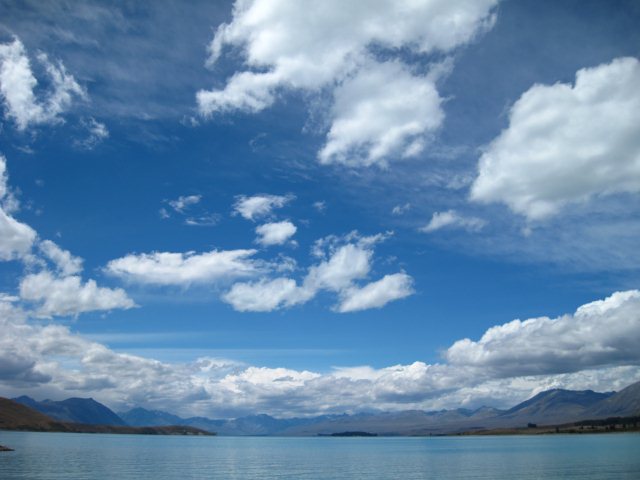
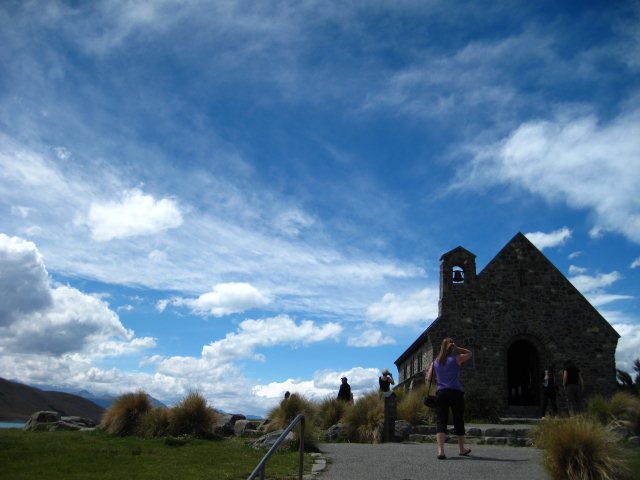
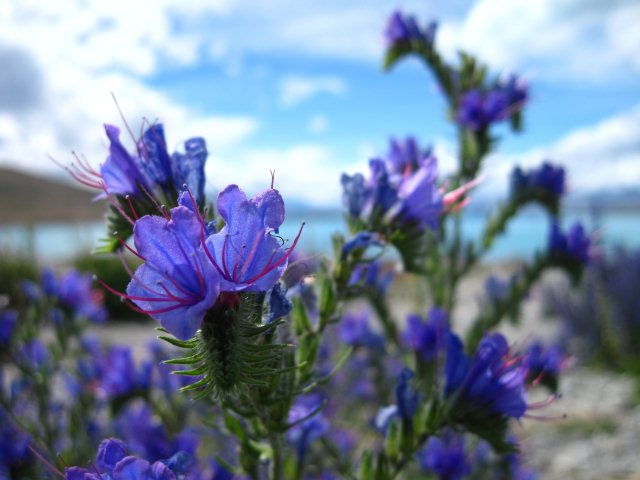
We left Christchurch bound for the mighty Mt. Cook. On the way we stopped at the stunning Lake Tekapo. I’m sure the rest of the scenery on the 3 hour drive there was very impressive too but since Jill was driving I seized the opportunity and took a well-earned nap. I felt pretty fresh at the lake, it truly was impressive. Beautiful wild purple flowers grow on the rocks surrounding the lake, a massive body of amazingly blue, still water. The water is mesmerising but as you look at it, it leads the eye to a stunning range of snowcapped mountains off in the distance. This region has mountains in seemingly every direction. Any one of these elements would make it a special place but taken as a whole, Lake Tekapo is just amazing.
It was another hour or so of driving before we got to Mt. Cook. It was pretty wet and miserable when we did. It was also unfortunate that on the next day (during which we had planned to do a few hikes), the weather would be even worse. Great.

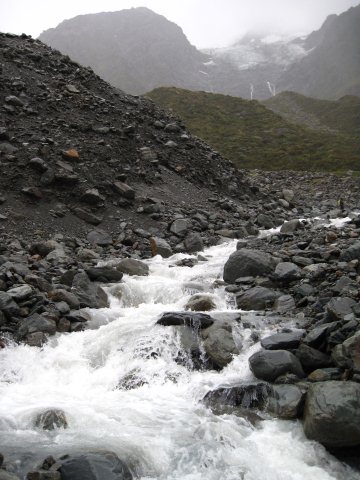
The guide book we’ve been using refers to the Hooker Valley Track through the Mt. Cook (Aoraki) region as indisputably the South Island’s most scenic walk. Indisputably! This, the book states, is dependant on it being a clear day. Unfortunately, the weather couldn’t have been further from clear for the entire time we were there. For the most part it didn’t matter though. Even with the grey overcast start to the day, the view from even the car park was dazzling and from there things just got so much better. We saw huge glaciers inching down jagged ridges, waterfalls spewing from blue-tinged hanging glaciers, moraine-dammed glacial lakes with floating icebergs, raging rivers, wispy waterfalls… all capped by Aoraki’s towering presence. It was quite the track! It would have been stunning in any weather but with the rain and later, the punishing icy blasts, it was a full body experience. The rain water permeated every part of my being and pseudo arctic blasts from the iceberg filled lake made my body work hard to stay warm. The lake was at the end of the hike though. During the first half, when I was still laughing at the weak showing the rain was making, we crossed a large swing bridge and shortly after, crossed another one. The scenery across both was to die for. We turned a corner and Aoraki literally pierced the clouds in the valley ahead. The view just got better and better after that, inunumerable waterfalls tumbled, the river roared and the sight of the mighty Aoraki required new words to be added to the dictionary. At 3,754m, Aoraki reigned above all. It was a constant presence for the second half of the hike, whether we were rock hopping or walking with planked tussock boardwalks underfoot, it was always there with us.
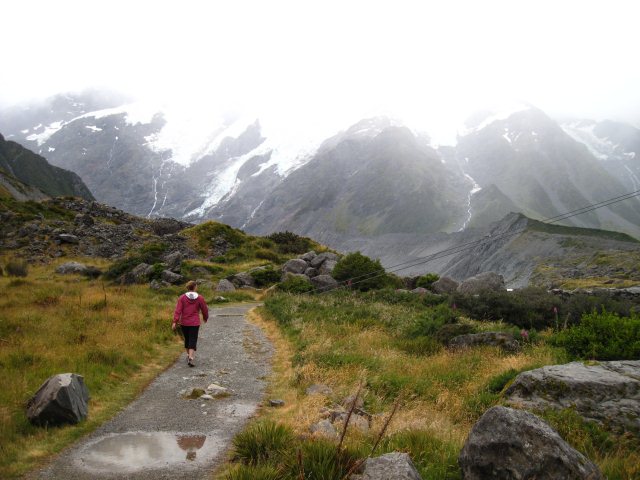
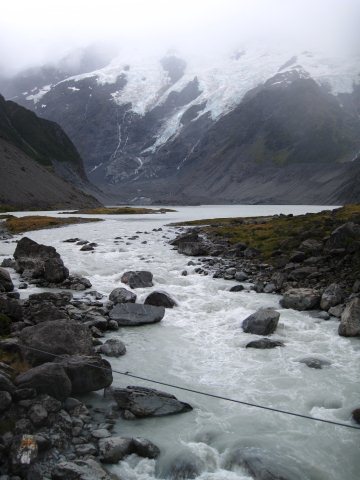
A couple of hours into the hike, the rain had seriously stepped up its game and the onslaught from the wind had become ruthless. Together they had turned this hike into a gruelling slog. Reaching the glacial lake at the end was a real achievement. An achievement I didn’t even realise I’d made. The weather was really beating me down so I stopped to compose myself, thinking I still had at least another hour to go. It wasn’t until Jill told me we were at the end of the trail that I looked up and saw the lake.
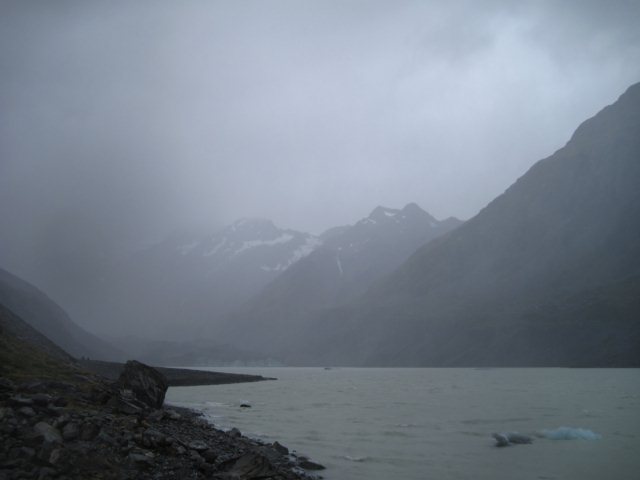
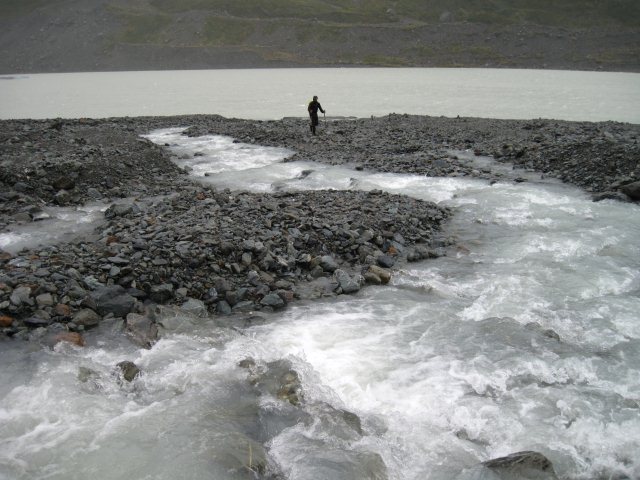
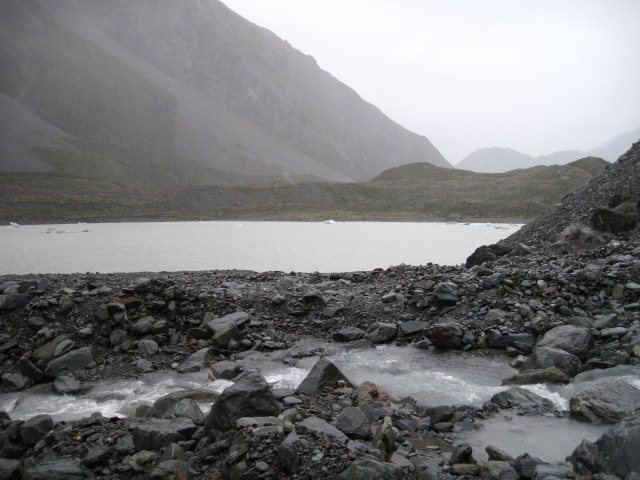
Jill wasn’t feeling great for much of the hike so decided to stay put but seeing that lake gave me a second wind. I went exploring around the lake, though it wasn’t as straight forward as that sounds. Calling the conditions that day wintery is a major understatement. The heavy rain and strong winds were bad enough, especially by that point when our clothes and footwear had completely soaked through; the water was sloshing around in my boots like it does in a wetsuit. But standing next to that glacier filled lake, my face was under an endless barrage from what felt like tiny, freezing shards of ice. The wind was considerably stronger by the lake shore too, those ice shards were striking me with some speed behind them. There were two fast flowing rivers coming down from the mountains. They were moving quick but shallow enough, with enough rocks near the surface for me to rock hop over them. This weather had done a good job of thinning out the herd already but by crossing those two rivers I’d left everyone behind. I stopped to take it all in. The wind was slightly more forgiving now and the ice shards had slowed. I took a good, long look at my surroundings. The droplets of rain were seemingly suspended in the air by the constantly shifting wind direction; it was like looking at dancing curtains of water. The scale of this place was staggering, where else in the world can you find calving glaciers, cloud-piercing peaks and thousand-foot waterfalls all in a single glance? Pure New Zealand!
Christchurch

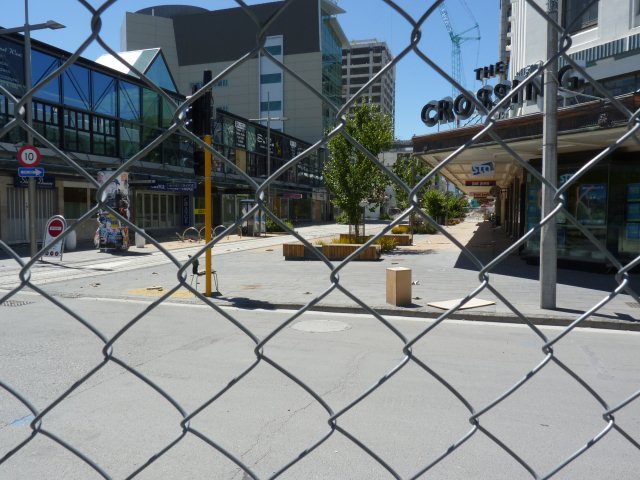
Christchurch, or Quakechurch as Sue so affectionately refers to it, is a very changed city. We were here to take in the views and admire one of New Zealand’s finest cities but it just so happens that two of the outstanding people we met in Africa last year are from this city.

We made our way to Spencerville, just outside Christchurch, after we left Kaikoura. We didn’t even see the city on the first day we were there, we got to our caravan park pretty late and decided to just chill. We met some lovely people here. Gavin and Jackie were the couple in the spot adjacent to ours. Despite the fact that they lived only 10 minutes away they were here on a holiday with their two children. Gavin and Jackie had been in Christchurch for a long time, it was really interesting hearing about their experiences with the earthquakes and how they’ve come to terms with what their city is now. They were really nice. We had trouble with our power supply (we didn’t have the right connector for the caravan park) so they let us charge our phone in their huge tent. Gavin even gave us prawns for dinner and bacon for breakfast. Great people, just another reason to love New Zealand.

It wasn’t until the next day though, the 11th, that we met with Sue. Since our phone was dead we needed to charge it before we could arrange a meeting time. We were really thankful we met Gavin and Jackie when we did.

We’d already met with a few friends from the trip in Africa, Jo was great and Frank and Helen couldn’t have been more welcoming, and after making it to New Zealand, it was brilliant to see Sue again.

She generously set aside the whole day to show us around the city. It was clear as we drove around that this was and still is a beautiful city but driving through streets where people’s favourite pubs and churches have come down is a sobering experience. It must be pretty grim for her.

Getting around wasn’t straightforward either. Because of the earthquake damage, authorities change permissible routes daily. There’s a lot of uncertainty in the air. You don’t know which roads you’ll be able to drive on day to day. I was almost in disbelief when Sue told me that there have been 9,000 earthquakes here since September 2010. Granted most of them are small ones (there were actually a couple during the first night we spent at the Spencerville caravan park but I slept right through them. Jill tried waking me up to tell me about them but in my half asleep state I told her she was imagining things, she thought she dreamed it until the next day when she heard our neighbours talking about it), but during the biggies (Sept 2010, Feb 2011, June 2011 and Dec 2011) lives were lost and major damage was caused to the city. The oldest and most recognisable buildings have all been destroyed, this includes most of the city centre and the Christchurch cathedral, the city’s most famous landmark.

Liquefaction has destroyed the future prospects for huge swathes of the city and large sections have been marked as red zones meaning no one can ever live there again.

The earthquakes have become a part of everyday life for the residents of this city, they’re learning to live with the ramifications of what they mean but that doesn’t stop the anxiety they feel when the ground starts moving under their feet.

No matter how grim the news delivered is though, there is always positive that can be taken from it. The unlivable red zones will be turned into green areas and nature will be allowed to reclaim them. In a city that already has an abundance of green spaces, a huge number of them will be added. In 20 years Christchurch will be even more beautiful than it already is.

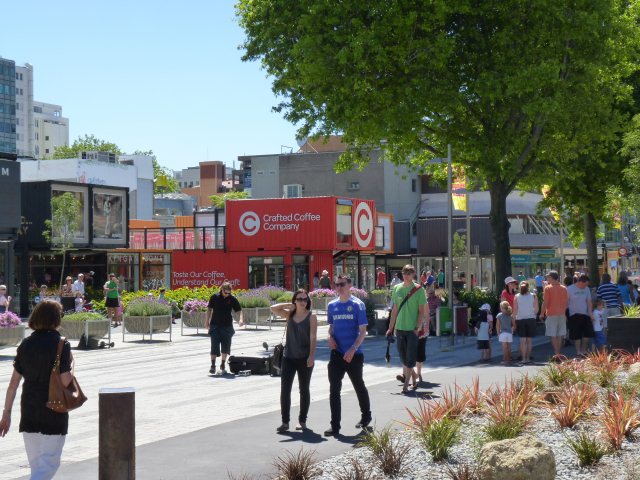
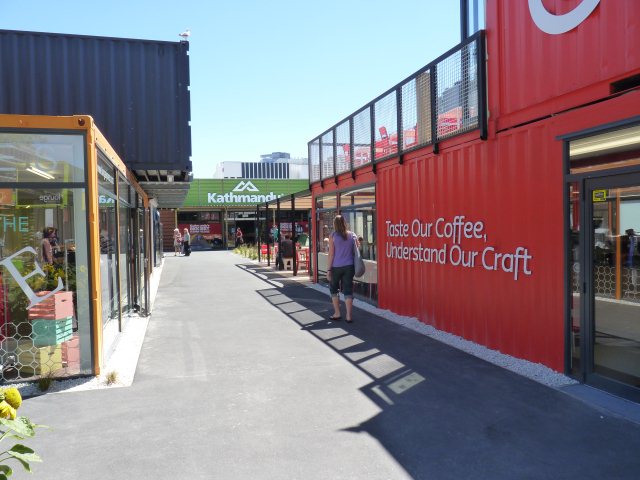
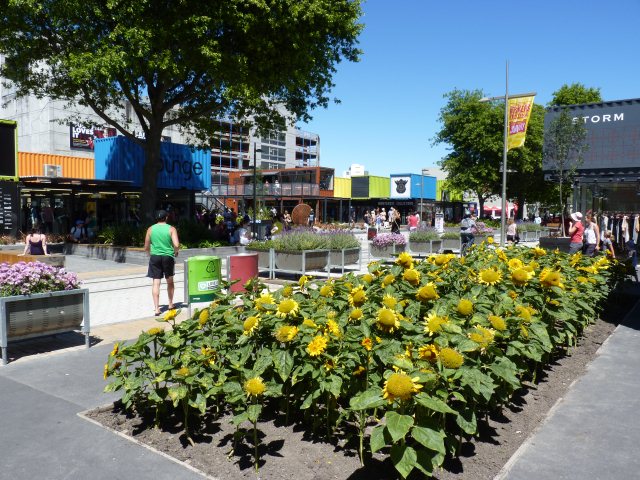
So, Sue was showing us around for the morning. She had to leave for a couple of hours in the afternoon (she had a dentist appointment) but that was fine, Jill and I checked out this cool new shopping centre in the middle of the city. All of the shops have been built out of brightly coloured shipping containers and arranged in a very stylish layout. It’s called Re:Start and there were loads of street performers and buskers around trying to raise people’s spirits. They didn’t have to try very hard. The people walking around seemed very happy. 

When I went for a wonder by myself (Jill seemed pretty happy exploring the shops by herself), I was very surprised to be asked for an interview by a TV reporter! I had noticed that people with a large camera were filming the area and was glancing over every now and then. I was standing in the local ‘i’ site so was instantly pegged as a tourist by anyone that saw me. I guess that’s what they were after though because before I knew it, I was shaking the reporter’s hand and he had a camera pointing at me! He was working on a piece about the current state of Christchurch and was asking general questions about what I thought of the city and whether I felt people should visit. I told him what I thought, my answers were probably exactly what he wanted to hear so it’s very likely I was on the evening news that night.

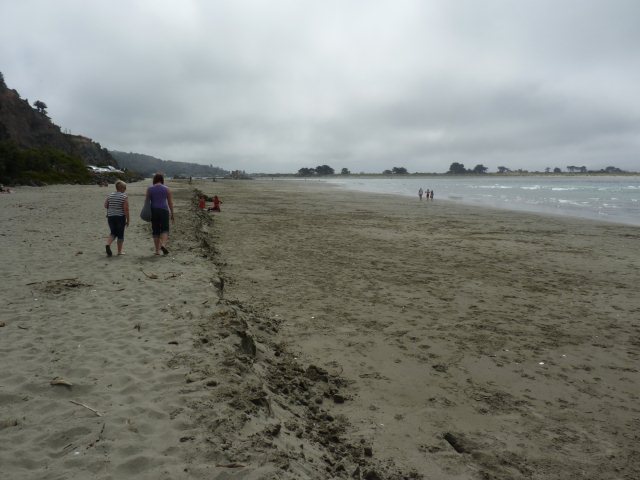
Shortly after I wandered back to Jill, Sue picked us up and continued our tour of the city. There are some very scenic drives here. Narrow, winding roads were the order of the day, much as they are in the rest of New Zealand. We stopped at a lovely beach for a walk but after that it was a couple of quick stops (one at Sue’s place so she could pick up her laptop and the other at a camera shop. I needed a replacement wrist strap because I’d lost mine during the dolphin swim the previous day) before we ended up at Matt’s restaurant for dinner.

The Lone Star is apparently an American chain but the food there was great and felt like it had a New Zealand spin to it. Since Matt was working tonight, Sue, Jill and I had drinks downstairs without Matt while we worked up an appetite. When we were ready we headed upstairs for some delicious food. Matt came out every now and then for a quick chat but he wasn’t done until 8. He’d been at work since 9 so his boss ‘generously’ let him leave early (he was supposed to finish at 11). Almost as soon as he came out we went downstairs for a few drinks. We’d been talking to Sue all day but it was great being able to catch up properly with the both of them there. We had a great night drinking together and ended up getting back to the caravan park late.

Kaikoura

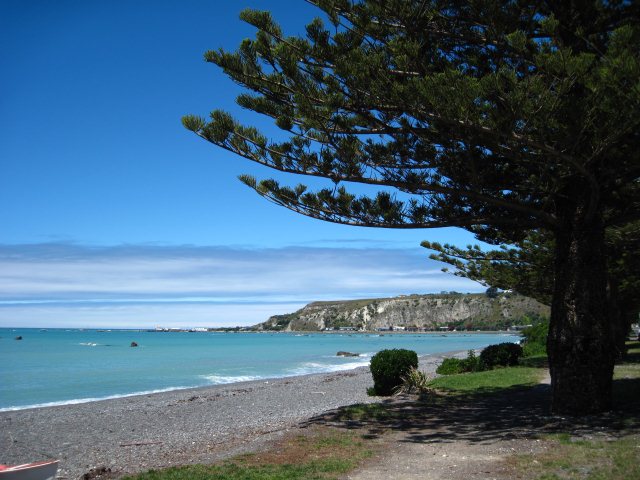
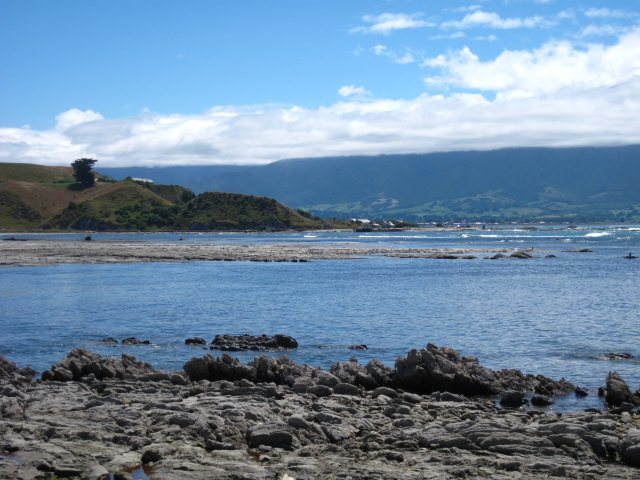
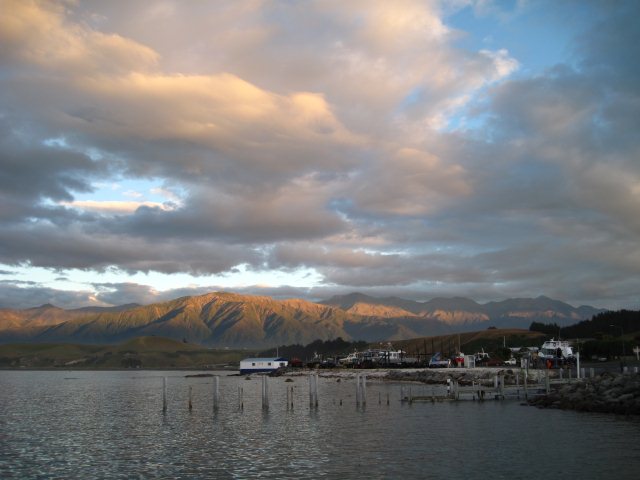
Kaikoura, the single nicest town I’ve ever been to, in any country. More beautiful than anywhere I’ve seen in Australia, Canada or America it was almost unbelievably nice. Sort of how I felt when I saw Kiama in Australia but Kaikoura has just raised the bar even higher. It’s a coastal town with some of the deepest blue water I’ve ever seen. The cliffs are amazing, it’s got mountains and thick forest all around, the town itself is so charming it’s impossible not to fall in love with it and the animals love this place. It’s actually one of the most renowned locations in the world for whale watching and swimming with dolphins. Offshore, the sea bed drops away rapidly to the kilometre-deep Kaikoira Canyon, a phenomenon that brings sea mammals in large and varied numbers. Whale watching and swimming with dolphins are big business here, and the presence of expectant tourists has spawned a number of eco-oriented businesses swimming with seals, sea kayaking and hiking. It didn’t take me long to realise it. Of all the places I’ve been, this is the single most beautiful place to live.

As the big activities here are whale watching and swimming with the dolphins, most people come here dead set on one or the other. Jill mentioned the dolphins at some point in the past but I wasn’t too keen. Since we were already here though, it seemed like a better choice than the more passive whale watching. Swimming with the dolphins is such a popular activity here that spots on the boat go very fast. The fact that we decided we wanted to do it only 2 days before we were going to head out just made things worse. They only had availability on the boat leaving at 5:30 in the morning meaning we had to wake up at 4:30 to make it.

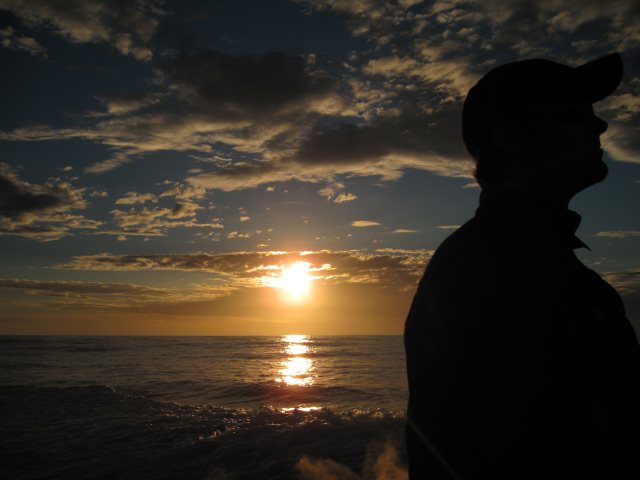
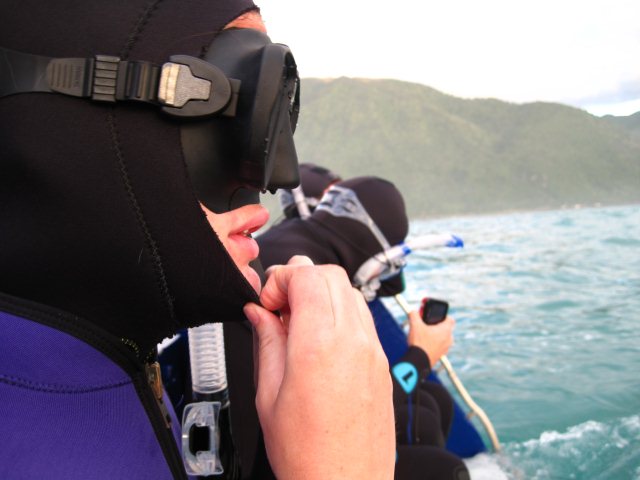
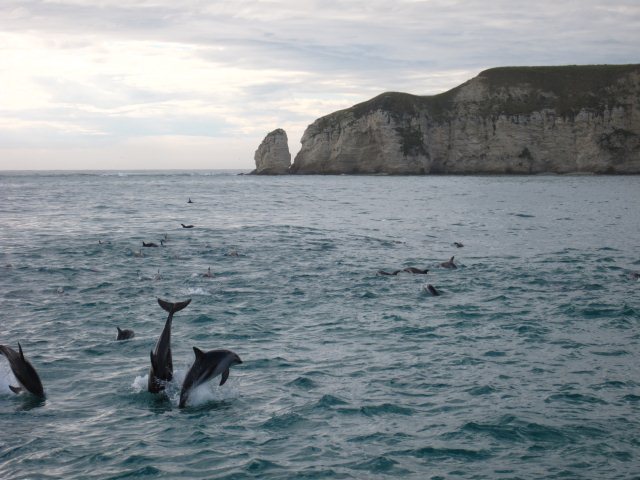
It was so worth it. Kaikoura is just as stunning before sunrise as it is after. By the time we got to the Dolphin Encounter building, had our wetsuits and equipment ready and had been briefed, it was around 6:15. We were on the boats and looking for dolphins by 6:30. It was very cool and completely different to swimming with seals. There were a number of things that differentiated this from what I’d done before but one of the things that jumped out straight away was the size of the boat, a fair bit smaller than usual, it was probably just a matter of preference for the tour operator but it made a difference nonetheless. It lent everything a different feel before we even got in the water. It took about half an hour to find some dolphins but as soon as we did, it was on! We found a big pod, it must have been at least a hundred dolphins. They were all swimming around the boat. Apparently, this is a behaviour they’ve learned from close proximity to whales. When a large whale is nearby, dolphins often follow closely behind or swim out in front. This is because of the pressure wave generated by such a large body passing through the water. The wave pulls the dolphins along, it’s a form of play for them. A boat passing through the water will produce a similar pressure wave to that of a whale so dolphins often come along for the ride.

The skipper of the boat sounded a klaxon letting us know the propellers were off and it was safe to enter the water. We put on our masks, snorkels and flippers, quietly slipped into the cold water and swam towards the dolphins. We made ourselves as dolphin like as possible, we had our arms by our sides and were trying to move our legs in as streamlined a manner as possible. The water was a little murky because of rain over the preceding two days but it was there was no mistaking it when the dolphins got close. They were so graceful in the water, so fast. They came very close to us, within a few inches of me for sure. It looked like two of them swimming towards me were going for a headbutt but they just missed me. They must have amazing spatial awareness. We followed them, trying to keep up but there was no hope of ever being able to do it. They looked so relaxed, they were barely moving and made moving through the water look like it was nothing. It was very different from the way seals move underwater. When they’re just chilling they look relaxed, sure, but if they’re trying to move quickly you can definitely tell. The dolphins were just so fast, I’d really like to see what they can do when they’re actually trying to swim fast. No, there was no way we could ever catch them. We did have a few ways of bringing them to us though. Firstly, they’re quite likely to come over and check things out if you dive down into the water, also, because of their playful nature they like it when you swim in circles so might come over to investigate if you do that. The third and most embarrassing thing we did to attract the dolphins was make sounds (like dolphin calls) through our snorkels. All three worked pretty well but we hardly had to use them. The dolphins were already so close and we were regularly coming into close contact with them. They were all around us but most of the time we’d only catch brief glimpses of them before they disappeared again. It would probably only be a few seconds (or less) until you saw another one but they didn’t stay put very long. They were slicing through the water more easily than a hot knife slices through butter. The only way to see them for more than a few seconds at a time was to swim in a tight circle at which point the dolphin would attempt to imitate you and do the same. The only problem with this is that the dolphin will swim in increasingly tighter circles expecting you to keep up, when you can’t (there’s just no way a human could – I got dizzy trying to), the dolphin gets bored and swims off. This was another difference to swimming with the seals. Even though the seals swam around a little bit they were mostly staying put, they didn’t make you work for it like the dolphins did. Also the area the seals were staying in was relatively tiny by comparison. After we got to them we didn’t have to go anywhere else but with the dolphins, we were constantly getting back in to the boat and going after them. During the course of the morning we entered and exited the water 5 times. This was a limit imposed by the local environmental regulatory commission hoping to limit dolphin exposure to humans; it wouldn’t benefit anyone if the behaviours of the dolphins were to change permanently.

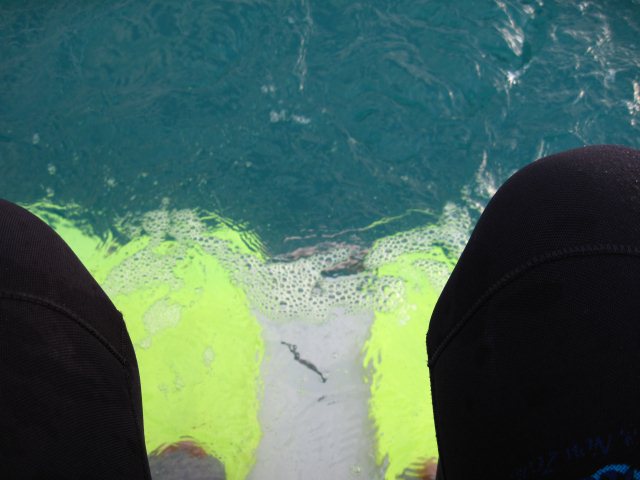
The experience was everything we wanted it to be. Jill was the one that really pushed for us to do this but I ended up enjoying it a lot too. When we were about to go back into the water for the second time, we sat on the back of the boat with our legs practically in the water. The klaxon sounded letting us know we could go in, I was so excited that I went straight towards the dolphins and about 10 seconds passed before I realised I didn’t even put my snorkel in! Jill enjoyed the ride back quite a bit less than me though. Yep, she got friendly with one of the buckets on board. The bucket probably wasn’t as happy to see her as she was to see the bucket. Alistair, the only other crew member onboard other than the skipper, was telling us all about the dusky dolphins we were swimming with. Their lives, how they can swim so deep without having the same issues as scuba divers (they hold their breath so don’t have to worry about the gas in their lungs expanding as they return to the surface – there is no air in their lungs when they return to the surface), all sorts of stuff about them. I thought it was interesting that male dolphins don’t even recognise their own offspring. It’s also cool that they can turn off half their brain at a time. They don’t float if they go prone so have to be moving all the time. They still need to sleep and rest their brain though so have evolved to support this unusual ability. When they sleep, half of their brain stays awake to control swimming, respiratory systems etc. as the other half is asleep. After that side of the brain has been sufficiently rested, the dolphin will swap and rest the other side. Whales also need to do this.

It was a great day out. Though overall, the seal tour may have been better value just because we got to spend more time with them. It helped that they were much lazier than the dolphins.

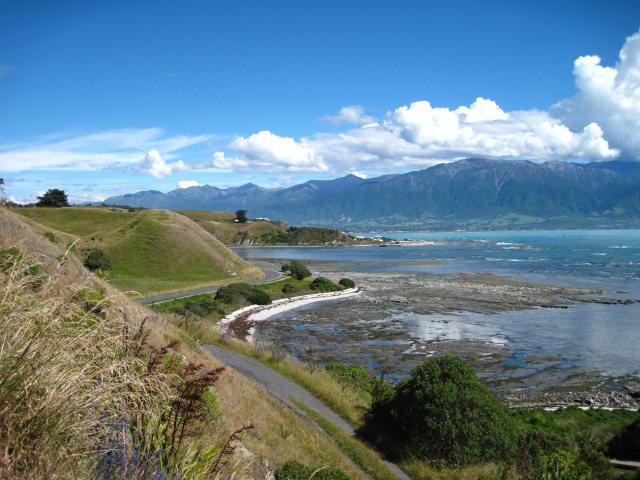
When we were done with the dolphin swim, we headed back to our campsite and got cleaned up. We had something else planned for today too, the Kaikoura Peninsula Walkway. This stunning 3 hour walk took us all the way around Kaikoura’s astoundingly beautiful peninsula. It defies description so I won’t try to express what I saw with words, the pictures speak for themselves anyway. The walkway took us up steep, man-made slopes constructed from concrete, huge swathes of New Zealand farmland (cows and all), and around massive hills, high up on the Kaikoura cliffs. The views we were treated to were among the best I’ve ever seen. It’s difficult to say they were the absolute best, there’s just too much beauty in this world, but they were way up there. Kaikoura is a place that keeps giving and giving. It really is the nicest place I’ve ever seen.

Mount Doom!

We left Waitomo for Tongariro National Park. It was a 2 and a half hour drive getting there. The drive was nice and the park was lovely but it wasn’t the reason we journeyed there. Mount Doom. The fire and brimstone seen during the finale of The Lord of the Rings films all came from Mount Doom. The mountain itself, Mount Doom, is part of the National Park! More accurately, Mount Doom is known as Mt. Ngauruhoe, 2291 metres above sea level. Jill had heard about this great path called the Tongariro Alpine Crossing, a 7 hour hike that included Mount Doom (I’m going to call it that instead of its actual name because it sounds way cooler) among its scenic detours. The only problem with it was that the hike was not a loop, its end point was several kilometres from the starting point so we’d have to catch a bus back to our car. Jill had another idea that I was instantly on board with though. What she suggested was that we start the Tongariro Crossing but instead of finishing it, we break off from the path and head towards Mount Doom, climb it and then go back the way we came to our car. Oh Yes! Mount Doom here we come!

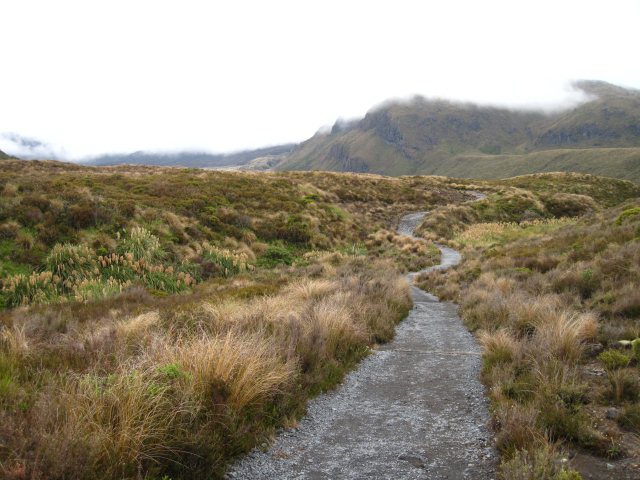
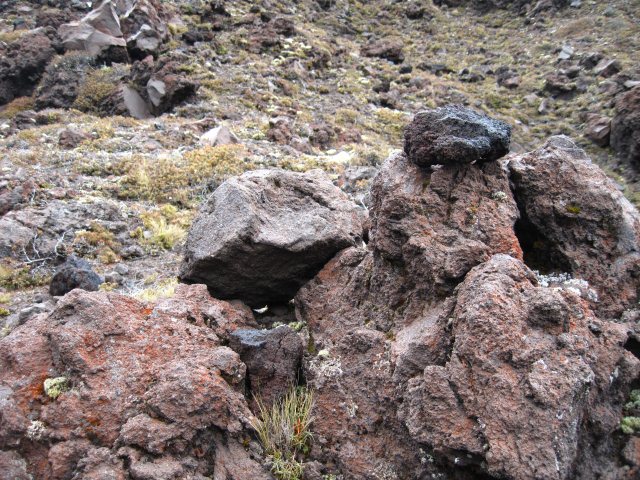
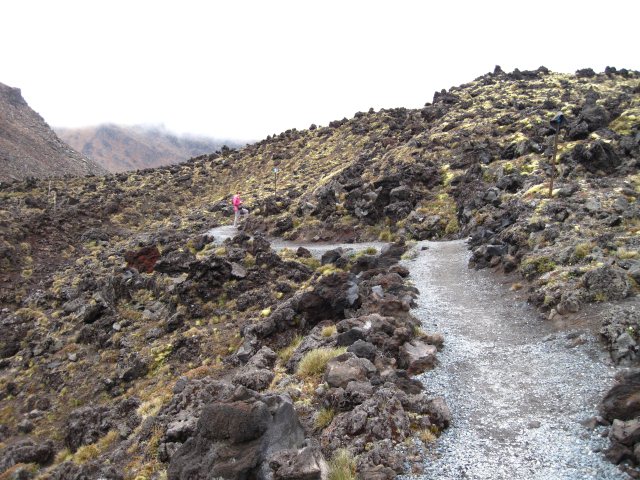
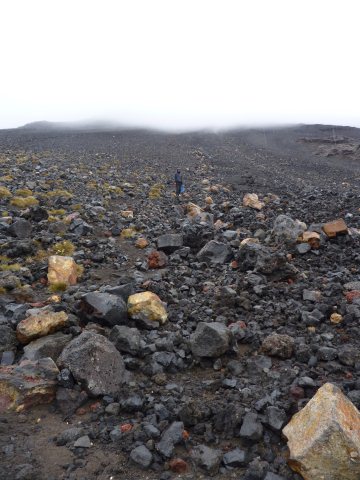
The path up there was one of the most strenuous hikes I’ve done in a long time. I count it up there with the Inca trail in Peru and climbing Mt. Fuji in Japan. My whole body ached for days after it was done. And it was only the beginning. Soon after setting off, we passed beautiful rolling hills engulfed in mist and fog and quaint little streams. There was an instantly recognisable charm to everything we were seeing. This was Lord of the Rings territory and it was stunning. Even the rock formations were beautiful. The first major feature we came across was the Soda Springs. They were basically a collection of small pools but were being fed by a waterfall. It was pretty cool and the walk to get there (a minor detour from the path to Mount Doom), was interesting because I had to avoid the myriad streams coming off the pools. It was fun but Jill didn’t come. We’d been hiking for an hour or two by this point and Jill was getting pretty tired, she didn’t fancy the detour so just waited for me to come back. There was a lot of hard graft on this hike. Many steep, uneven, rocky climbs awaited us. We’d done a fair few of them already but we still had our energy and the benefit of an oxygen rich environment. I wasn’t that tired, not yet anyway. The soil we were walking on started off looking relatively normal, it felt sort of like dry mud but with more particulants. But this was an active volcano we were on (this being Mount Doom, I wouldn’t have had it any other way!) so the types of rock and soil we were seeing changed as we got closer to the base of the mountain. There were all sorts of dark igneous and metamorphic rocks around, huge amounts of black volcanic ash around too. There was actually a sign further up the mountain that said that all of the rocks and ash currently on the surface of the volcano were created during an eruption in 1975. Throughout the day, pretty much from the moment we left our van, there was a slow but steady rainfall lightly showering down on us. It didn’t bother us at first, it was actually quite nice since it was keeping us cool but as the day wore on it gradually picked up. It only really became a problem after lunch but by that point it was a pretty big problem. The path leading to Mount Doom was beating me down by attrition, it was death by a thousand cuts. Mount Doom itself though was just fucking savage. At no point during the climb did I think I couldn’t make it like Jill so pessimistically did about herself but it was sapping my energy like nothing else. I had to slow down to a snail’s pace to keep going but keep going I did. And I made sure Jill kept going too. By the time Jill suggested we stop for lunch I was feeling pretty weak, a little light headed too. Altitude sickness is not my friend. But after I ate something, I felt like I could do anything! It was like I had the strength and energy of an ox! This was definitely a good thing because I was going to need it. We’d been climbing for three hours already and both became a little demoralised when we saw that we hadn’t even reached the tough part yet. Compared to what we’d done already, the next bit looked like it was practically vertical. It was a very good thing I felt thoroughly energised, it gave me the mental strength I needed to go on. But back to the big problem. The rain had been gradually picking up all day but while we were eating it changed quite noticeably. We were getting soaked and there was another 3 hours to go on the toughest terrain of the whole hike. The volcanic ash was mixing with the water and slowly becoming like slippery mud, the rain wasn’t helping the grip provided by the rocks either. And when combined with the wind, had left us seriously chilled, Jill could barely feel her fingers any more. I kept looking up and reassessing the worsening conditions. After lunch, Jill was constantly saying we should turn back. I kept reassessing the conditions. I didn’t want to admit defeat but in my heart I knew that it was too dangerous to continue in rain like this. The low-lying clouds and fog were so thick that they were seriously obscuring our visibility. There were times as we were climbing that we couldn’t even see the path back down. This was not good. In the end we made a respectable effort, we were about 30 minutes from the summit but we didn’t make it to the top. With nobody else out there though it was just too risky. It would have been reckless to continue. I’m happy though, I’ve seen all of Mount Doom’s menace up close and personal and for all intents and purposes saw everything it had to offer. It’s a shame about the weather that day but it couldn’t have been helped. Despite becoming progressively more and more wet as we descended (it carried on raining for about 20 hours after we left), I think I appreciated the surrounding scenery more on the way down than I did on the way up. The mountains around us were truly beautiful. Beautiful in a way that I hadn’t seen before. I’ve been in environments like this on other hikes but New Zealand has an uncanny ability to constantly amaze and surprise me. The mountains around us were stunning and the way the wispy clouds were moving around them lent them an ethereal, otherworldly quality. There were huge mounds of snow on some of the other mountains, a stark contrast to the hotbed of volcanic activity that we were currently standing on. The rivers, the streams, small waterfalls, the hills, grass, plants, rocks, the clouds, even the rain and wind. It all came together to create an incredible, unique picture. Even though we didn’t make it to the top, I’m so glad we went. It was amazing and now I’m even MORE excited to do the Routeburn Track.