Ice Climbing in Jackson (Texaco)

I do complain about America’s numerous failings often but can’t deny that the country’s natural wonder and in particular its geographic diversity is probably second to none. Jill and I both meticulously researched Boston, the wider state of Massachusetts and even the states neigbouring Massachusetts prior to moving here in 2013 but we were both still caught off guard by the degree of variation in New England’s stunning natural landscapes and the wealth of outdoor activities on offer. The biggest (and most pleasant) surprise was the fact that central New Hampshire, just a two hour drive North from where we’d be living, is host to some of the best ice climbing that can be found anywhere in the world. With my (relatively) new found love of the sport, I was ecstatic.

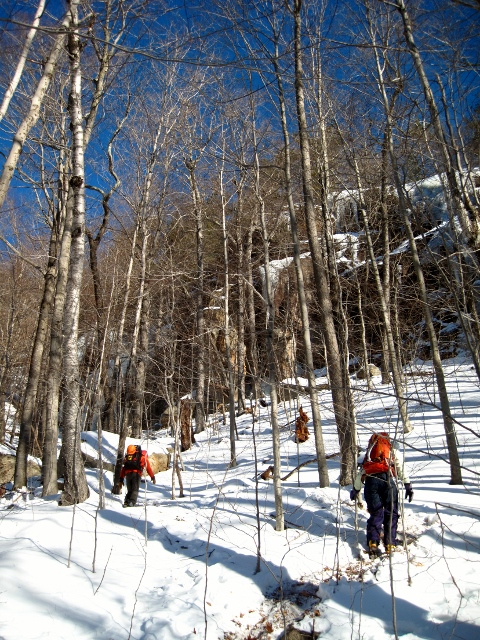
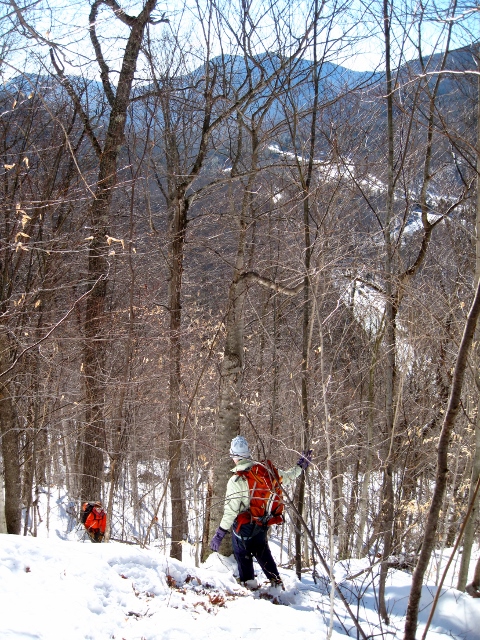
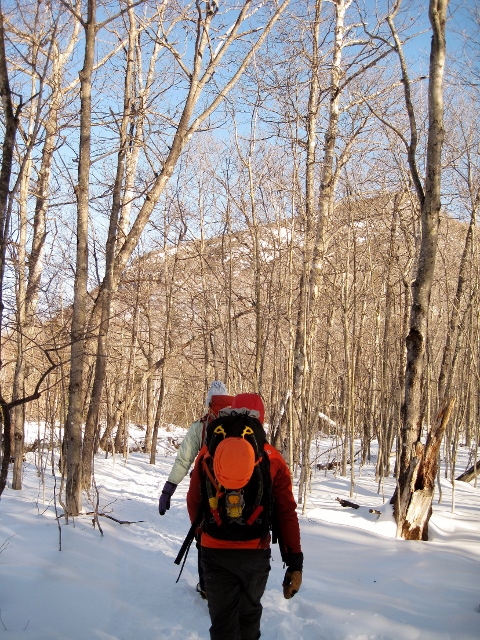
We picked the same mountain guiding company as last time. Synott Mountain Guides served us very well in 2014 (Jill’s puncture wound notwithstanding – refer to last year’s ice climbing entry for details), and there was no reason to think they’d steer us wrong this time. They had moved to a new location since we were last here, one that was much easier to find. In the car park we loaded up on energy for the day by way of the delicious breakfast burritos that our friends from Glenn Oaks had packed for us. When booking the B&B, Jill had mentioned how much I loved the burritos last year so this year, we got two each! (Along with a selection of other goodies). Inside, we met our guide, Nick Aiello and got started picking out our gear. We’d later learn that though Nick is an accomplished climber, having summited Mt. Denali several times, he isn’t quite as skilled as our guide from last year, Paul Cormier. What Nick lacked in climbing experience though (he’s only 25), he more than made up for with personality. After helping load our car full of gear, Nick jumped in with us for the 15 minute drive to Jackson. It looked like there were a few other groups of climbers heading to the same area as us. Nick said on the hike there that it’s called “Texaco” (last year’s was called “Lost in the Woods”). He also told us as we were starting, that the hike would take about 15 minutes. That turned out to be a wholly inaccurate assessment. It actually took over an hour but that wasn’t really Nick’s fault. Snow had been falling for several hours prior to our arrival and coupled with the extreme temperature (it was around -18 degrees Celsius until around midday then warmed up to a balmy -10 for the rest of the day’s climbing), the hiking conditions were not favourable.

IMG_7485 (480x640)

IMG_7487 (480x640)

IMG_7489 (640x480)

Norwegians are said to have at least 50 different words for snow and after nearly two years of living through the harsh, New England winter it’s easy to see why. Snow can vary greatly in texture, consistency, density, stability and a wide range of other factors. Low temperatures like today’s give rise to light, powdery snow that while ideal for making snowmen, having snowball fights and skiing, does not make for the best hiking, especially when the majority of that hiking is uphill. Many layers of loosely connected snow had accumulated on the mountainside that lay before us and we were already tired from the strenuous exercise of getting to that point. With the snow providing so much resistance to movement, every step was a struggle, a hard fought battle for progress but when the gradient of the hike shifted dramatically, we were facing a losing proposition. Previously, the terrain was largely level with thin, sparsely distributed trees punctuating the serene, snow covered landscape. We had to move through the layers of snow but the frozen streams, ambient sounds of the winter forest and crisp winter air lent the unbroken white expanse of our surroundings a sense of calm, perhaps eerily so. That calm was shattered when we began moving upward. Even when digging each foot into the snow for extra purchase, the ascent was an exercise in frustration. I’d regularly make good progress only for the top layers of snow to come loose and send me back down from where I came. The only relief came from some of the larger, stronger trees that grew on the mountain and acted as breakers to my downward slide. I knew that once I made it to the next tree, it would stop me sliding back down any further than where it stood. Eventually it got to the point where forward movement was yielding diminishing returns. Nick saw this and suggested that we stop to put on our crampons. The game changed entirely from that point on. I forced my first crampon into the snow and felt a stability that I hadn’t known since last year. With each successive placement of my foot I was able to rapidly ascend the steep inclines that had caused such dismay only minutes earlier. There was no longer a need for careful consideration of the environment. Where previously I’d been assessing a multitude of factors before making even small movements and constantly adjusting my route based on changing conditions, now I was able to move with impunity. I was freed from the confines of my environment and able to move up the mountain at a speed I had not considered possible. Jill followed shortly behind.

IMG_7496 (640x480)

IMG_7498 (640x480)

IMG_7504 (480x640)

IMG_7509 (480x640)

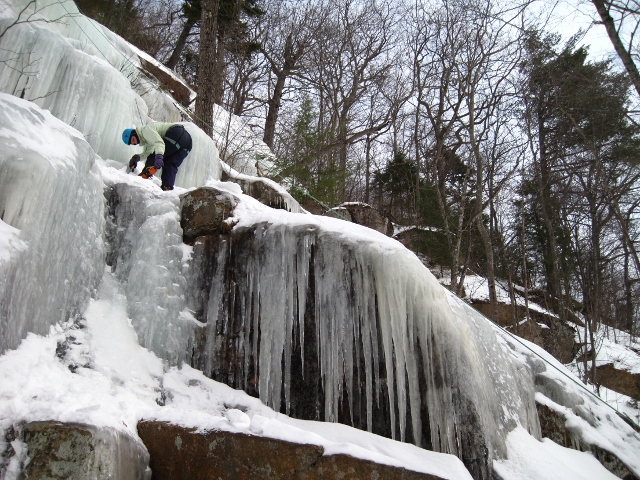
Nick was leading us to a series of ice walls that would present a gentle challenge on which to start the day’s climbing. Unfortunately though, the thick snow at our destination made our arduous hike there redundant. The climb ended on a shallow angled section that was now covered with snow. Nick had been planning to lower us down so that we could climb back up to the shallow part of the ice but with the snow there it was no longer worth it. We hiked back down and around to where the ice walls started. We went knowing that we wouldn’t have to hike back up later. Nick found a spot for us to set down our bags and took the opportunity to remind us of some basic techniques. Throughout the day, he commented that we should keep our heels low when moving up an ice flow, keep our feet level, our ice tools close together and placed roughly head width apart and that when attempting to place an ice tool higher, you should first bring your hips up and press them toward the ice. He also talked about the dangers of ice dams (how ice can trap a high pressure flow of water that would spell disaster if released) and ice mushrooms (when snow builds up over an ice column creating a mushroom that is very unstable). Nick mentioned the strength of various types of climbing rope knots too. It was all useful information that will serve me well in the years to come.

When Nick had finished setting up the rope system for the first climb I stepped up and volunteered to go first. The ice on this first climb had formed evenly and the ascent was at a very manageable angle of around 80 degrees. I remembered my past experience and made short work of it. My crampons went into the 30 metre high wall of ice firmly and shoulder width apart, their lack of movement while in the ice giving me complete confidence in my chosen placements. I kept my heels low when removing each crampon to move higher and surveyed the environment quickly when considering my options for the ice tools. Movement felt effortless and natural and my climbing form was as honed as it had become during the final climb of 2014. I abseiled down once I reached the top. Jill did well on this climb as well though she wasn’t as fast or precise as I was.

IMG_7536 (480x640)

IMG_7545 (640x480)

The next climb, to the left of the one we’d just done, was much more interesting. It featured a series of cascades and bulges in the ice that set it up as a three-tiered climb. Each tier was shaped differently than the one before and the angles of the ice changed throughout. There was a large, thin slab of rock protruding vertically from the first section making the choice of an ascent route difficult and to complicate matters further, the types of ice seemed to be different in each of the three cascades. This one would be a challenge. Again, I was the first one up. I tentatively placed my first crampon in the ice to get a feel for it. It was stable but it felt different than on the first wall. I’d have to be more careful here. I proceeded upward remembering Nick’s advice that I should always be able to see my feet when making a push to get over a ledge. I grew increasingly confident with each successive placement and got faster as I ascended. Upward movement of an ice tool was always followed by one crampon and then the other, with me being sure to keep my feet level for added stability. I made it over the first edge with a burst of strength and collected my breath before tackling the next cascade. I lost my footing once or twice but never felt my harness brace to support my weight; I was climbing under my own steam the whole way. I breathed a sigh of relief after the second edge and shortly afterward, had climbed the third as well. The ice walls in each of the three cascades though short, were completely vertical so abseiling down them was fun. I had expected Jill to handle this climb with similar ease but she made a much harder time of it. This was due in part to her left crampon coming loose while she climbed but she impressively managed to secure it at the top of the first cascade. No, Jill’s difficulty was because she forgot to keep an eye on her feet, with her ungraceful attempts at pulling herself up and over the edges of ice being the unfortunate result. She made it in the end but it could have been much easier.

IMG_7559 (480x640)

IMG_7575 (480x640)

IMG_7578 (640x480)

IMG_7596 (640x480)

At the bottom of the second climb, my fingertips felt very cold just as they had at the bottom of the first. This time was worse though. Placing the ice tools firmly during each ascent meant holding my arms far above my head for sustained periods, impeding blood flow. My fingertips had become SO cold that the sensation of returning warmth was painful. I’d only experienced this feeling once before in my entire life; at Niagara Falls with Jill in 2011. Nick encouraged me to “windmill” my arms to speed up the recovery but it wasn’t good. Coupled with my dehydration (the water in the exposed drinking tube of my water bladder had frozen making the entire bladder useless), the sharp pain in my hands made me feel as though I needed to throw up. I wasn’t going to let the cold beat me. I summoned a resolve that had lay dormant for years, waiting deep within for a time at which it would be needed. The time was now. I rode the wave of gradually subsiding discomfort as the warmth returned to my fingers. When it was over I walked over to Nick and asked if I could drink some of his water. Thankfully, my water bladder itself had not frozen so Jill was able to top up Nick’s supply when we’d both had a drink. The pain of returning warmth had also affected Jill but with her it struck in the feet. Our problems with the cold and Jill’s difficulty with the second climb had left us both demoralised. We weren’t excited at the prospect of further climbing but had a bit of time before we’d need to do it again. The break helped.

IMG_7615 (640x480)

After Nick had taken down our ropes we walked back in the direction that we’d come from. The area was busy, Nick left Jill and me alone so that he could scout out some available ice flows. The area in which we waited was much more visually striking than the one we’d just left. Dramatic blue-white ice flows came down over the edges of the cliffs and formed monolithic structures that stood in stark contrast to the underlying rock. There were almost ten of them in all, getting gradually shorter from left to right. Jill and I watched the climbers’ attempts as we waited, slowing building our appetites to get back out onto the ice. When Nick came back we were ready to go. We walked past all of the ice flows and around a corner to the left. We were met with yet more flows, equally dramatic as the ones we’d just seen but fewer in number. These got shorter from left to right as well. Nick set up our ropes on the rightmost pair of flows. Each of them was less than 10 metres in length but featured by far the most technical climbing either Jill or I would attempt today. Nick commented that our two ice flows included the most difficult climbing of any of the flows, regardless of length. On the way there, we ran in to Paul, our guide from last year. I would say it’s a small world but I guess it’s not that unusual for us to have run into him here. He was climbing on the flow immediately to the left of ours and watching him climb, I was reminded immediately of his astounding ability. It was nice catching up with him briefly and seeing him in his element.

IMG_7620 (640x480)

IMG_7623 (640x480)

Back at our ice flows, despite me being eager to get back to climbing, my previous activities had left me tired. I attempted an ascent of the bigger of the two flows but realised early on that it wouldn’t end well. I moved over to the second flow and started up. The ice was very awkward to climb. Its contours and textures changed from one section to the next making a consistent approach impossible. I constantly had to adjust my tactics and revaluate my position in light of the changing climbing environment. At one point I slipped entirely, losing my footing before I had a chance to firmly affix either one of my ice tools in the wall. I swung around to the right almost going all the way around to the back of the flow. On the way, I knocked several icicles off an overhang in the cliff, sending them spiralling downward. They shattered like glass on the hard rock below. I hung there for a moment as the harness supported my weight, and dropped my arms, letting them dangle. I needed to regain some blood flow and hopefully, some strength. After a moment, I readied myself for a second attempt and this time, with a more measured approach, succeeded. I breathed a deep sigh of relief. A feeling bordering euphoria overcame me as I stood at the top of that cold, icy cliff. Jill made the climb straight after I did and was more impressive with her ascent. She slipped off at one point too losing about 6 feet in the process but didn’t swing around to the side like I did. Overall, she was a bit quicker in climbing the third ice flow. We started gathering our gear and got ourselves ready to leave. The sky was darkening and the hike back went quickly. I talked with Nick about all manner of things as we walked: interesting films from 2014, modern figures that will be remembered fondly by history, the future of space travel, climbing Mt. Denali. All sorts of things. The sun set during the drive back to the Synott Mountain Guides building and it was nearly pitch-black after Jill and I said our goodbyes to Nick.

IMG_7640 (480x640)

We were hungry after getting back but both knew we wouldn’t leave the B&B if we returned now. One of the things Nick had mentioned during the day was which restaurants in the area are good. We picked one of them (Delaney’s) and headed straight there. It was busy; there was a wait of over an hour for a table but pretty soon after we arrived two seats opened up at the bar. We decided to skip the wait and just eat at the bar. We each had a burger and split an order of fried chicken as an appetizer. The food wasn’t bad but it wouldn’t be winning any awards.

After getting back to the B&B, I was able to take my shoes and socks off and have a look at my right toe. It was causing me discomfort earlier but I wasn’t sure why. The nail on my big toe did not look good at all. Jill thought it was ready to fall off, I thought it would heal as it’s done in the past. Regardless of what would happen in the coming weeks though, I knew I was in pain now.

We went to sleep pretty early after watching some TV.
Waterfall Abseiling in Lincoln

Abseiling down a waterfall is a fairly unusual thing to be involved with but nevertheless, that’s what I recently found myself doing in New Hampshire.

Jill and I had to hike to get to the waterfall and realised quickly that the trail must be a popular one. It’s rare to see even a single park ranger at the start of a trail but you get it sometimes if people often get lost at a given trail or regularly have questions about it. This one had four. That’s right. Four. It must have been boring standing around all day but at least they had each other for company! We got started on the hike. Jill and I had packed much more than anyone else had but we’re both of the mind that it’s better to be safe than sorry, so didn’t regret the decision to throw in as many dry clothes as we did. I had to carry my camera as well though as it didn’t fit in any of my pockets. It might normally have fit but Jill wisely suggested I bring along the waterproof case I use when scuba diving. On top of that, the guides had brought along three ropes we’d use during the day and had asked for volunteers to carry them on the hike. I was the first to put my hand forward. Between the backpack, the rope and the waterproof camera case I was awkwardly holding, I had a fair bit to concentrate on other than the wet, rocky terrain we were navigating.

Despite the popularity of this particular trail (we were passed by other hikers at least 4 or 5 times), the hike was beautiful. It was one of the nicer ones I’ve been on while in the US. The trail was fairly narrow so the 12 of us (10 abseilers and 2 guides) walked in a line as we journeyed deeper in to the forest. The trail was an 8 mile loop but we’d only need to go about 1 and half miles in to reach the waterfall. The trees on either side of the trail were thick, more densely packed than they normally are and grasses could be seen on the forest surface along with all manner of other plants and undergrowth. Rocks and boulders were covered by a variety of mosses and running water could be heard off in the distance. In many places, the undulating forest path we followed was soft underfoot, pleasingly springing back under the weight of a sturdy boot. In others, massive rocks and boulders formed the trail on which we walked. Their scale was only hinted at as mud and forest shrubs meant the rocks went largely unseen.

IMG_6873 (480x640)

We crossed a small wooden bridge not long into the hike. It had a railing on one side but not the other. A river flowed beneath, maybe 20 feet down. Shortly afterwards we came to the first of two small clearings in the forest where a water crossing was called for but there was no bridge to help. Most of the group made short work of the river, hopping from rock to rock, minding the water as they went. Looking back, it’s funny how gingerly most of us proceeded with that first crossing. The water was only ankle deep; even if someone had fallen in to it face first it would have been a mere drop in the ocean compared to how wet we would all be later. It doesn’t even bear comparison; at the waterfall, the volume of water passing through every second was staggering, here, the water was barely flowing at all.

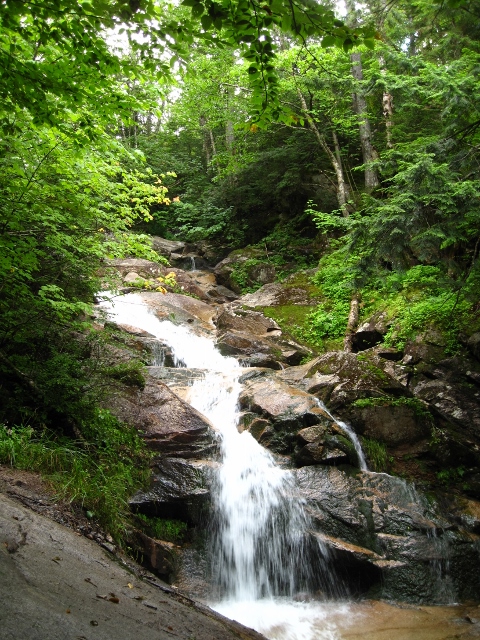
That first water crossing led us to a new part of the forest with an associated gain in elevation. At various points, the roots of large trees had become part of the fabric the trail, interwoven with mud, rock and boulder. The ancient roots helped with traction on some steeper parts of the ascent, that which followed the first water crossing included. As we climbed, with dense forest to our right and a sharp drop to the left, we could see a small waterfall nearby. It was not even a taste of what lay ahead but I found it soothing and stood there for a moment, letting the sounds of the forest wash over me. We continued, up and down, gains in elevation followed by losses. Maybe 20 minutes later, we came to another uphill section but this time, rather than being the varied, dynamic forest terrain we’d become accustomed to, it was all rock. There was forest to the left and another small waterfall off to the right. Proximity to the waterfall and the many adjacent streams had given the rock a thin sheen of water with small puddles collecting in its dips and recesses. My hiking boots afforded me a good deal of grip but even with that, I could tell it was slippery and was not looking forward to the journey back when we’d be going downhill on the very same rocks.

IMG_6876 (480x640)

More hiking led to a second clearing in the forest. A river widened but there was no bridge to help cross so we need to jump from rock to rock and where the rocks were too far apart, use floating logs instead. This river wasn’t much deeper than the first (it was probably the same one) but since the distance that had to be covered was larger and unstable floating logs needed to be used, crossing it was certainly more of a challenge. Large slippery rocks and awkwardly meandering forest paths followed. In the short part of the 8 mile trail we saw, a large degree of variation could be seen in the environments, terrain and hiking conditions. It was quite the journey and I almost didn’t realise what I was looking at when the final waterfall came into view. The big one.

IMG_6884 (480x640)

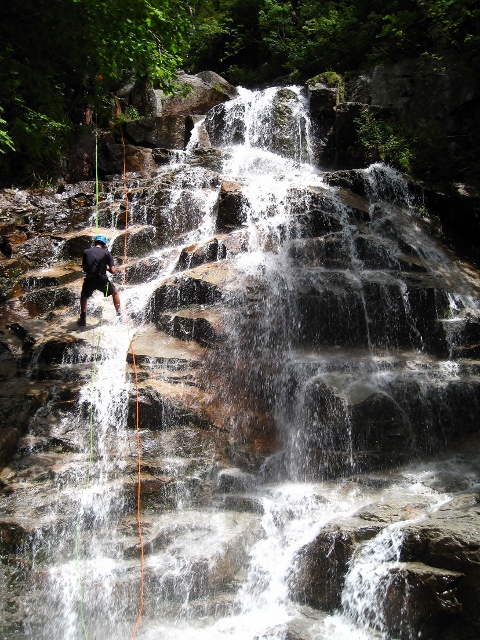
It was 100 feet high and fed a wide forest river below. Water rushed violently off its edge down the sharp, jagged rocks that formed its face, crashing with force into the pool below. I surveyed my surroundings noting the tall trees to the right of the river and the mountain of loosely collected rocks on the left. After over an hour hiking, I was so overcome with excitement to finally be here that it took me a minute to realise how cold I felt standing there. A fine mist surrounded the waterfall, settling on all that stood before it, the power of the falling water was generating currents in the air, driving it outward away from the falls, disturbing nearby plants and greenery. The change in atmospheric pressure was so dramatic that it felt as though I’d stepped into an invisible bubble that surrounded the waterfall. The temperature seemed as though it had dropped by at least 5 degrees. I admired the waterfall, taking pictures as others listened to our guide give instructions on how to secure their ropes and caribiners. I joined them before he got to anything important then continued taking pictures and talking with the group. I ended up being the third person up.

The large, loosely collected rocks to the left had wildly varying sizes and were the only way to the top of the waterfall. It was like having a natural climbing frame in the middle of the forest. It was possible to climb up without using one’s hands but with the sharp rocks below and sudden drop to the right, there wasn’t any sense in doing so. I would have loved being here as a child.

Two ropes had been set up at the top of the waterfall, once an abseiler was done with one, the next person would start going down on the other. One of the guides set up my ropes as I waited for person two to finish their descent. Both guides were at the top belaying abseilers all day. We each had our own ropes and could control our rate of descent but they’d set up the belay just in case. The guide gave me my final instructions as the abseiler below was untying her ropes and with that, I gave one final look over my shoulder, planted my feet firmly on the rocks at the top of the waterfall, leaned back and felt the harness shift as it braced to support my weight.

As I descended, each placement of my foot was a calculated assessment based on dozens of split second decisions; the size of the rock, its gradient, the rate of water flow over the rock, coefficient of friction, amount of moss, amount of algae, how many edges does the rock have? How sharp are those edges? Which way is the water flowing over the rock? And so on. I descended sure footedly, evaluating my path and adjusting my route based on changing conditions. Others slipped at least once but I never did. I crossed the path of the falling water maybe 6 or 7 steps into the descent; it came into contact with my skin but despite the fact that I knew it was cold and that I had felt such a chill at the bottom, before I was even near the water, I didn’t feel cold. I was concentrating too much to be cold. After I’d been at it for a minute or so, my mind though still deeply engaged, had gotten used to the business of considering foot placements and evaluating the environment; it freed up enough capacity for me to truly enjoy what I was doing and fuck, it was exhilarating! The sound of the water was immense; it was soaking my boots, lower legs and forearms. This is around the point where I felt how cold the water was. I continued down, looking around often, being sure to let the stunning surroundings soak in. Close to the bottom, I reached a point where the rocks stuck out further than they had before. Getting past was no problem but because of the overhang, there was a focused torrent of water passing directly beneath. The water was falling exactly where I wanted to go and though I could have gone around slightly, avoiding most of the water, I thought “fuck it, I’m going through!” It was easily the most sudden drop in temperature my body has ever experienced. That water was fucking cold! Colder than even my experience when first seeing the falls had suggested. If I stood under that torrent for a prolonged period of time, it wouldn’t have taken long for it to cause damage to my body. Of that I’m certain. It was only a few more foot placements to the bottom and the pool being fed by the waterfall. The pool of freezing water was up past my ankles but I didn’t have any option other than to stand in it while untying my ropes. The group was very supportive and just as they’d done for the first two abseilers, I was cheered and applauded as I waded through the water back to dry land.

IMG_6965 (480x640)

IMG_6968 (640x480)

I should have felt really cold; I was drenched in freezing water and the cold air coming off the falls was blowing in our direction. But strangely, I felt fine. My choice of clothing (t-shirt and shorts made of thin, breathable fabrics) worked very well. The clothes dried quickly and though I felt the occasional chill, was mostly ok. Everyone else was shivering, going for their jackets or sweaters but there I was, just standing in my shorts and t-shirt. One thing that was terrible though, is how much water was in my shoes. It felt as though I was walking around with bags of water sealed around my ankles. It sloshed around with every step and the motion of the water was quite off-putting. I took my shoes off and the amount of water that came out could easily have filled two cups of water. Jill and I had already eaten lunch so we just hung around talking, with each other and the rest of the group. Jill went 6th or 7th and made the descent look just as easy as I did. She didn’t slip once and was just as quick as I was. When it cycled back around to the beginning, 5 members of the group opted to go a second time (myself included) and when it cycled around once again, 3 members of the group (myself included), went for a 3rd and final descent. The 5 members of the group all improved with their second attempt, either slipping less or making the descent in less time and the three of us that did it a third time all felt like pros by the end. I was the last one to come down and brought the ropes over when I left the pool. Everyone was dried off and ready to go so I quickly toweled off, changed my top and put on my waterproof NorthFace jacket. I wouldn’t need my camera on the way back so put it into my newly available jacket pocket. I didn’t have any rope this time either as someone else volunteered to take it so was much more comfortable hiking through the forest this time. The wet rocky obstacles I noted on the way in weren’t as much of a challenge on the way out as I’d thought they would be and we were back to the starting point of the hike about an hour and 15 minutes later. After giving back all of the equipment (we still had our helmets and harnesses), we said our goodbyes and set off back to the B&B.

IMG_6946 (640x480)

Desserts for Cookouts

As usual, when Jas told me that his coworker was hosting a cookout, my first thought was what I could bring. Of course, I was excited to finally meet some of the people he works with, but I love having occasions to try out new recipes. Since Jas frequently brings my cupcakes to his office, he said I just had to bring them to the cookout. After checking with the hostess that dessert was ok to bring, I started thinking about cookout cupcakes.

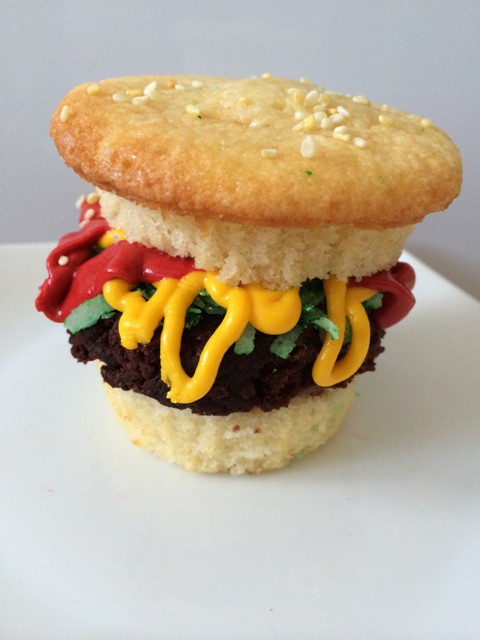
Once I scoured Pinterest for ideas, I found a few pictures of hamburger cupcakes and settled on those. I discussed (several times) with one of my friends whether the “hamburger” should be frosting or brownie. The brownie looked more authentic but I love frosting, so I didn’t want the frosting to cake ratio to be off. I finally settled on using the brownie, but hollowing out the lid of the cupcake and filling it with frosting.

First I got all my supplies ready by making one batch of butter cupcakes, and one batch of Ghirardelli brownies (my favorite boxed version!) Since I wanted the brownies to be thinner to fit better in the cupcake, I took what should have been one 8×8 pan, and spread it into two. After cutting out the brownies into circles, I ended up with 18 “hamburgers”, and lots of tasty leftover corners to snack on. Since I had 30 cupcakes, this left plenty of taste testing for those too!

After making one big batch of buttercream, divided into plain, chocolate, and two dyed red and yellow, I was ready to start. I unwrapped all the cupcakes, cut them in half and placed a brownie on a dollop of frosting on the bottom “bun”.

photo 1

Next came the lettuce (coconut dyed green) topped with ketchup and mustard frosting. Then I scooped cake out of the top “bun” and filled it with white frosting. This was mainly to have extra frosting, but if it leaked a bit, I figured it’d just look like mayonnaise. Stick the lid on top, and add a few seasame seeds, and you’ve got a hamburger cupcake!

photo 4photo 2a

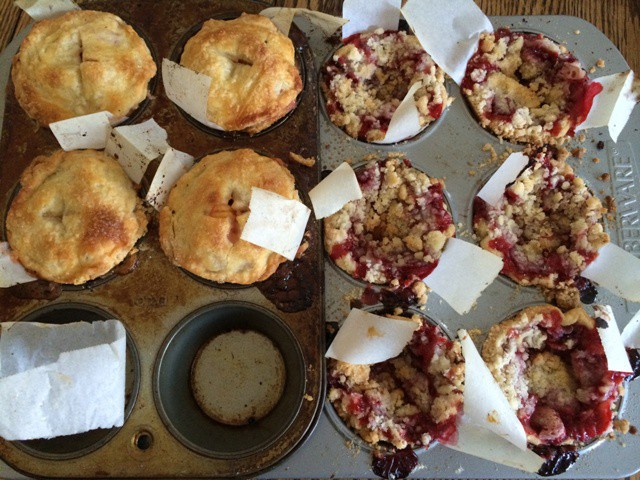
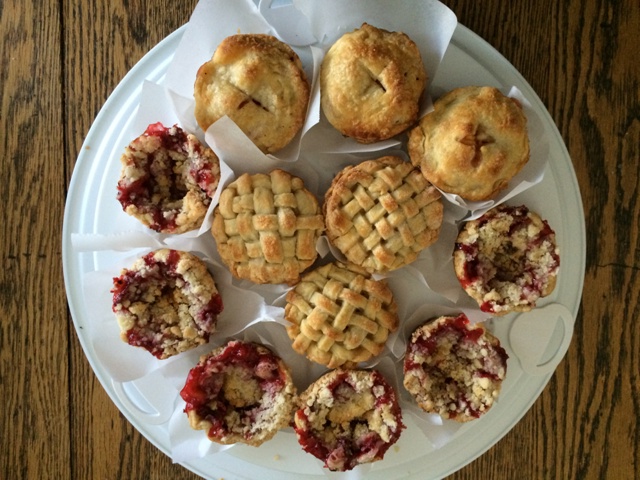
I can never bring just one thing though, so I also decided to make mini pies in a cupcake pan. I thought this would be difficult, but it was much easier than I expected, and a great way to use up leftover fruit! I had two apples, two peaches and a pint of strawberries, so I figured I’d just see how many pies I got out of that. I already have recipes for all three of those pies, so I just scaled the filling down based on how much fruit I had. I also precooked the apples so that the pie crust wouldn’t burn while the apples were still crunchy.

I saw a tip online to line the cupcake pan with strips of parchment paper, and I would highly recommend this. It made it a breeze to lift them out of the pan, and also allowed me to peak at the bottom to check if the crust was browned.

photo 2b

(Peach left, strawberry right)

I think it was a good idea as well to put a different top crust on them to help people know which pie was which. Since you don’t have to cut into them, it’s hard to tell! I loved bringing these pies along and not having to worry about needing a knife and pie lifter. I think it prompted people to eat them too since it’s less hassle then trying to find a plate. I will definitely be making mini pies again!

photo 5b

Recycling Furniture

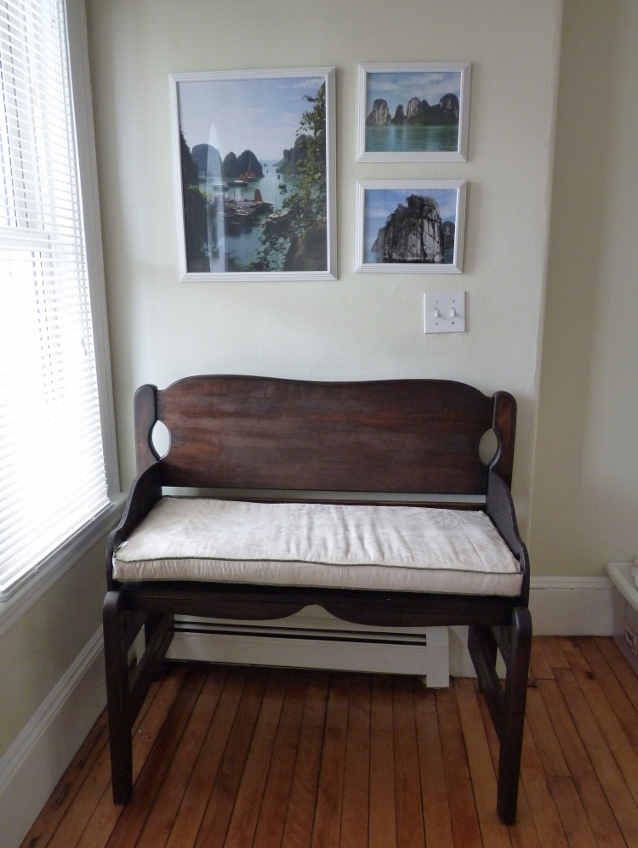
While it is now almost May, and I actually started this bench last August, I only recently made the cushion to complete it. Soon after moving into our apartment, I knew I wanted to buy something to put in our entryway. Preferably a bench and a secretary. Jas (probably wisely) suggested I not buy any furniture just to accommodate our current space when we don’t know how long we’ll be staying. So when I saw an idea on Pinterest to make a bench out of an old twin bed frame, I thought it’d be a great idea to try. Especially since I knew my mom had a few twin beds hanging around I could snag for free.

In August, Jas and I went camping with my mom and step-dad up north in Vermont. I convinced my mom to bring me one of the bed frames that I thought would work great for my plan. A few weeks later, my dad came out to Boston to visit us, and I thought it’d be a great project for the two of us! The first task for the project was to sand down the frame, because I wanted a darker wood to match our living room. This was the part of the project that I disliked the most, partially because sanders are quite loud and hard on the arm, but mostly just because it’s time consuming. I think to do the best job, we probably should have sanded the pieces more than we did, but my dad and I decided that taking off the shine of the wood was good enough for us.

After looking at the bed frame we had, we quickly realized that we couldn’t build the bench the way it was done in the example I found. They used the slat at the bottom of the headboard and footboard to lay the seat, with the top of the footboards for the arms. However, the gap on the headboard and footboard on my bed frame did not match up, and if we had cut the legs off the headboard to make them match, we’d have a child’s height bench. So after much discussion, our new plan was to cut off the curved part of the footboard, and lay the seat on top of that. Luckily I had bought a jigsaw for a different project, the circular saw I already had just wouldn’t cut it for this type of work! Off we went to Home Depot to buy wood for the seat, long screws to hold it together, and wood plugs to cover them, hopefully making our final product look more professional as a result.

P1060507 (638x850)

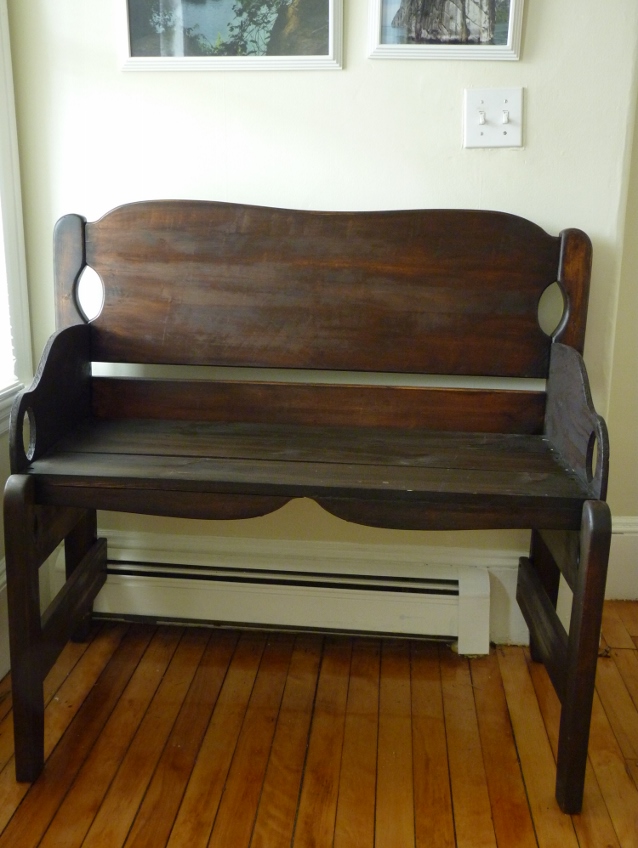
After putting the headboard and footboard together, we realized the bench looked a little silly with no arms. While it’s not the best wood, we were a bit tired of going to the Home Depot, so I drew freehand arms on a piece of particle board I already had at home. I also had the idea to use the curved bit we cut off the footboards to add a bit of decoration to the bottom of the seat. Once those were all attached, we had a bench! And sadly, it was time for my dad to go home. Which left me with the job of staining it. Needless to say, I’m a bit of a procrastinator, so I waited till the last nice weekend in October to do it outside. It was a little chilly, and slightly rained on me, but I got two coats of beautiful Kona Brown stain on the bench.

P1060510 (638x850)

Shortly thereafter, I bought pretty purple fabric, the foam and cording to make the bench cushion. Once I got the fabric home though, I realized the purple, which did match what I have in the living room, blended right into the bench. So I decided to go out and get ivory fabric instead. This took me about 5 months to get around to. In the meantime, the bench worked great all through winter as a place to put on our boots, although not quite as comfy as it could be!

P1060513 (640x480)

I finally made time to stop by the fabric store again, and lucked out by finding fabric that matched my pull-out couch for $2.99! Since I had all the supplies, I was able to get the cushion done on a Sunday afternoon. It was an easy box cushion, although I made it harder on myself by adding cording for a little decoration. I saw a post on Pinterest about wrapping the fabric around the cushion in one whole piece instead of cutting it, and that’s the idea I followed. I think that idea worked well for her because she didn’t use cording. I probably would have spent the same amount of time if I had cut strips, but oh well. I secured the back with Velcro instead of a zipper, because I didn’t want to struggle to put the foam into a 24” zipper hole. Plus, Velcro made the construction that much faster. Once it was finished, I wrapped the foam in batting for further cushioning and squeezed it into the new cover! Once it was on the bench I realized it is probably a little too big for the seat, but I like the way it looks, and it feels very nice to sit on!

P1060512 (640x480)

Maybe one day I’ll actually make my projects all in one go, but even though this took me a long time to complete, I’m very happy with how it looks in our apartment, and I can see using it in future houses. Now I just need to find a coat hook with a mirror to put in the space next to it.

P1060505 (638x850)