Snapshot of Hawaii (Big Island)

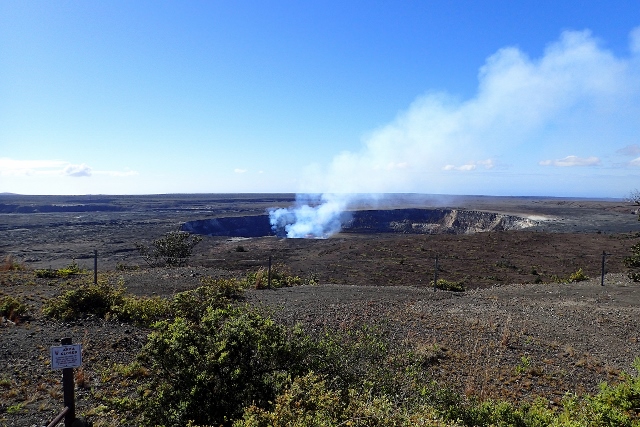
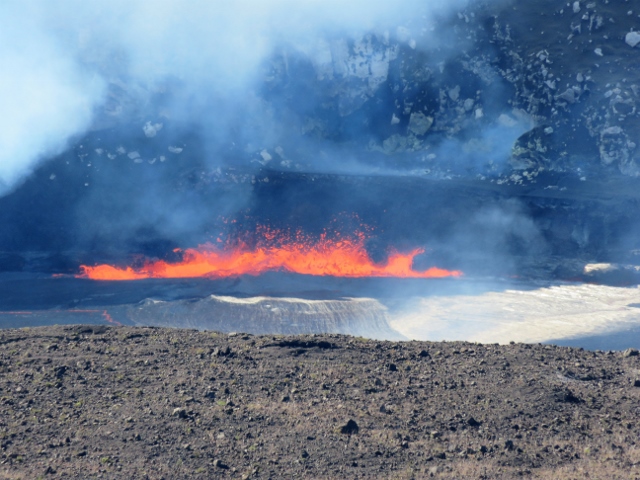
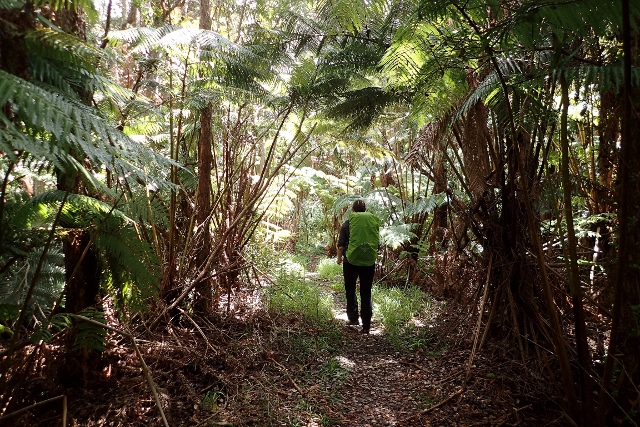
Hawaii, which I’ll refer to as Big Island to avoid confusion, is the youngest of the Hawaiian Islands and the only one that is volcanically active. Kilauea, though small compared to the other volcanoes, is the most active of the five that together form Big Island. It put on quite the show for us while we were there. The lava was so turbulent, it sloshed around, bubbled, splashed, if it wasn’t for the bright orange colour, I’d say it was behaving more like water than lava. It was so cool. I was mesmerised.

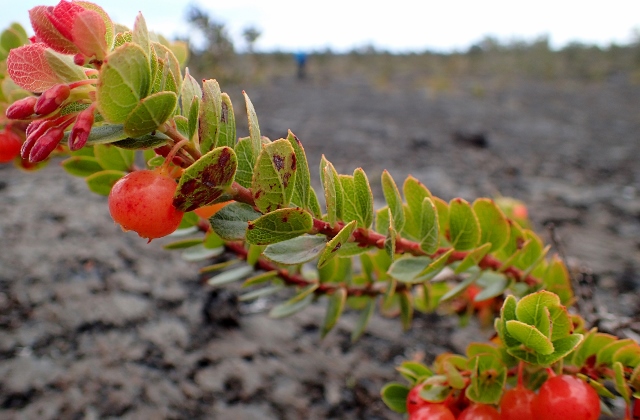
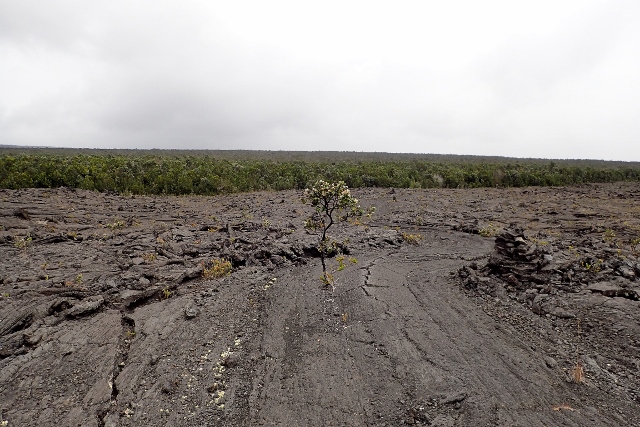
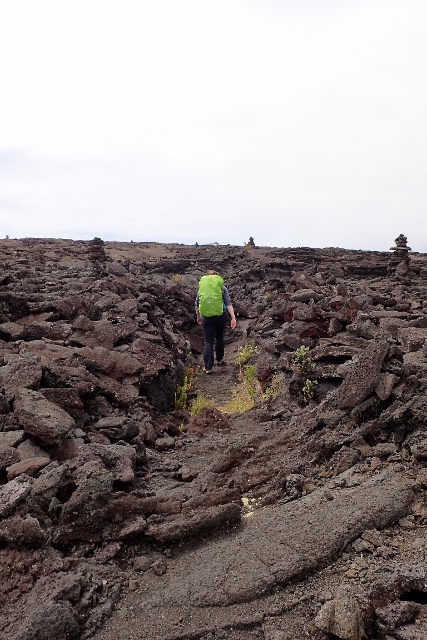
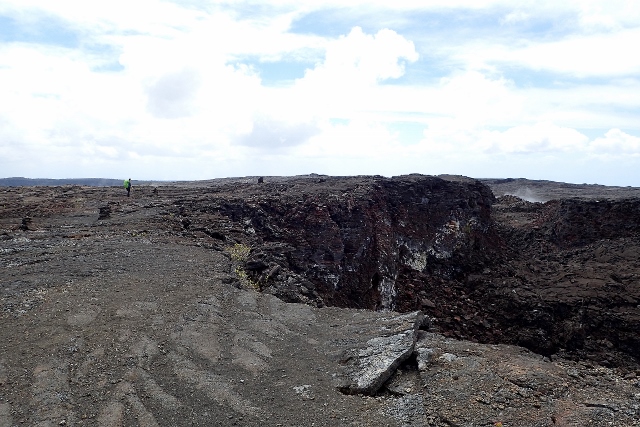
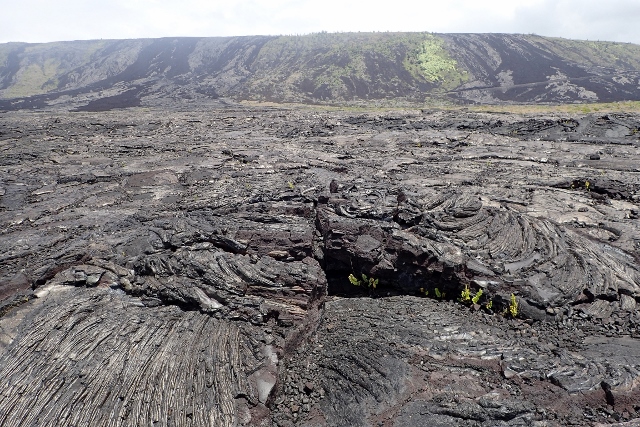
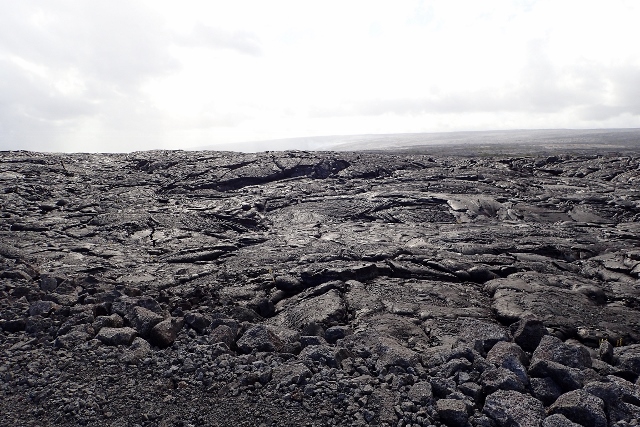
The Napau Crater Trail was a two day hike. The volcanic desert that lay before us was a vast expanse, rich with striking rock formations. The shapes, features and contours of the landscape varied dramatically; whorls, spirals, obelisks, too many forms to count, or name. Sparsely dotted desert shrubs added flourishes of colour (red, green, white), to the grey-brown tones of the surrounding area. In shaping the outward appearance of this environment, from formless magma deep within the Earth to the sharply defined structures that I could see in front of me, nature drew on a pool of infinite possibility. Here, on this ancient lava field, the realisation of nature’s geological processes seemed no less varied than the boundless potential that seeded them.

When Jill and I got our camping permit in the morning, the park ranger told us that we’d be the only ones out there. There wouldn’t be anyone else around for miles and miles. It was a little unnerving knowing this, especially when it rained at night, when we wouldn’t have been able to hear someone approaching our tent. Jill kept saying that we were going to get murdered by crazy people living out in the forest and repeatedly insisted that I sleep with my camping knife within arm’s reach.

Apart from a little mouse (possibly a rat), that kept trying to climb up onto our tent, we didn’t have any trouble. Jill was quite vigorous each time she shook him off though.

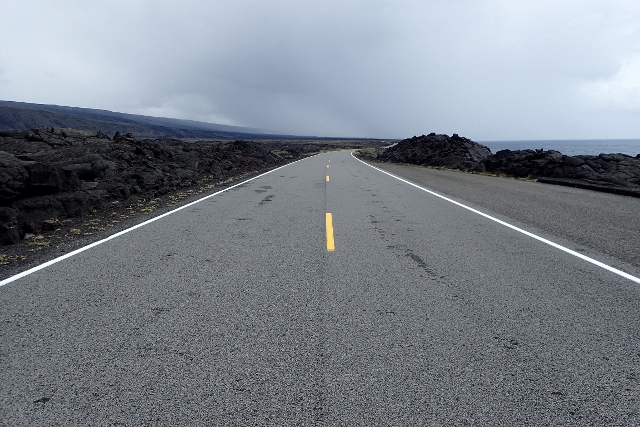
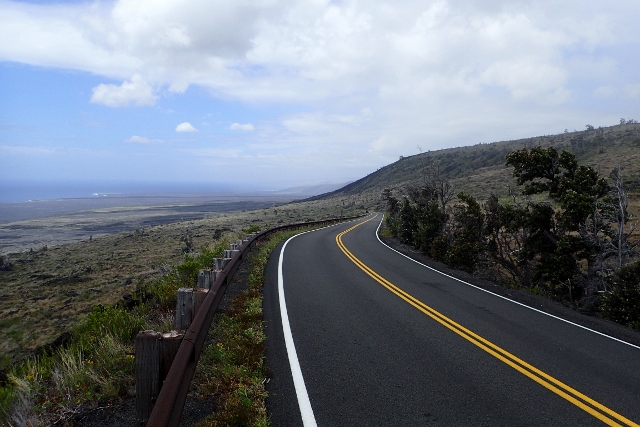
Chain of Craters Road was an absolutely stunning drive, reminiscent of both New Zealand and Mongolia (my two favourite countries outside the U.K.); verdant mountains, volcanic lava fields, unique vegetation and expansive views of the Pacific Ocean. Such a vast range of environments being represented while driving down a single, relatively short road was a rare gift. We stopped by the side of the road at several points to fully absorb the immense beauty of our surroundings.

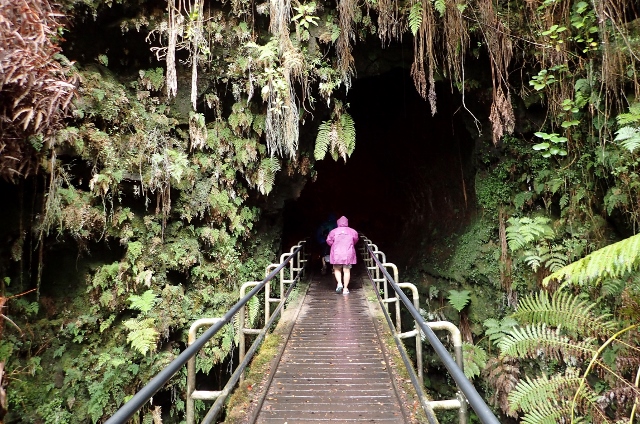
Thurston Lava Tube.

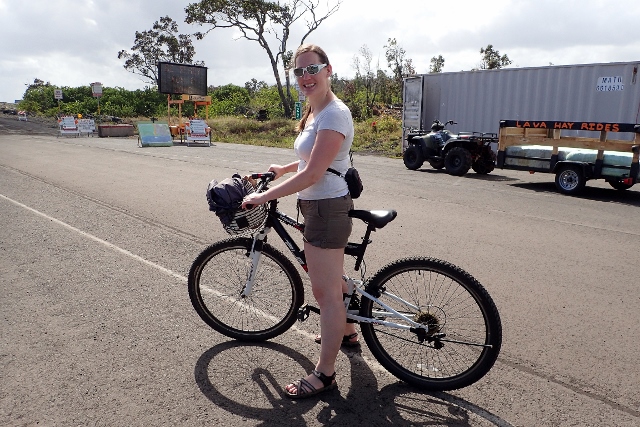
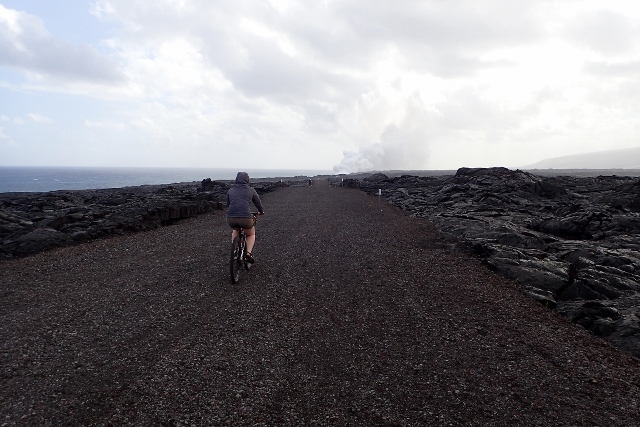
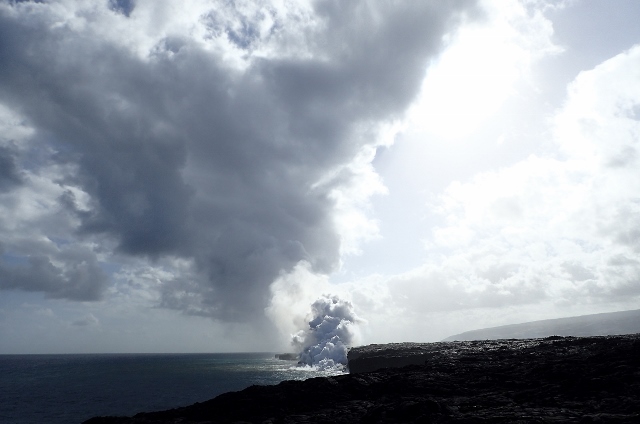
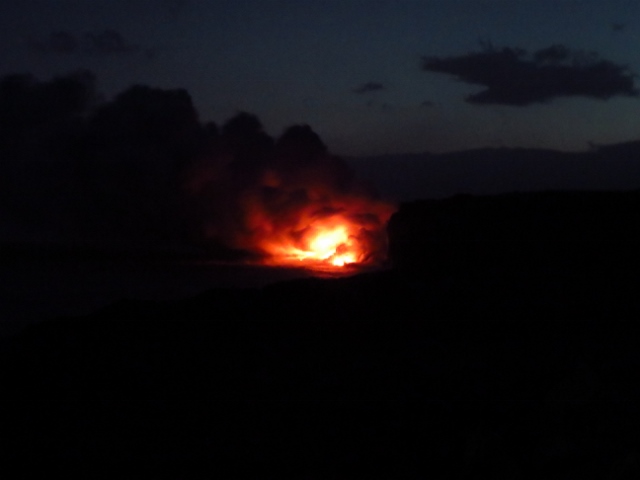
Jill and I cycled 8 miles to Big Island’s “Lava Viewing Point”. This was where Kilauea’s hot, flowing lava could be seen entering the cold, unforgiving ocean. The lava was only about half a mile away but it was largely obscured from view by the immense plumes of smoke it generated upon contact with the water. The appearance of those billowing clouds rising from the ocean changed dramatically as daylight faded. We caught glimpses of the lava itself, much more frequently. We even saw chunks of smouldering rock (freshly cooled lava), being thrown from the smoke into the sea. The rocks sizzled like a frying pan does when you throw water on it. After sunset, the now orange smoke was hypnotic. Every now and then, the lava would flare up, piercing the clouds of smoke to dramatic effect as the calm dance of reds and oranges became momentarily violent.

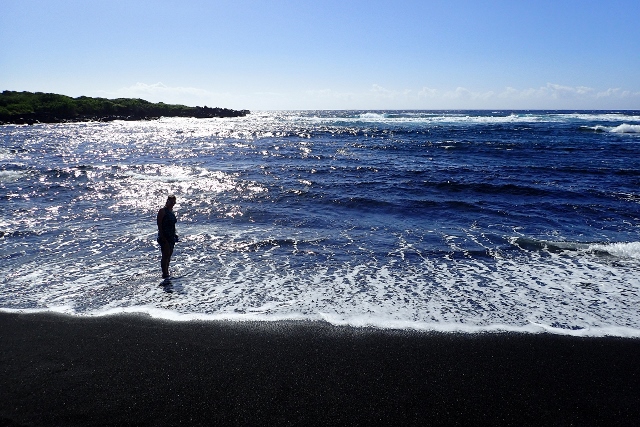
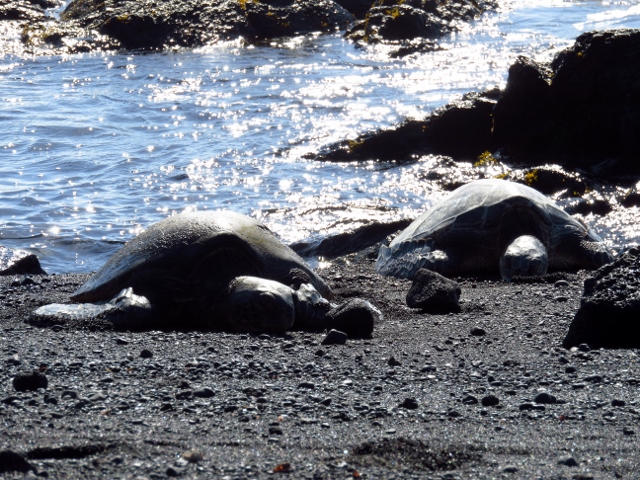
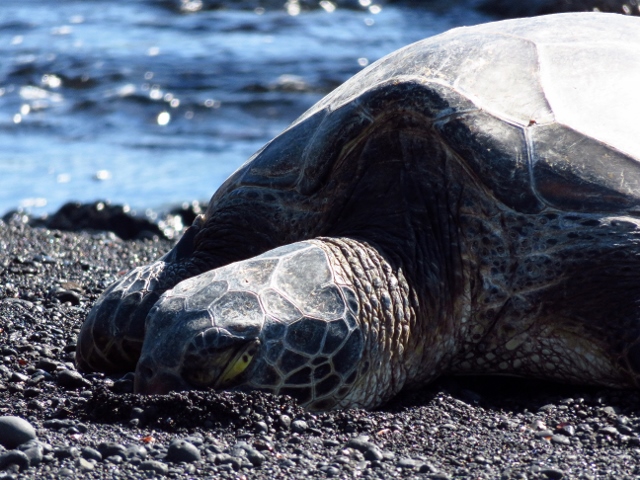
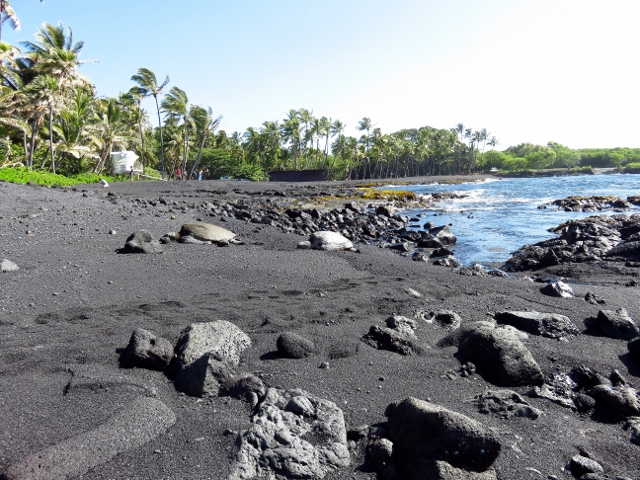
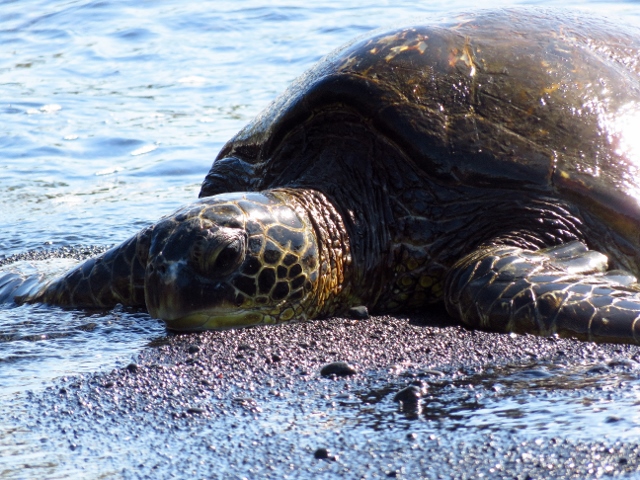
Big Island’s black sand beach (Punalu’u Beach), is known for the hawksbill turtles that frequently visit. Before we’d even started to look for them, we saw five just chilling on the beach. There were many more in the water. Jill and I hadn’t planned to snorkel here but the fact that we had our masks and snorkels in the car meant that we could if we wanted to. We realised quickly that we didn’t want to miss this.

The turtles in the water were massive and didn’t seem to mind us being there at all. They swam right by me several times. Apart from the turtles and the fish, Jill and I were the only ones there.

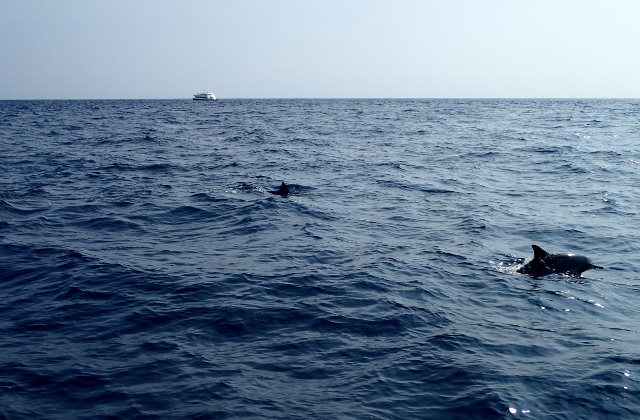
A curious pod of dolphins swam alongside our small boat when Jill and I were on our way to a scuba dive.

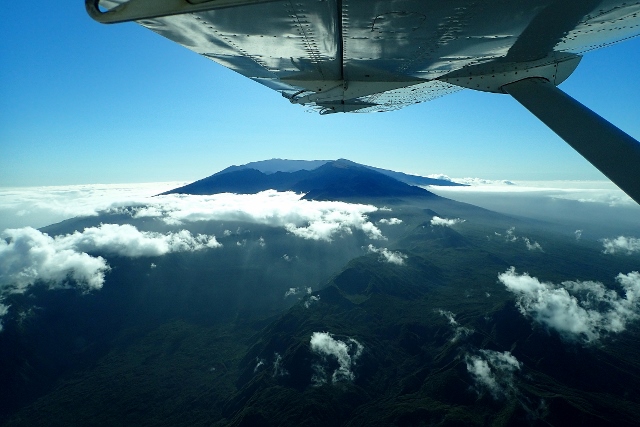
The tiny 8-seat aircraft that took us from Big Island to Maui was so small that the co-pilot doubled as cabin crew and gave us the safety briefing. I could see the cockpit during the entire flight and our seat belts went over the shoulder, just like in a car. The views during that short, 45 minute flight were amazing.

Green and Blue

Our flight from Sydney to Cairns arrived on time, as did the bus at Cairns airport that would be taking us to Port Douglas. It was quite a relaxing one and a half hour drive but the heat outside was a serious body shock. The air conditioned bus was cool enough for both Jill and I to fall asleep straight away though. It’s a shame we fell asleep so quickly because the scenery was a uniquely beautiful thing for Australia. It looked like the sort of thing I’d been seeing in Thailand, Cambodia and Vietnam, the tropical trees and plants I was seeing could have come right from there, I didn’t know Australia could offer this type of environment. It felt like I was in a rainforest while we were still on the road.

We did a couple of big things in Port Douglas, the first was the Daintree Rainforest tour and the second was scuba diving on the wonder of wonders, the Great Barrier Reef.

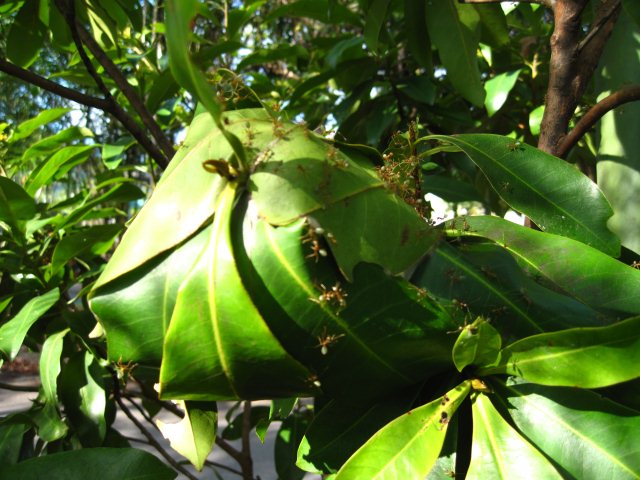
For the rainforest tour Pete, our guide and driver, picked us up at our hostel at 7:30am. Jill and I were the only ones on the tour and it didn’t take long before our first stop. Barely a couple of minutes from our hostel, Pete spotted a gathering of fruit bats so he stopped immediately and took the opportunity to tell us a few things about them. There was then a brief roadside stop as Pete told us about banana plantations and how they work. Enroute to our destination the next stop again felt like it was by the road but this one was actually a reserve or pseudo zoo of some kind. Pete stopped here to show us the cool green ant colony I’ll mention below. When we were done we continued towards the forest in Pete’s Land Rover. The drive was maybe an hour and a half but Pete’s relentlessly interesting information and engaging style of conversation had (at least) me captivated the whole time. After that, we took a ferry to cross the river. Before we actually got to the forest though there was one more stop; a stunning lookout point the aboriginals (or bama, as they refer to themselves) used when establishing the lay of the land. Pete told us about the cassowary, laciandra, licuala, cassowary plum and mamosa plant (see below). He also showed us techniques to use when testing wild soft skinned fruit for suitability to consume. When he was done here we hopped back in the car and had a few more minutes before we got to the starting point for our forest walk. On the way we had a brief roadside stop to try some wild jackfruit, it was delicious and tasted like banana pineapple bubble gum.
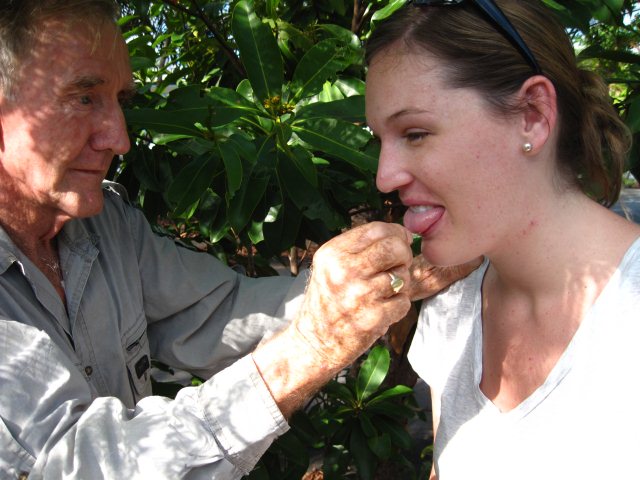
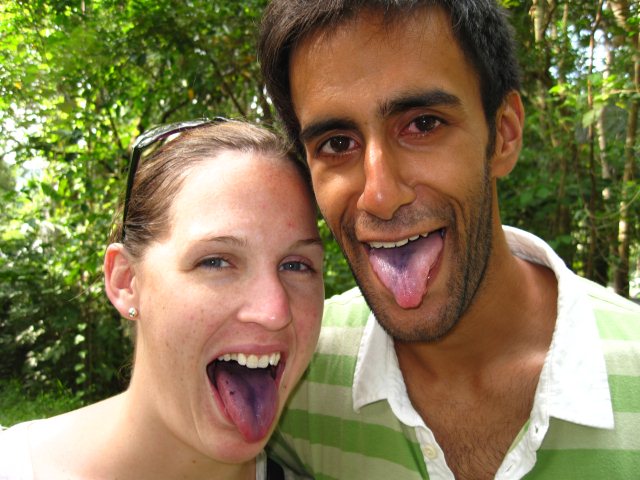
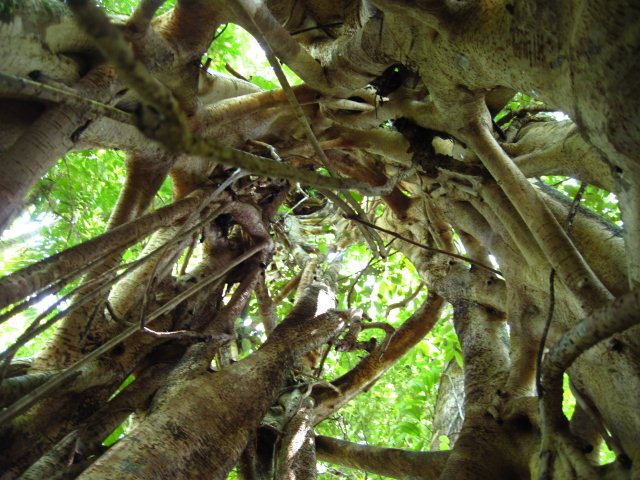
When we finally got into the forest for our bush walk, we didn’t leave for a good 3 or so hours. During that time Pete told us too many interesting things to remember but some that stood out were: triangular spider, davidson plum, spurwood mahogany tree, not sure what they are called but a wispy vine with small, sharp thorns on it, Daintree’s version of poison ivy (this one is much, much worse because it causes the same or possibly even worse agonising pain but the microscopic barbs on the leaves of the plant become embedded in the skin so the pain they cause lasts for about 4 months), parasitic fig trees, one large example of which Jill and I climbed inside, all sorts of trees and leaves that have medicinal and narcotic properties and tarzan vines (one of which Jill and I attempted to climb). Before we got to the fig trees we had to stride through a large stream to reach that section of forest, during that little adventure we picked up a few uninvited guests. Leeches. We knew they were no problem though and as Pete was telling us all about them, he informed us that it’s good karma to leave them on until they’re full, so we did. They were only small but they drink 10 times their own body weight in blood. I’ve got before and after pictures of them and the difference is staggering, the leech is unrecognisable when it’s full. If you allow a leech to get its fill when you find one on you, it won’t need to eat again for another year. Also, this is just by the by but if you ever get a leech on your eyeball you should leave it there until it falls off of its own accord. If you try forcing it off in any way it will spasm, possibly taking some of your cornea with it. This won’t blind you but it will give you distorted vision. After the main forest walk we hopped back in the Land Rover and Pete took us to a little spot he’s been cultivating over the last 12 years. We stopped by the side of the road and came across a makeshift doorway Pete had fashioned to deter visitors from his little sanctuary. He discovered a little stream here 12 years ago and since then, one stone at a time, has been building up an impressive dam that has turned the stream into a lovely natural swimming pool. He’s even fashioned his own ‘furniture’ by stacking some of the larger rocks. This is where we had lunch. After we’d eaten and had a swim, Pete showed us how the bama captured their artwork; they’d use oxidised red stones as chalk and larger flat rocks as a canvas. Pete also showed us the ‘cooee’ stick, an amusing trick that’s sure to entertain anyone, especially kids. We headed to Cape Tribulation beach after that, it was absolutely stunning. We walked through a nice little mangrove on the way there from our parking spot, Pete showed us all sorts of cool and interesting seeds and plants while we were on the beach too.  As we walked there, one of the things he had us do was try a berry he found. It was called blue tongue and guess what? It turned our tongues blue. Pete made us lick, taste, chew on or eat at least 8 different kinds of wild fruit, plant or insect while we were out on the tour, it was a really cool way of keeping the tour fresh and exciting. (Green ant, jack fruit, laciandra, davidson plum, small fig, a mushroom like plant growing around Pete’s ‘swimming pool’, blue tongue and the ‘magic fruit’).
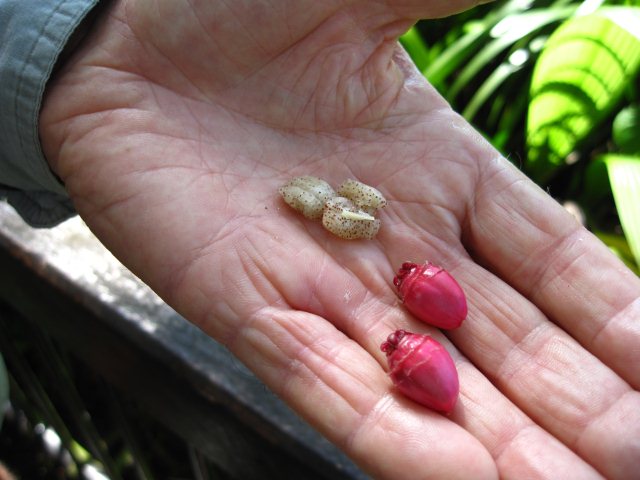
As we were leaving, when we waited for the ferry to take us back to the other side of the river, Pete showed us one final thing. He was going to perform a miracle for us. We tried the davidson plum earlier and knew that it was very sour, it has a lemon like taste. When he picked one for us to try earlier in the day he took a second one and popped into his water bottle for what he said was an ‘experiment’. Well it was finally experiment time! Pete had both Jill and I chew on what he called a miracle fruit for six minutes and then had us try the davidson plum again. True to his word, Pete had performed a miracle; it now tasted very sweet and completely different from before. It turns out that Pete’s miracle fruit had temporarily desensitised the sour taste buds on our tongues and made everything taste different. Apparently, it makes beer taste like wine but I didn’t have a chance to test that out.
I (and possibly Jill but I’m not too sure on that one) learned far too much on this tour for us not to share it with you. I got schooled in a lot of stuff during the day so I’m going to drop some steaming hot knowledge on you: Green ants (so called because of their large green abdomens) look more or less like normal ants but if you lick the tip of their abdomen (which we did because Pete told us to), you get a nice little kick. Pete pulled one of the ants off the impressive looking leaf hive they were crawling on and while holding the top half of the ant told me to lick the bottom half, it was sour like a lemon or sort of like putting your tongue on an acid based battery (I did dumb stuff as a kid). Jill did the same but since she isn’t a lemon officianado like myself, had a much stronger reaction to it. (Interjection by Jill: That was not true, Pete made me lick 3 ant butts because he thought I wasn’t getting the right reaction to it.)

Banana is not a plant, tree or palm, it’s an herb. The banana is like a flower, the ‘branch’ is like the stem. Once you cut the flower, the stem will never produce bananas again, you have to cut it down and start again. Despite the fact that Australia has every latitude and type of environment necessary to grow anything that any other country can grow, Australia has no commercial agricultural product; everything that grows here has been brought here from somewhere else.

The cassowary is north western Australia’s large bird. It sort of looks like the large bird from Pixar’s Up. They’re big; the females weigh 60kg, the males weigh 35kg. They’ve got very strong legs and three sharp toes on each foot. When they kick they go back on their tail and kick with both feet, they’ve been known to disembowel humans when they do this.

The biggest crocodiles in the world live in Daintree, there have been 8-9 metre long crocs spotted here and since they’re an apex predator (at the top of their food chain), they live for ages. A 93 year old crocodile was found here. One of many cool schoolings given: you know how old a crocodile is by counting the rings in its spinal column.

The rainforest in Daintree is the oldest one in the world. It doesn’t have the oldest trees, nothing survives here very long before becoming fertiliser for the next generation, but the species of plants and trees here date back hundreds of millions of years. This is a very primitive rainforest. So primitive that the plants here don’t even have fruits. Because of this there are no animals here, just insects and possibly some birds. It is a very forgiving forest, there isn’t much here that can kill or injure you, certainly no deadly snakes, spiders or anything like you’d find in other rainforests.

Things we saw in Daintree: a small pink fruit that looked a lot like dragon fruit on the inside. It’s called laciandra, Pete cut some for us to eat with his Swiss army knife. Various types of tree trunks that have medicinal and sometimes narcotic properties. The licuala plant. It has large, circular, cool looking leaves. They can survive hurricanes and typhoons because in strong winds (provided the barometric pressure is indicative of a big storm), the leaves crumple up like a Chinese or Japanese fan. The cassowary plum. Poisonous so it shouldn’t be eaten. It’s interesting because like the thorny bushes we saw in Namibia they can only be pollinated when eaten by a specific animal. The thorny bushes in Namibia needed to be eaten by a springbok but this cassowary plum is, unsurprisingly, eaten by cassowaries. They’ll eat and evacuate the same cassowary plum up to 8 times so by the last time they do it, the seeds will be quite far from the tree they came from. The plum has to pass through the cassowary at least a few times before all of the inhibitors, the nutrients, are removed and absorbed by the cassowary and the fruit can actually germinate. Pete showed us how to test the suitability of soft skinned fruits for consumption. The first thing you when assessing whether or not you can eat something is to cut off a small piece and rub it on soft flesh like your wrist, wait 20 minutes for a reaction. If nothing happens, rub a small piece on your tongue, wait 20 minutes. Then chew a small piece, ensuring it gets on to all of your mucus membranes and spit it out, wait 20 minutes. The final step is to eat a small piece and wait 2 hours. If you follow this 3 hour cycle, you can be confident that you won’t eat something that can kill you. The closing leaf plant that I first saw in Laos. I didn’t know what it was called at the time but I now know it’s called a mamosa. Its’ leaves are open at first but they close up if you touch them or breathe on them when you have bad breath. To the plant, you always have bad breath. The leaves open up again 8-12 minutes after they were first touched. This plant has narcotic properties. Jackfruit, tastes like banana pineapple bubblegum. The largest tropical fruit in the world, it can grow up to 30kg in weight. As we saw so many insects on this tour Pete dropped some hot knowledge about them on us; insects make up 85% of ALL biomass in the world. Also, after a termite queen is fertilised, she can produce 1 egg a second for each second of her 54 year life.

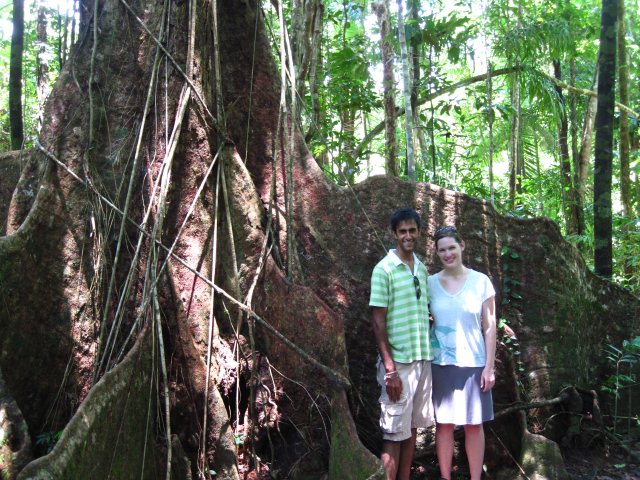
Triangular spider, as the name would suggest, this is a triangle shaped spider. Its shape is more evident if the spider is stunned because it has an autonomic response whereby its legs are drawn in towards its body. Davidson plum. A fruit that looks just like a normal purple plum but is very sour like a lemon. I loved the taste of this. Spurwood mahogany tree. Has massive ‘spurs’ going out over the ground in every direction for support. It does this because its roots don’t penetrate deep enough into the ground to keep its large structure upright. We saw numerous other things too but it was just too much information to take in over such a short time.

As mentioned above the second thing we did in Port Douglas was scuba dive along the Great Barrier Reef. Truly one of the most generous gifts to the world, the Great Barrier Reef is an absolute marvel and one of the most breathtaking sights I’ve ever witnessed in person. Scuba diving here was an experience I’ll never forget and it was without question one of the best things I’ve ever done.

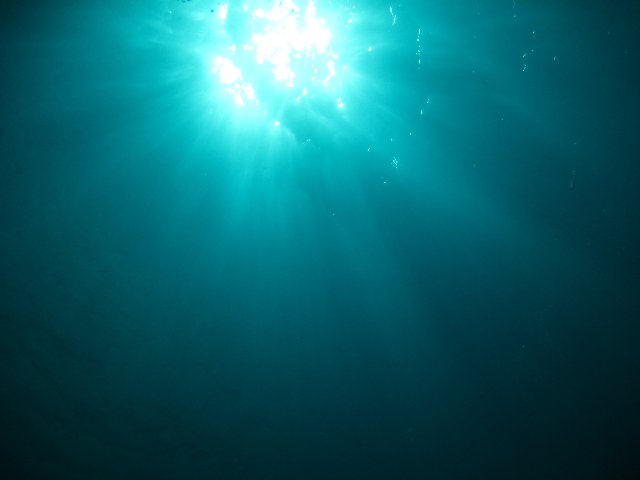
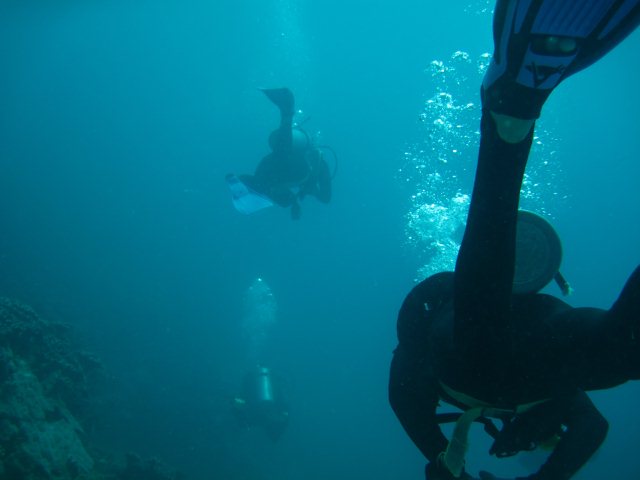
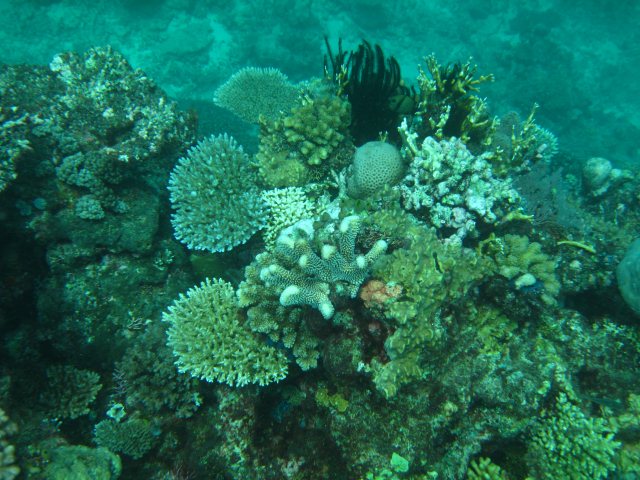
After that introduction I don’t feel I have the words to accurately reflect what swimming in this wondrous place is like but I’ll try. It’s a shame my pictures couldn’t really capture it either, light entering the water is dispersed and absorbed by the water too quickly. As you go further down in to the water, the visible part of the electromagnetic spectrum gets cannibalised by the water. The lighter colours (red, orange, yellow, green) are the first to go, it makes everything look blue and if you go down deep enough, eventually black. I’d need a powerful light to capture what I saw with a camera, even with my eyes it becomes more difficult to clearly see the underwater environment as I descend deeper, especially if another diver has disturbed the sea bed and kicked up sand or silt with their fins. What I did see though was transcendent. If you’ve read my other posts about scuba diving you’ll know that I love it, it’s one of my favourite things to do but this, this was something else. Like the dive sites in Langkawi and Phuket, there were more fish and coral species than I could count, there’s no point in trying after having spent a few minutes down there but where in my previous dives the number of new species I was seeing slowed after maybe 20 minutes, the Great Barrier Reef just kept on producing. Up until the last few seconds I was in the water I kept seeing new species of fish and new types of coral, it was endless. During the last of my three dives I even saw a white tipped reef shark, Jill wasn’t there because she wanted to snorkel at the end of the day but she saw the shark from the surface so things worked out fine.

At each of the three dive sites I visited there was a huge wall of ever varying coral that was seemingly without end. The wall was immense and there were shoals of countless fish, fish of all colours and sizes, passing through. It really was wondrous.
Scuba Diving, Phuket

I realised almost straight away that I love scuba diving, after Langkawi it was only going to be a matter of time before I got my undersea adventure on again. I wasn’t planning on it happening until Australia when Jill and I would be able to dive together but an opportunity presented itself in Phuket that was just too good to pass up. A friend at the hostel I was staying at was telling me one day about the scuba diving he’d done here. He’d booked it at this place called Water World (less than a minute away from the hostel) and had got a day of diving with 3 dives, equipment hire, breakfast, lunch, dinner and snacks throughout the day (all of which I later found were delicious), and this was all for less than 100 pounds. I’d paid 70 for 2 dives and a single meal in Langkawi, so it was a really good deal. I booked soon after he told me about it and am really glad I did.

Since it’s monsoon season over here, it’s been raining A LOT in Phuket and the surrounding islands. During the 10 nights I’ve been here only 3 days have been completely rain free, one of them was the day I went diving. Rain doesn’t make too much difference when you’re diving, the primary concern is that it takes longer to warm up when you surface, well, that and the gentle patter you’ll hear throughout most of your dive (sound travels 4 times faster underwater and it seems like it’s coming from all directions, it’s pretty strange, all sounds underwater are in surround sound). Anyway, the weather during the diving day was absolutely gorgeous. It was really bright, definitely north of 30 degrees Celsius and there was barely a cloud in the sky. It certainly helped appreciate all the stunning islands when we were on the boat enroute to the first dive site, Racha Yai. During the way back too, the great weather gifted us an amazing view of the sunset.

The people I was diving with were brilliant. Unlike the last dive trip I went on, everyone on this boat was a scuba diver. There were maybe 20 people on board. One of them was this Australian girl Hannah from my hostel, so it was good having someone I already knew to talk to on the way over. It was only really a thing at the start though, I met a lot of cool people during the course of the day. Three of the people I was talking to ended up being assigned to the same divemaster as me. Dave from Australia, Dominic (who was unbelievably camp) and Jason (both from America) were very nice and friendly. All of them had been diving for at least 15 years so they were full of useful information and advice.

Any of the trepidation I felt before my previous dive was a distant memory, I couldn’t wait to get in. When it was go time, we geared up and jumped in right off the back of the purpose built boat we’d come in on. Our divemaster Lamm checked that everyone was ok and we began our descent. Our maximum depth was about 23 metres and we stayed down for an hour. As we descended the water was very clear, it stayed that way the whole time and we could see 15-20 metres away. I was really excited about this dive because of Ash’s glowing recommendation but when I was actually down there myself and throughout the whole first dive, I was a little disappointed. There were no soft coral, only hard ones and the fish we saw were few and far between (though I thought to myself afterwards that I may have only felt that way because the visibility was so good). Also, the changes in topography were nowhere near as dramatic as Langawai, it was very much even the whole way. The water was very nice and warm though and it was just as relaxing being down there as I’d hoped it would be. Despite the slight disappointment I felt, it was an enjoyable dive and a good start to the day. The meal we had on the way to the next dive site helped settle any nerves the first timers had and we were treated to amazing views from the top deck as we sat and unwound a little.

The next island, Raja Noi, would be the site for the remaining two dives. We were told that the island had no inhabitants, the only things living there were goats and monkeys (not that anyone had any idea how they came to be there). Dive time came and we geared up and jumped in. There were a lot more fish this time and the bottom was angled downward as all the sand went further and further from the island. There was a lot of rich and varied marine life near the corals and there were some soft corals too. There were a lot of very inquisitive fish on this dive. Some of them seemed to linger for ages and only seemed content to leave after I’d taken pictures of them. I happily obliged but some of them still looked miserable afterwards. It was a really good dive and I definitely enjoyed it more than the first. We stayed down for 50 minutes and the maximum depth was 18 metres.

The boat moved only a few hundred metres to get to the next dive site. While we were sitting on the top deck we just chilled with some fruit platters as we waited for the minimum surface interval to pass. While diving, people build up an unhealthy amount of nitrogen in the tissue that makes up their bodies. When you return to a normal pressure, this nitrogen safely works its way out on its own but (depending on how deep you went and for how long) you need to leave a certain amount of time for this to happen). FYI, flying after diving is usually a big no-no too because the change in pressure can cause the excess nitrogen to work its way out of your body too quickly and result in unpleasant things like paralysis and death. It only clicked with me on the morning of my dive that I had a flight the next day and as soon as it did, I checked what time we’d leave the water for the last dive. Luckily, I’d meet the 18 hour minimum (my flight was 20 hours after dive 3 ended) so I didn’t have to cancel any plans.

I wasn’t quite ready for how amazing dive 3 was going to be. It was in the same type of angled sand environment as the previous dive but it couldn’t have been more different. A few minutes after we got down there was seemingly endless coral for as far as the eye could see. We swam in the direction it led and it just kept on going and going. There was so much down there, hard coral mixed with soft and any part of it you looked at was just buzzing with countless species of fish. It was incredible. At one point (when that massive section of coral finally ended), we were swarmed by thousands of these medium sized fish. They were sort of silver but their skin looked iridescent and they had blue stripes running along their bodies and around their mouths. It was really something, they were all over us and there were so many that at times it was difficult to see where my fellow divers were. Those fish moved on after a couple of minutes and we too kept going. Before long we reached another large coral but this one had a clear boundary. I wasn’t looking towards it as I was swimming in that direction because there was still so much behind me but when I finally turned around I was amazed to see another huge shoal of fish. Since they were so small (each one was around the size of my finger tip) and because they blended in with the water so well (and also the fact that I wasn’t looking in their direction at first), they seemed to come out of nowhere. At the very least, they numbered in the tens, probably hundreds of thousands. It was like a living cloud had enveloped us. Of all the things I’ve seen and experienced this was one of the most spectacular. They didn’t seem frightened of us either, they moved out of our way as we passed through but otherwise they just seemed to be going about their usual business. The varied marine life continued for the whole dive and because the sun was shining so brightly, the visibility was so good and the current was near enough non-existent, everything was illuminated so well that the colours of all the fish really jumped out at you. I couldn’t name any of the speci
es apart from the ones I saw in Langkawi but I think there were at least as many different species here as there were there. The third dive alone was worth the cost of admission for the entire day. The others in my dive group agreed and it was a fantastic end to the trip.

On the way back, we had a great time talking about the dives over dinner and were treated to an amazing view of the Phuket sunset as well. This was undoubtedly one of the best things I did in Phuket and it leaves Cambodia with a lot to live up to.

Top: The great blue beyond; Above: One of many large coral reefs I saw down there

Langkawi, Seeing is Believing

I know it’s hard to feel bad for me right now but I just can’t catch a break with some things! First, the rain follows me from London to Detroit, then from Detroit to Singapore, and bloody now from Singapore to Langkawi! What the funk? Granted it didn’t ruin anything in the first two places (despite my complaints at the time, I think it actually made the Detroit apple picking more fun), but Langkawi was different. My prospects for enjoying this part of the trip were looking seriously grim as so much of what I had planned was dependent on good weather. I was not happy. 

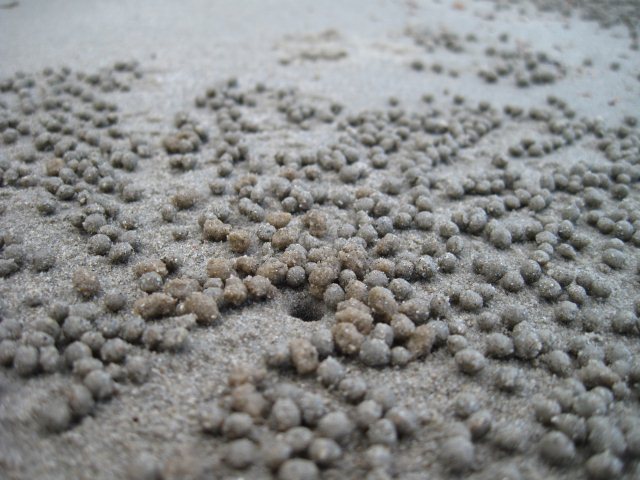
Apparently though, I WAS meant to enjoy my time in Langkawi. After about 3 hours of solid rain, the sky started clearing and eventually the sun came out :) By this point I’d got my bearings and had the lay of the land so I headed to my first beach of the island, Chenang. Beautiful doesn’t do it justice. I made a strange discovery while I was there too. All over the place, there were these elaborate patterns on the sand constructed of what looked like fish eggs. There were so many of them all along the beach and they were all completely different, different patterns, different sizes, different everything but one thing they all had in common was a small hole in the sand somewhere in the pattern. These things were seriously impressive, if a person had made them, they’d be worthy of an exhibition. So there I was, walking around, being careful not to step on any of them and trying to figure out what the hell they were, when all of a sudden, I see movement out of the corner of my eye. Damn, too slow. I keep looking for a while and eventually, I see something really small next to one of the holes, but wait, it’s moving! It’s a tiny little crab! It turns out that these cute tiny crabs had been rolling little balls of sand and fashioning them into elaborate displays around their homes, probably in an attempt to attract females (what other reason do males ever have for doing anything?) 

Later on the beach, while I was walking around looking at prices for things, I realised that everyone was not exaggerating when they told me Singapore is twice as expensive as Malaysia. Really good meals were going for as little as £2. And on the first day, for £160, I managed to arrange a day at Langkawi Canopy Adventures (zip-lining through the rainforest canopy, as well as climbing it, balancing on it and abseiling down it), half an hour of jet-skiing on a 1500cc jet ski, an amazing 6 hour, lunch inclusive, mangrove tour (which basically involved going into a series of caves that the sea feeds into and seeing bats, eagles and crocodiles in their respective natural habitats, feeding exotic fish in the sea, feeding stingray (the thought of which initially creeped me out), chilling out on a beautiful beach and swimming in secluded waters), AND a whole day scuba diving and snorkeling an hour off the coast of Langkawi. Week in Langkawi sorted! I even managed to arrange a few other cool things on the cheap but I’ll let the pictures do the talking for those.

Tuesday morning, I was all set for Langkawi Canopy Adventures, I woke up extra early, had eaten breakfast and had left more than enough time to get there. Or so I thought. It seems that free Malaysian tourists maps are not always produced the high (or even adequate) standards that one might expect. Clearly marked as Langkawi Canopy Adventures on the map, I’d have thought that the place I asked my taxi driver to go would have got me where I needed to be. Instead I ended up at the top of some mountain (Gunung Raya, fact fans) and was out both 100 ringets and an hour of my time for the round trip. I don’t need to tell you I ended up missing the Canopy Adventures people when I actually got to the right place, but thankfully, they graciously offered to let me do what I missed that morning on Friday instead. Minor crisis somewhat averted, I started thinking about what I was going to do with my day instead. I decided to start with the jet skiing and then to head off toward the Langkawi cable car and nearby Telaga Tujah waterfall (apparently the nicest waterfall of the four major ones on the island). None of them disappointed, though the waterfall was the highlight. It was dazzling and swimming in the pools at the bottom was very fun. The only downside was that I kept thinking about those amoebas from freshwater lakes that go up through your nose and eat your brain (thanks Jill!) Hopefully I’m amoeba free. 

More unexpected delights were had on Wednesday. The mangrove tour was exceptional and it helped that I actually learned what a mangrove is! (An inland saltwater area where vegetation uniquely suited to both salt and fresh water environments can grow). This mangrove (as I understand all of them are – the one on Pulau Ubin in Singapore was very similar but much smaller), was a cross between a river and a swamp, a lot like the Everglades in Miami or the Okavango Delta in Botswana but the water in this mangrove was a lot deeper than either of those other places. Just riding through the mangrove and spotting animals on the jet boat was fun enough (the river was pretty wide in places and the boat picked up some serious speed for fun on the bumpy waves, especially later when we got to sea!) but we did so many other things on the tour as well. It was also nice that everyone else in the group was so friendly and talkative. I saw a bunch of cool stuff like the swimming, long tailed macaques (seriously not good for my dreams, I’ve got enough monkey problems as it is) and the deadly shore pit viper, and did cool things like hand feed a stingray, avoid guano in a bat cave and swim at an incredible, secluded beach on the border of Malaysia and Thailand (it was so secluded that we were the only ones there). Later, after the tour ended, I swam at an even more secluded beach (so secluded that I was the only one there!) It was postcard perfect and I can’t imagine a more faultless beach, well actually, now that I say that, there were some troublesome monkeys around… They almost walked off with the stuff I left on the beach but I (just about) managed to swim back in time and see them off before they did any real damage. I didn’t leave any energy for that swim back though, I had to use up all my reserves getting to the beach and was exhausted when I did. If those monkeys had wanted a fight I wouldn’t have been in a state to give them one.

I’m not even sure where to begin with how good scuba diving was (I must be beginning to grate with my use of superlatives in this post but there really aren’t enough for the things I’ve seen here. I’m gonna have to start making up words like Jill!) For a planet that’s over 70% water, there’s a lot of awesomeness out there that most people just don’t ever see. I always knew it was there but seeing it with my own eyes was just something else. Upon arrival at Pulau Payar (the main dive island), an hour after we’d left, the only other solo diver and I hopped onto a small boat with our divemaster to get to the dive site. I had butterflies in my stomach on the ride over and the choppy water didn’t help. This was going to be my first real dive and there was definitely some trepidation as we were gearing up on the way to the dive site. It got worse when we were about to make that first leap into the water and it didn’t get much better when I was actually on the surface. After we started to descend though, all of my worries just drifted away and everything felt right, it felt like I was doing what I was supposed to be doing. It’s difficult to explain but I just felt so at peace with myself down there, I’ve always felt comfortable in the water but this was something else, something I haven’t experienced before, not even on my training dives.

I absolutely loved it, every second. I would have lost count if I was trying to keep track of how many different species of fish I saw, I realised after about 10 seconds that that would have been a losing battle. The types of coral too, the only type I recognised was the brain coral but there were dozens or maybe hundreds of different kinds there. There were all these shoals of fish going past too and when I concentrated on them I’d spot hundreds of smaller fish swimming around and between the bigger ones, it was very cool. As were the huge, super camouflaged grouper fish we saw, we even saw a bunch of fish from Finding Nemo! There were loads of Nemos (or clown fish) and anemone around, we also saw plenty of the type of fish that Gil was and I think Dory too. None of the fish seemed to mind us being down there at all, they were swimming right up to us, going through the gaps between our arms and our diving equipment, it was like we weren’t even there. The water was really nice and warm too, I could have stayed down there for ages and completely lost track of time. I was later told that the first dive lasted 40 minutes and the second, 50. Both were to around 20 metres.

I’ve run out of space to tell you about Langkawi Canopy Adventures (Jill’s imposed a 1500 word limit per post – which I’ve already exceeded). Needless to say, flying through the rainforest canopy, high above the ground was incredible. And it doesn’t matter how many harnesses you’re in or how much gear you have on, there is something very disconcerting about being told to lean back when you’re at the top of a 30 metre tree and already have your heels hanging over the edge!

Ipoh and Kuala Lumpur couldn’t possibly live up to Langkawi, and there was so much I didn’t even have the chance to tell you!