End of the South Coast

Jill’s directions have been impeccable on this trip. Despite the fact that we drove across over 6,000 km of Australia’s south coast, we never got lost once and it was all down to Jill’s superb navigating skills. One thing that did go wrong however was a little dirt road detour we took enroute to Wollongong. We were on a road that we thought had a few unsealed dirt sections. The map we were using made it look like the dirt sections of the road were at most a few kilometres long but it turned out that the whole 40km road was like that. Since the rough dirt road was so tough on our camper van we were limited to a speed of around 20km/h and we’d already been on it for half an hour when we realised we couldn’t continue. With the time it took us turning around and getting back to the highway we came from, that little detour had cost us over an hour in Kiama. We got there in the end though.

The last of the towns we stopped at on Australia’s south coast, Kiama was quite possibly the nicest, most beautiful town I saw in all of Australia. Just like my other two south coast favourites, Esperance and Port Lincoln, Kiama is a coastal town that features fantastic views of the water with some amazing rock and cliff formations. The weather was just gorgeous as we parked up and went for a walk towards the lighthouse right on the coast. There was a great ‘blowhole’ too; a large rock formation with an opening where the surging tide can rush through. This creates impressively violent displays of water being sprayed upward through the opening. Our campsite in Kiama was also one of the best I saw in Australia (along with Ceduna, Port Lincoln and the Pisces park in Apollo Bay).

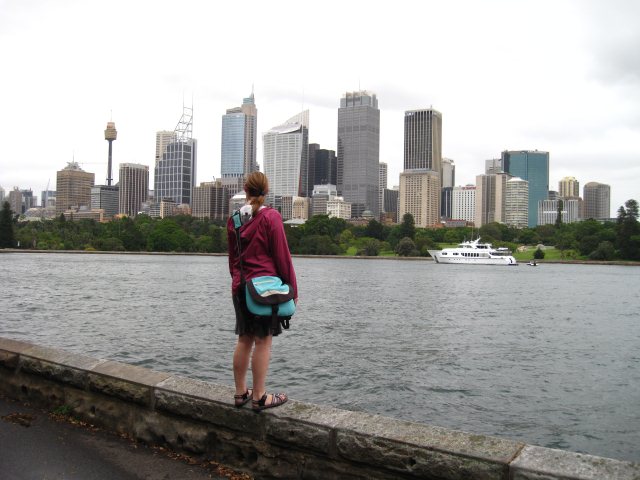
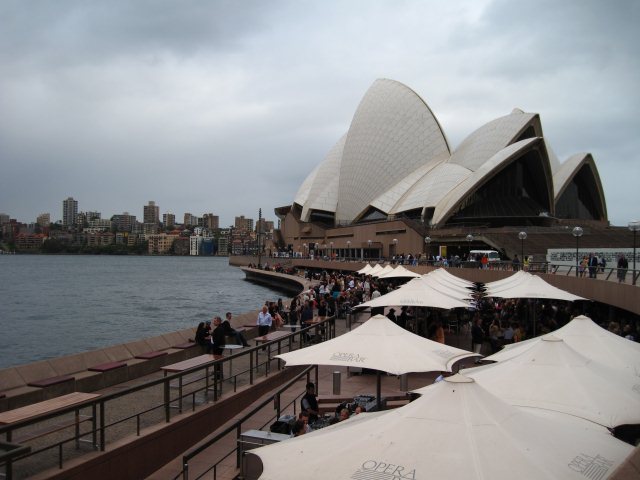
When we arrived at the defacto capital city of Sydney, we had less time to explore than I would have liked, it wasn’t Jill’s fault this time so I can’t complain too much. It wasn’t a big deal anyway, we knew we’d be back for a week around New Year’s. My first taste of this place was really cool; walking around the city, especially the area right outside the Opera House was great. (It took a minute to figure out why there were so many people in formal attire around that area). The parks were just as lovely as I’ve come to expect and it felt suitably busy compared to the rest of Australia. I won’t write about Sydney here too much, like I said, we’ll be back at the end of the month, you can hear about it all then! Also, my next post about Port Douglas will be a bumper one so I don’t want to take up too much time with this one.

Kangaroos, Koalas and Kookaburras

Even though this article was posted by Jaz, it was written by both of us again. All but the last three paragraphs were written by Jaz, the end is Jill’s.

Australia is one of my favourite countries in the entire world and it took me barely a week to realise it. It’s been one amazing sight after another and Jill and I saw plenty more during our visit to the world famous Kangaroo Island. Up until this point, we’ve been driving around going wherever the wind (or Jill’s ridiculously detailed planning spreadsheet) took us but since Kangaroo Island is so big (seven times the size of Singapore), we decided to book a day tour for that part of our trip.

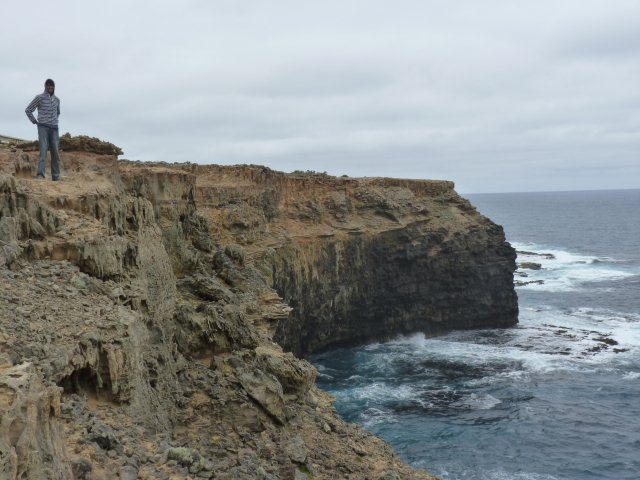
It was an early start with a one and a half hour bus ride to wake up for but it was what came after that that I was dreading. We needed to catch a ferry to get to the island itself and since I’ve seen Jill throw up on this trip several times already (that boat ride to the sharks was REALLY messed up), I wasn’t keen on a repeat performance. Luckily though, it wasn’t anywhere near as bad as I thought it would be and we got to the island barf free. For most of the day we were in a tourist coach with our driver Daniel acting as the tour guide and onboard stress relief, his voice providing smooth dulcet tones throughout the journey. The first place he took us was Seal Bay. Unsurprisingly, it reeked of various seal juices, an especially bad set of animal odours that Jill and I first encountered when we were in South Africa. It was a lovely beach though, animal smells and all. I hadn’t really thought about it before since seals are always the ones getting eaten or screwed over but they can be quite vicious when they want to be and even with their clumsy looking movement on land, can run 3 to 4 times faster than people can. We were told to keep our distance. Being warned about things has been a bit of a recurring theme throughout Australia, apart from the obvious stuff that can all kill you like spiders, snakes and jellyfish so small you can barely see them (scuba diving here is going to fun!), the sea and cliffs here are very dangerous too. A surprisingly high number of people die here every year because they don’t give Australia’s awesome natural wonders the respect they deserve. Also, I’ve found that with such long stretches of wide open road (I’m sure the high campervan didn’t help either), the cross winds here are deadly. Even a one second lapse in concentration is too much. But back to the island, after seal bay and lunch, we went to see a birds of prey show. The birds that featured were a tawny frog mouth (cool looking), Australian kestrel (it can do cool stuff like dive down really quick but it looks a bit shit), barn owl (shit), kookaburra (cute!) and a badass peregrine falcon. I didn’t know this before the show but since they’ve been recorded at speeds of up to an insane 246mph, peregrine falcons are the fastest animal on Earth.

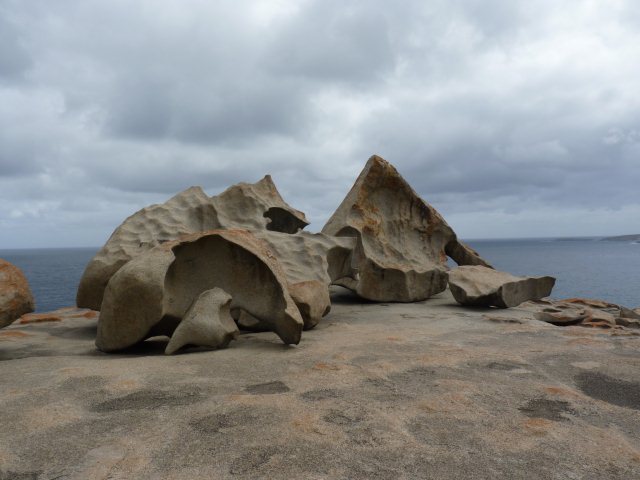
Daniel drove us through Flinders Chase National Park next. Matthew Flinders was an English explorer dude that lucked out big time and found a bunch of stuff in Australia, stuff like Kangaroo Island. His name is everywhere in Australia, I’ve lost count of the number of roads, buildings, parks and general shit named after him. The English have definitely had their fingers in a lot of pies throughout history; old English dudes had their names all over stuff in Singapore and Malaysia too. Next we saw Remarkable Rocks, a cluster of large granite boulders shaped by thousands of years of unforgiving Australian weather. With the rocks sitting on a large granite dome rising steeply from the ocean, the views were fantastic and climbing the rocks was pretty cool. The $4 flip-flops I picked up in Thailand have been serving me well but in hindsight probably weren’t the best choice for footwear that day. The wind was pretty strong when we were up there, it didn’t feel particularly safe and it made everything really chilly too. I’ve been amazed by what I’ve seen in Australia so far so I’m not complaining, but I really wasn’t expecting to bust out my winter wear until New Zealand a couple of months from now. Who knew Australia was so bloody cold in spring? Next we had a brief stop at the eerie Cape du Couedic Lighthouse (the place gave me the willies) before heading to Admirals Arch, a stunning natural arch formed by coastal erosion. Words can’t really do it justice, so check out the pictures of it in the Kangaroo Island image gallery!

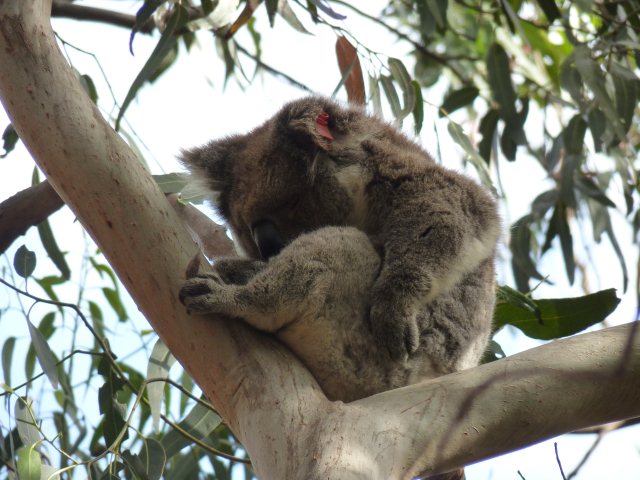
We had time to spare at the end of the day’s scheduled events and since we hadn’t really seen any kangaroos yet, Daniel kindly offered to take us to a kangaroo and koala reserve. The animals were just as cute as you’d expect up close but one thing I was surprised by is how big the koalas are. Most of them were pretty solidly conked out high in the trees. If a sudden gust had caught one of them while they were sleeping high up in a branch and someone happened to be walking under that branch at the time, that falling koala would have done some serious damage. Almost as interesting as what we saw during the day was hearing Daniel’s take on everything as he was showing us around. Towards the end of the day he was talking in general about life on Kangaroo Island, the hardships of being so isolated from the mainland, how important water conservation is (if there’s no rain, there’s no water), inflated prices because of the captive market and so on but also how much simpler life is there. Luxuries you might not be able to live without were you in Sydney or Melbourne seem unimportant when you’re living on a place like Kangaroo Island. There are only a few thousand people living there so practically everyone knows everyone and because of this there is near zero crime on the island. There is no need for a legal system because whenever someone commits an act that is deemed unacceptable by the community, they are simply asked to leave the island. They can try to stay if they want but because of how close and dependent on one another everyone is, life would just be made too difficult for them if they stayed against everyone else’s wishes. They would in effect be exiled. Learning about the island was a very interesting experience and I’d definitely recommend a visit there if you’re ever in Australia.

After returning late and exhausted from our long day on Kangaroo Island (after the ferry, bus and city bus rides, we didn’t get back until after 11 pm), we were happy to not have to get up real early the following day. In a slight change from my not ridiculously overplanned spreadsheet, we decided to drive to Mt. Gambier on the way to start the Great Ocean Road. Getting out of Adelaide was not as complicated as our arrival since we left after rush hour, and we were on our way relatively quickly.

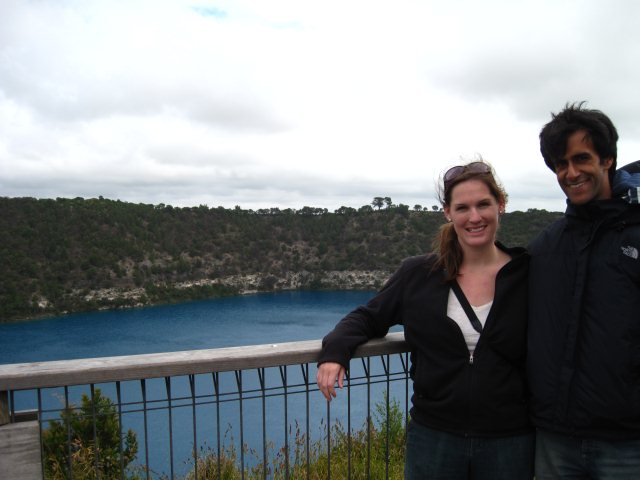
The reason I suggested switching our route to include Mt. Gambier was to shorten our drive time by a bit, but also because of its’ famed Blue Lake. On our way into the town, we first stopped at the “I” (the information center and my favorite place to stop in every town and collect maps), where we discovered the other local attractions. The first stop was the Umpherston Sinkhole, a large sinkhole on the eastern edge of town that had been turned into a garden. Back in the late 1800s, the sinkhole (and surrounding property) was owned by a man named James Umpherston who even then promoted the site as an attraction for locals. It was neat to be able to walk down into it and see all the greenery. Since it was a Saturday, on the way out we also saw wedding photos being taken (the first of two that day). Next up on our Mt. Gambier sites was the Blue Lake, which is known for its’ ocean blue color in the summer months. Luckily for us, we got there a week or so after the lake had changed, the lake is a steel blue color in the winter, and then over a couple days it switches its’ color. The lake was very pretty, although the site was slightly marred by the fact that the town uses the lake for its’ drinking supply and consequently has built a plant right on the waterfront. Last up was the Cave Gardens, situated right in the town center, and it looked like a smaller version of the Umpherston Sinkhole. The only redeeming quality was the huge rose garden surrounding the sinkhole.

Leaving Mt. Gambier, we headed off to Port Fairy to start the Great Ocean Road. Along the way though, we stopped near Portland at Cape Bridgewater, where there was supposed to be a blowhole (not that I saw it though) and a petrified forest. Not much is left of the petrified forest due to local and tourist damage, but what was left was cool to see. The scientists speculate that a long time ago, there was a forest that got covered by a sand dune, which subsequently hardened to stone around the tree trunks. Once the tree trunks rotted away, the hollow sandstone pillars were all that was left. This detour was much appreciated once we got to Port Fairy, because we ended up making friends at our caravan park and didn’t head into town until the sights were closed. Since it was the first group of people we had chatted with at any of caravan parks, we didn’t mind the diversion though. We were the youngest people by at least 40 years, so we were the only ones on a limited timeline. One of the couples had sold their home and bought a converted truck to drive around Australia in. The helpful part was that several of them had just driven the Great Ocean Road and were able to give us a couple tips about driving (the roads are quite steep and curvy) and campgrounds to stay at!

Sea Sickness, Sharks and Near Death

Even though this article was posted by Jaz, it was written by both of us. The first two paragraphs were written by Jill, and the rest is Jaz’s.

The campground we stayed at in Ceduna was a lovely end to our couple long driving days. The sites were encircled with trees, so it didn’t feel as much like each van was on top of one another. They boasted about being on the beach with sand dunes, but anyone who has been to the west coast of Michigan wouldn’t consider them much of a dune. Regardless, the beach was pretty to watch the sunset. If you’ve read the previous post, you know how the rest of the evening and the morning went, with Jaz and I emptying out the entire van to try and remove the mouse. Because of our mouse troubles, we got a bit of a later start to Port Lincoln than planned, but we still had time to stop in Streaky Bay and Elliston for a relaxing bayside picnic. We also made a stop at Murphy’s Haystacks, which are really large boulder formations that look like haystacks from a distance. They were quite neat to see, especially because up close they are quite a bit bigger than expected.

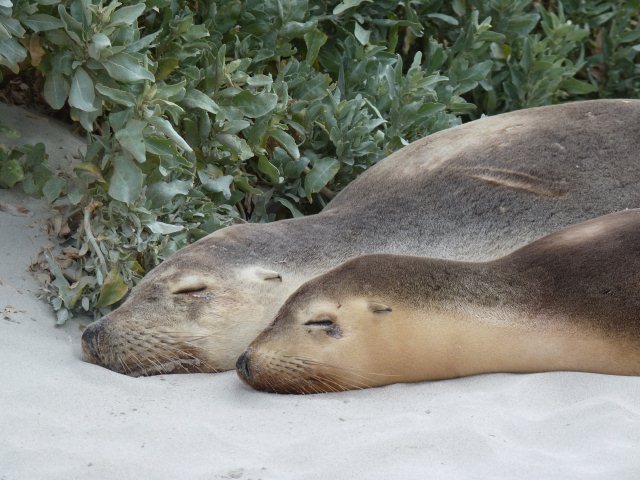
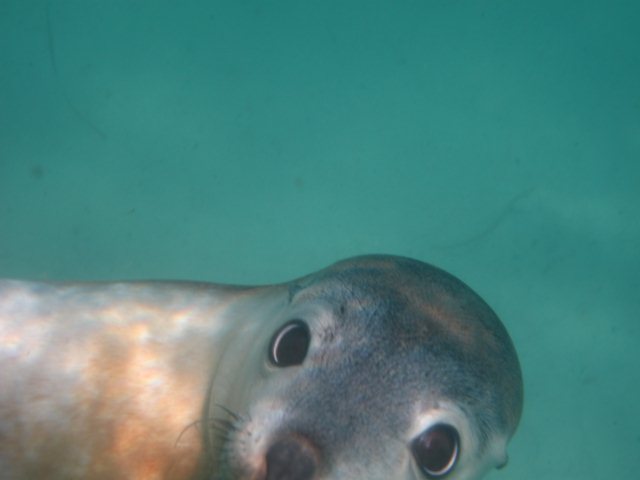
With all our stops, we made it to Port Lincoln at around 5 pm, in time to make dinner and walk along the water for a bit before it got dark. The next day was our first planned adventure activity, swimming with sea lions. The weather was a bit rainy and chilly when we left, so both of us were wondering quite how warm the swimming was going to be. After a one and a half hour boat ride (in which I did get seasick, just in case anyone who knows me was wondering), we made it to the colony of Australian sea lions. The Australian sea lions are slowly being pushed out by the New Zealand fur seals, and there are only about 12,000 of them left in the wild. We stopped at Memory Cove where there were maybe 15 sea lions relaxing on the beach, and 6 or 7 that came out to play once our guide clapped her hands several times. We put on wetsuits and got into the very chilly water (less than 70 degrees Fahrenheit, or 18 degrees Celsius), where we had about an hour to swim with the sea lions. It was a lot of fun because they were very playful, they’d swim alongside you, dive and flip if you did it, so the more we interacted with them, the more excited they got. The cool part too was that they were close enough that if they weren’t so fast, you could have reached out and touched them. Our time was up much quicker than expected, although all of us were eager to get out of the cold water and have a nice snack on the boat ride back to Port Lincoln.
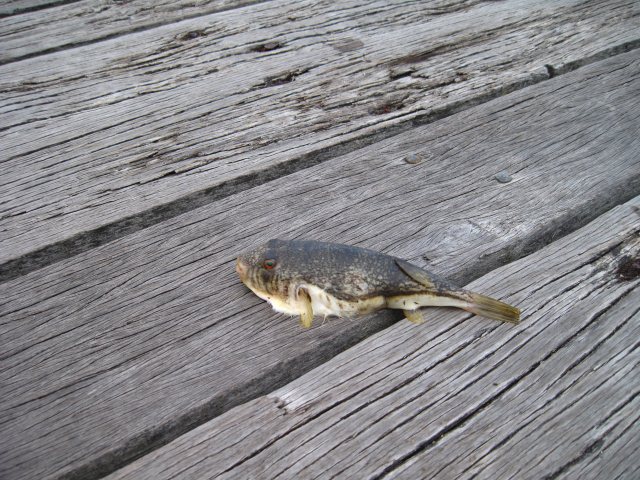
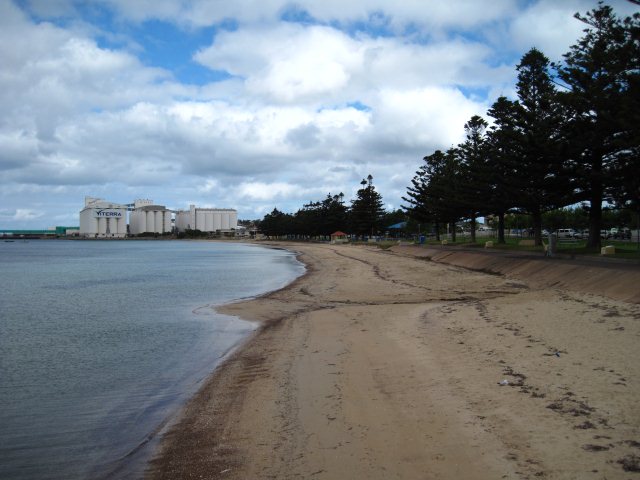
Since we were done with the sea lions fairly early, we got back to Port Lincoln for around 12:30. Jill and I decided to have a little wander around town. With the roads and pavements being so wide here and the American influence being so unexpectedly strong for shops and town layouts, almost all of the towns I’ve been to here have felt strangely familiar despite my never having set foot on the continent before. A significant difference jumped out at me straight away though; all of these towns are staggeringly beautiful. It really is obscene how much natural beauty Australia has been blessed with, Jill and I haven’t even seen the Gold Coast or the Great Barrier Reef yet, all the amazing things people normally associate with Australia  are still to come but we’re already blown away by what’s on offer here. It finally makes sense why all those people from home have moved half way across the world to come live here. So in Port Lincoln, we walked around the streets, sat for lunch in a beautiful park and had a stroll out on to the pier. It was a lovely afternoon and there was an added bonus on the pier where my karma got an unexpected nice guy boost. As we were walking out to the end of the pier, Jill and I saw a few people with fishing poles heading back in the other direction, we didn’t think too much of it as loads of people here fish but we were a little startled when we suddenly laid eyes on a puffer fish stuck to the pier. I guess the people leaving didn’t want it but neither did they  feel the need to throw it back. We thought it was dead but all of a sudden it took a deep breath. It was alive! Jill told me to throw it into the water. As I picked it up, its’ spikes were slowly peeling off the wooden pier, it was a very strange feeling and even though I was doing right by this wayward little fish it felt like I was hurting it. After I’d tossed it in to the water the fish just floated for a while, it looked like it had taken its last breath but about a minute later, it sparked back into life and its body slowly powered up again. Before long it had swam off and we couldn’t see it anymore. I felt really good about myself on the way back to the caravan park.
Our day swimming with the playful and loveable sea lions was done but we were full of excitement for what we’d be doing the next day; diving with very un-playful and unlovable great white sharks! After Jill’s episode on the sea lion boat ride she thought she’d exercise a little more prudence for the ride out the next day…

Those of you that know me already are aware I’m not a pickupand-go person, I’m very methodical with my planning and need to know what I’m doing well before I actually do it. Compared to Jill though, I’m the personification of a free spirit. That’s why it was so surprising to me that she threw caution to the wind for the sea lion boat ride and skipped her motion sickness medication. That ride didn’t go so well for her but what’s (sort of) funny for me is that even though she did take her medication for the boat ride to the sharks, she still got sick. In fact the whole boat (very nearly including the skipper too) got sick. The two and a half hour ride over was pretty grim. Jill was a wreck but I threw up at least 4 times as well. My iron stomach is a thing of legends; since the age of 3, I’ve never been ill or suffered any consequences from ingesting food or water abroad (even more noteworthy since I travel so much and place very low expectations on people for the standards of food hygiene they’ll provide), I can keep almost any amount of alcohol down and have eaten all sorts of unspeakably disgusting things (though I failed spectacularly when attempting to eat a cockroach in Thailand). My stomach has been able to deal with any amount of abuse I throw its way. With all of that, I made that the reasonable assumption that it wasn’t possible for me to get seasick. I’ve been in small boats on rough water many times and just recently had a  couple of hairy encounters when heading out to do some scuba diving but got though it all fine. This ride was something else. I felt like death. The waves were so big and unpredictable and we were just on them for such a long time that by the time we got to our destination, Neptune Island, everyone had thrown up either in the toilet, in a bag, over the side of the boat or some combination of the three. Even the sea hardened captain, a veteran of the fishing industry for many years admitted he was only ten minutes from losing it himself.

After the boat was anchored and we’d had a chance to settle down a bit, we suited up and got ready to go into the cage. These were shark infested waters we were on so we weren’t going in unprotected, the dive company had brought a massive cage out on the boat with us that we’d use when in the water. The water was freezing just like it had been the last day but this time I had a blanket of excitement with me to keep me warm. The cage was big enough for four people at a time, this worked out nicely since there were only five on the boat (Jill didn’t go in as she was feeling too delicate from the ride over). The three other people and I were in there for a long time and saw all sorts while we were down in that water. The water was deep, very deep and unlike my experiences whilst diving, I’d often see fish come into view and then disappear again back into the dark abyss. It was a little disconcerting how suddenly things could come into view down there, if a shark had appeared without warning at an inopportune moment, we would have been left without any recourse other than to get eaten. We saw countless shoals of trivali fish while we were under, they were swimming around in huge numbers, loads of other fish too but unfortunately, one thing that we didn’t see was sharks. We were told it’s really hit and miss whether you’ll see them and it just wasn’t our day. We all still had a great time out there though (apart from Jill that is!) Every now and then I’d come out of the water to do other stuff. I used the captain, Shaun’s, binoculars to look out at the nearby islands and when he started doing a little fishing, offered me the chance to join him. I even caught a fish on my first attempt! It was a fairly large (by English standards for fish) trivali, it must have weighed maybe 5kg.

The ride back was much more forgiving on all of us. Jill even managed to get some sleep and felt like gold when we made landfall. After all the excitement we had during the day it was a quiet night for us. A good thing too as we had to get up early the next day for our drive to Adelaide.

A couple of hours in to the drive, we stopped at Mt. Remarkable National Park for a 2km hike through an ancient gorge. It was stunning and raised my sky high opinion of Australia higher still.

Now that we’re in Adelaide, we’re seeing a different side to Australia. Away from the national parks, beaches, picturesque coastal towns and country side, Australian cities are a cut above too. I haven’t ever felt safer walking around a city at night and everyone has been so nice and friendly. The only drawback is the unexpectedly high prices but that’s a really shallow complaint in the face of everything else we’ve seen here.

Laos in Pictures

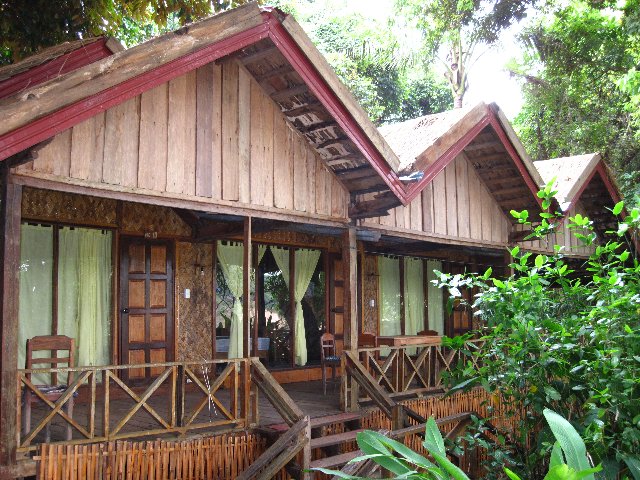
The forest lodge where I spent my time in Laos. It looks really nice but I had to fish a cockroach out of my bag within 15 minutes of arriving. It got better after that.

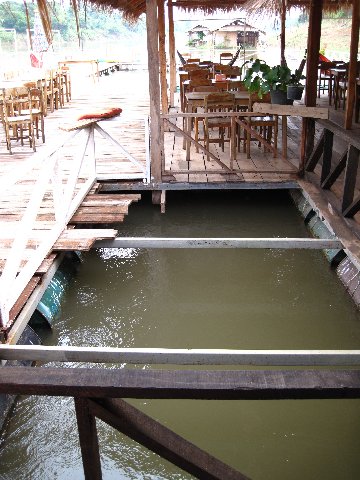
A nearby floating restaurant. I didn’t visit this one.

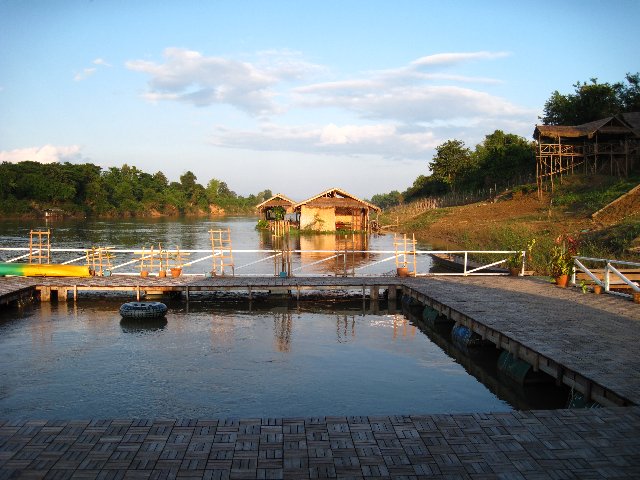
The floating restaurant built by the owners of my ecolodge. It was so easy spending hours here doing nothing but looking out at the river.

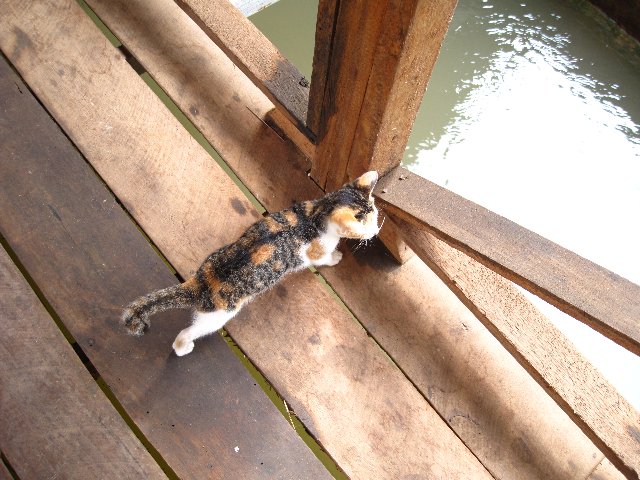
Kitty!


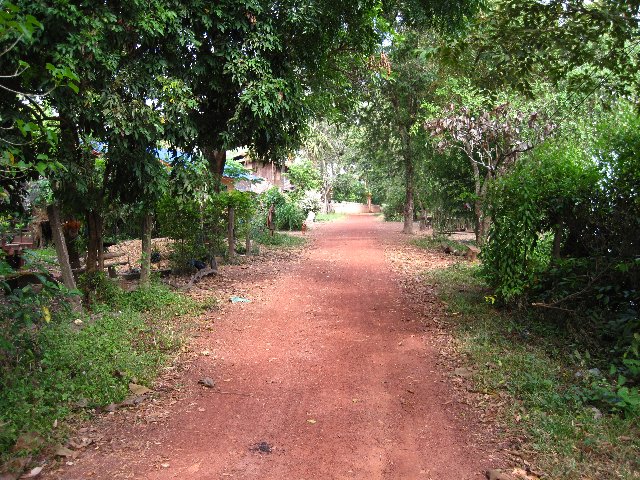
A dirt road I walked down when exploring a nearby village.


I think this cow was judging me. It stared at me for a suspiciously long time as I walked past.

Puppy!

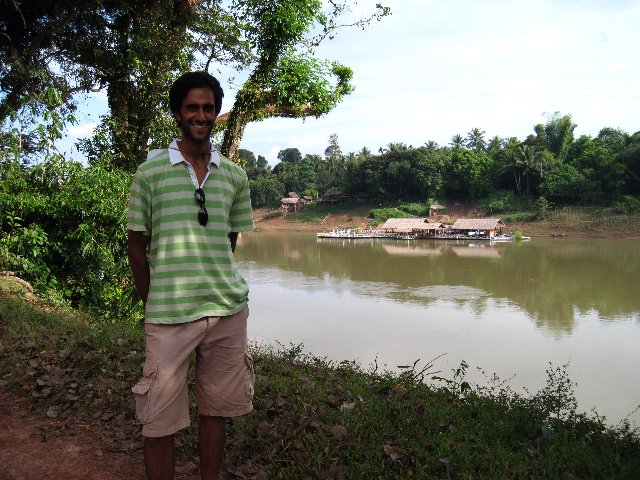
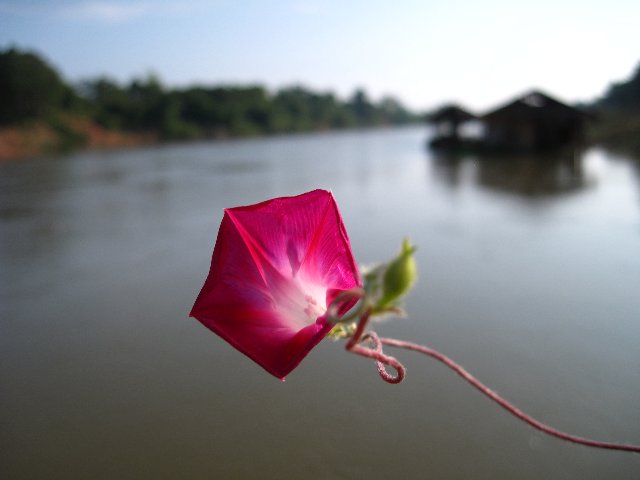
Across the river from the ecolodge.

The swimming pool that made up part of the floating restaurant.

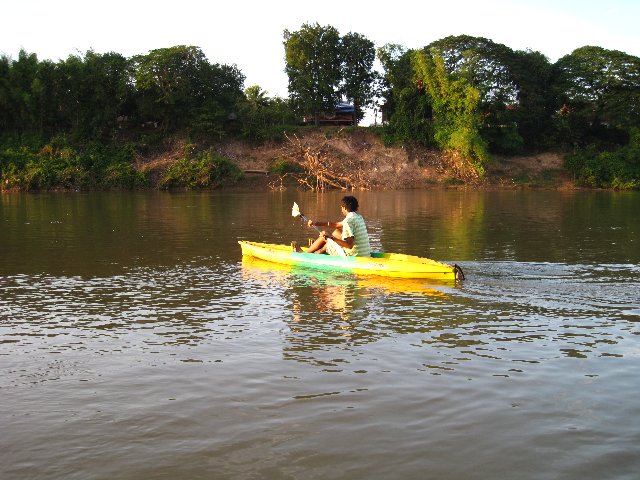
Kayaking on that river was really fun. You can’t really tell in the photo but the current was pretty strong; it nearly took me with it a few times.

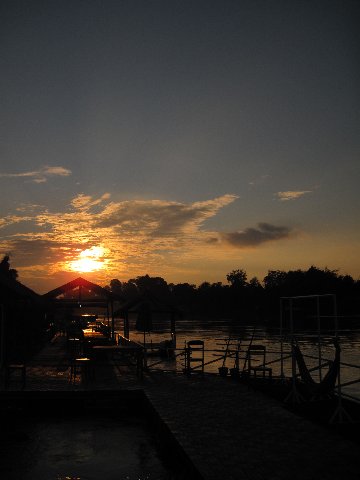
Sunset as seen from the floating restaurant.

I probably took way too many pictures of this sunset.

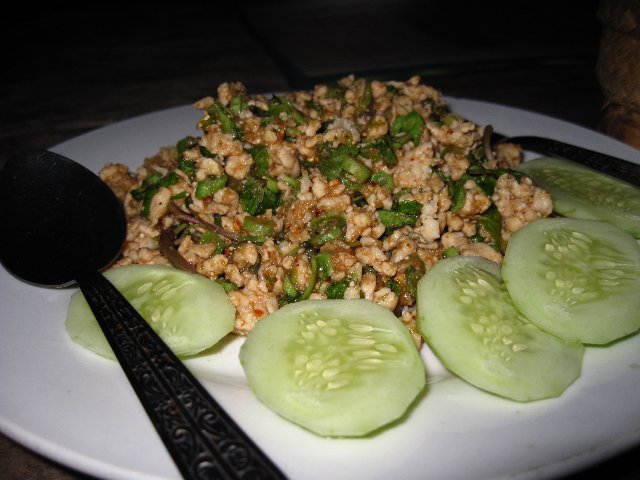
Behind Vietnamese, Laotian food is probably the best type of cuisine I’ve sampled on this trip. Beats Thai food hands down.

Arty shot.

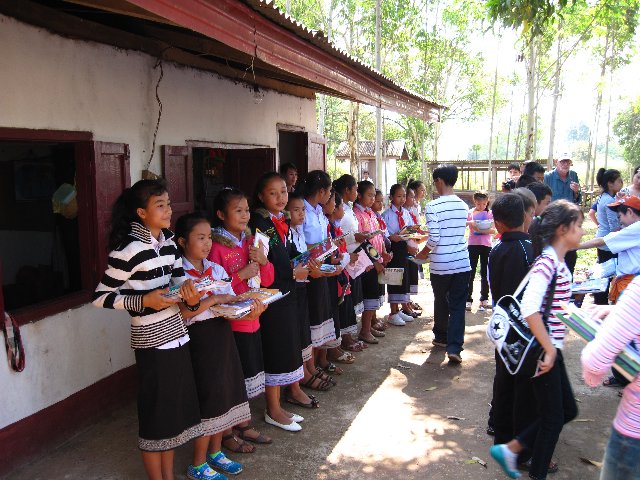
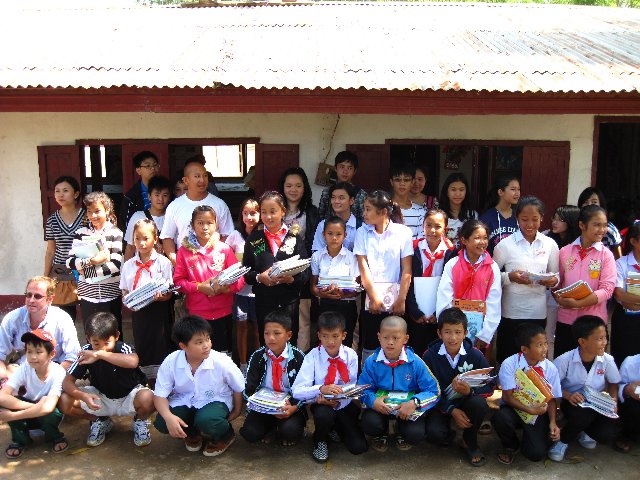
One of the things I did while I was here was tag along with the ecolodge owner for the presentation ceremony of a book donation scheme at a local school.

Books being handed out to the local kids.

The ceremony was unexpectedly elaborate, involving a fair bit of picture taking (not just by me) and congratulatory back slapping.

The cute kids at small local village I visited.

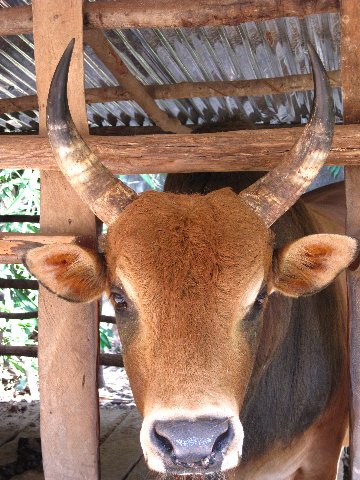
This bull looked badass and I had to take a picture of it. Apparently, one of the pastimes here is making bulls fight each other. Marginally better than Spanish bull fighting but not by much.

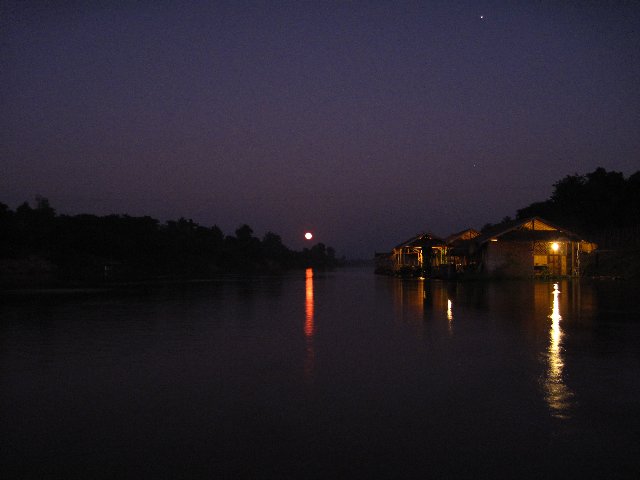
It’s difficult to tell in this shot but just after sunset, the moon was a deep shade of red for about 10 minutes.

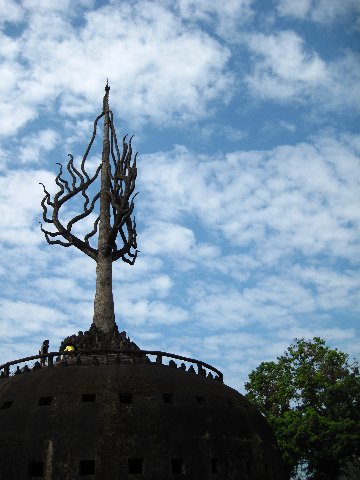
We climbed to the top of this stupa. There was a pretty sweet view from up there.
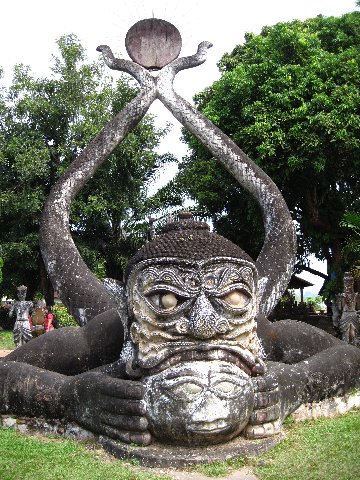
 

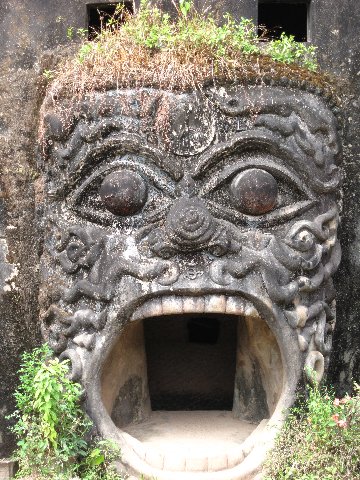
This was the (unspeakably brilliant) entrance to the stupa shown in the last shot.

This Buddha was huge but there were loads of other cool statues here too.

Like this one. I’m pretty sure this dude is chowing down on a human head and has two massive snakes coming out of his arse.
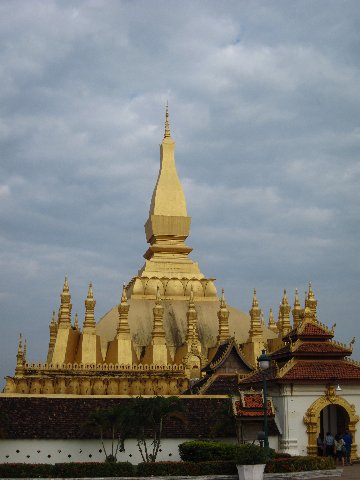
That Luang. The national symbol of Laos and its most important religious monument.

That Luang again.

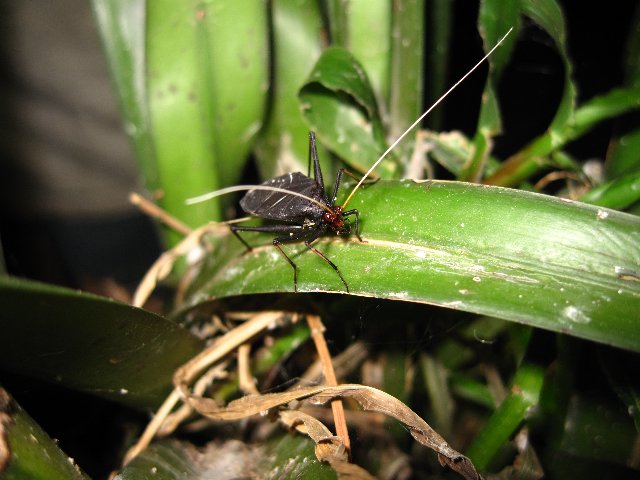
The sound this bug generated with its wings was ridiculously cool. I feel like it could be a decent base to a dance track if someone sampled it.