Mount Doom!

We left Waitomo for Tongariro National Park. It was a 2 and a half hour drive getting there. The drive was nice and the park was lovely but it wasn’t the reason we journeyed there. Mount Doom. The fire and brimstone seen during the finale of The Lord of the Rings films all came from Mount Doom. The mountain itself, Mount Doom, is part of the National Park! More accurately, Mount Doom is known as Mt. Ngauruhoe, 2291 metres above sea level. Jill had heard about this great path called the Tongariro Alpine Crossing, a 7 hour hike that included Mount Doom (I’m going to call it that instead of its actual name because it sounds way cooler) among its scenic detours. The only problem with it was that the hike was not a loop, its end point was several kilometres from the starting point so we’d have to catch a bus back to our car. Jill had another idea that I was instantly on board with though. What she suggested was that we start the Tongariro Crossing but instead of finishing it, we break off from the path and head towards Mount Doom, climb it and then go back the way we came to our car. Oh Yes! Mount Doom here we come!

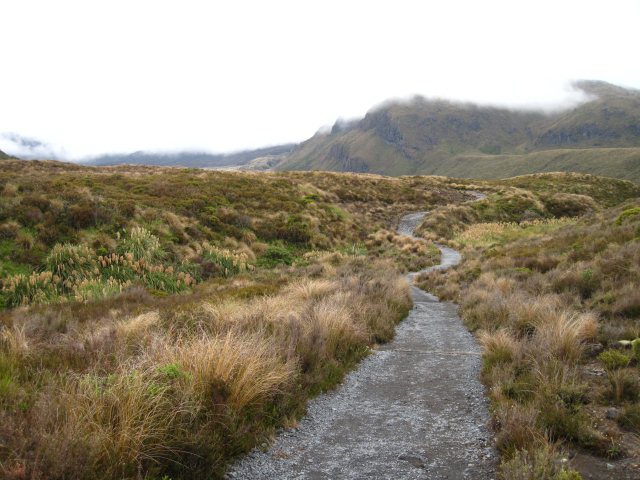
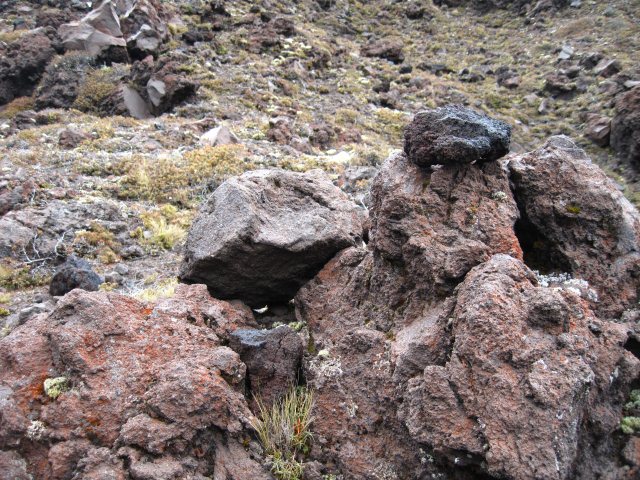
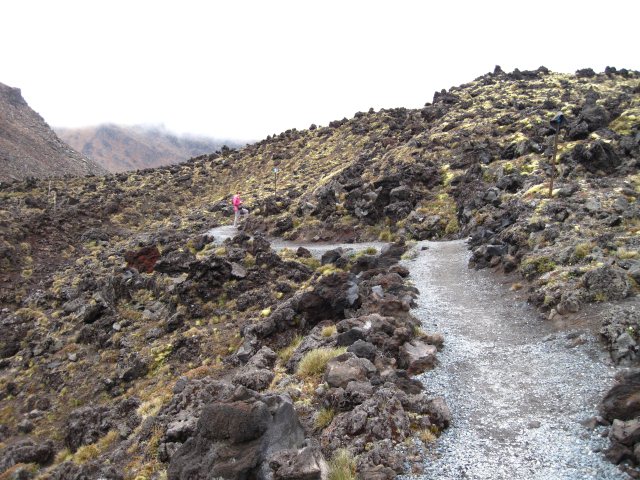
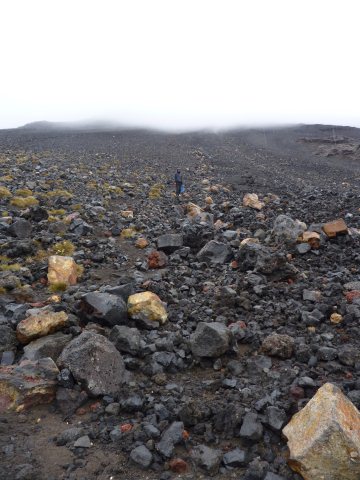
The path up there was one of the most strenuous hikes I’ve done in a long time. I count it up there with the Inca trail in Peru and climbing Mt. Fuji in Japan. My whole body ached for days after it was done. And it was only the beginning. Soon after setting off, we passed beautiful rolling hills engulfed in mist and fog and quaint little streams. There was an instantly recognisable charm to everything we were seeing. This was Lord of the Rings territory and it was stunning. Even the rock formations were beautiful. The first major feature we came across was the Soda Springs. They were basically a collection of small pools but were being fed by a waterfall. It was pretty cool and the walk to get there (a minor detour from the path to Mount Doom), was interesting because I had to avoid the myriad streams coming off the pools. It was fun but Jill didn’t come. We’d been hiking for an hour or two by this point and Jill was getting pretty tired, she didn’t fancy the detour so just waited for me to come back. There was a lot of hard graft on this hike. Many steep, uneven, rocky climbs awaited us. We’d done a fair few of them already but we still had our energy and the benefit of an oxygen rich environment. I wasn’t that tired, not yet anyway. The soil we were walking on started off looking relatively normal, it felt sort of like dry mud but with more particulants. But this was an active volcano we were on (this being Mount Doom, I wouldn’t have had it any other way!) so the types of rock and soil we were seeing changed as we got closer to the base of the mountain. There were all sorts of dark igneous and metamorphic rocks around, huge amounts of black volcanic ash around too. There was actually a sign further up the mountain that said that all of the rocks and ash currently on the surface of the volcano were created during an eruption in 1975. Throughout the day, pretty much from the moment we left our van, there was a slow but steady rainfall lightly showering down on us. It didn’t bother us at first, it was actually quite nice since it was keeping us cool but as the day wore on it gradually picked up. It only really became a problem after lunch but by that point it was a pretty big problem. The path leading to Mount Doom was beating me down by attrition, it was death by a thousand cuts. Mount Doom itself though was just fucking savage. At no point during the climb did I think I couldn’t make it like Jill so pessimistically did about herself but it was sapping my energy like nothing else. I had to slow down to a snail’s pace to keep going but keep going I did. And I made sure Jill kept going too. By the time Jill suggested we stop for lunch I was feeling pretty weak, a little light headed too. Altitude sickness is not my friend. But after I ate something, I felt like I could do anything! It was like I had the strength and energy of an ox! This was definitely a good thing because I was going to need it. We’d been climbing for three hours already and both became a little demoralised when we saw that we hadn’t even reached the tough part yet. Compared to what we’d done already, the next bit looked like it was practically vertical. It was a very good thing I felt thoroughly energised, it gave me the mental strength I needed to go on. But back to the big problem. The rain had been gradually picking up all day but while we were eating it changed quite noticeably. We were getting soaked and there was another 3 hours to go on the toughest terrain of the whole hike. The volcanic ash was mixing with the water and slowly becoming like slippery mud, the rain wasn’t helping the grip provided by the rocks either. And when combined with the wind, had left us seriously chilled, Jill could barely feel her fingers any more. I kept looking up and reassessing the worsening conditions. After lunch, Jill was constantly saying we should turn back. I kept reassessing the conditions. I didn’t want to admit defeat but in my heart I knew that it was too dangerous to continue in rain like this. The low-lying clouds and fog were so thick that they were seriously obscuring our visibility. There were times as we were climbing that we couldn’t even see the path back down. This was not good. In the end we made a respectable effort, we were about 30 minutes from the summit but we didn’t make it to the top. With nobody else out there though it was just too risky. It would have been reckless to continue. I’m happy though, I’ve seen all of Mount Doom’s menace up close and personal and for all intents and purposes saw everything it had to offer. It’s a shame about the weather that day but it couldn’t have been helped. Despite becoming progressively more and more wet as we descended (it carried on raining for about 20 hours after we left), I think I appreciated the surrounding scenery more on the way down than I did on the way up. The mountains around us were truly beautiful. Beautiful in a way that I hadn’t seen before. I’ve been in environments like this on other hikes but New Zealand has an uncanny ability to constantly amaze and surprise me. The mountains around us were stunning and the way the wispy clouds were moving around them lent them an ethereal, otherworldly quality. There were huge mounds of snow on some of the other mountains, a stark contrast to the hotbed of volcanic activity that we were currently standing on. The rivers, the streams, small waterfalls, the hills, grass, plants, rocks, the clouds, even the rain and wind. It all came together to create an incredible, unique picture. Even though we didn’t make it to the top, I’m so glad we went. It was amazing and now I’m even MORE excited to do the Routeburn Track.

Hello New Zealand!

The air is different in New Zealand. It just is. When I take a deep breath here, I feel energised, energised in a way that I don’t at home. This could be addictive…

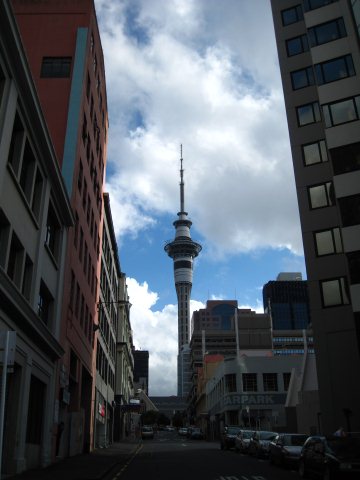
At the end of Australia, I’d been travelling through Asia and Australasia for 4 months, travel fatigue had started to set in and my excitement levels for New Zealand had waned considerably. People always say that New Zealand is incredible, a life changing experience even, but I didn’t care, I wanted to go home. How quickly things change. Auckland was a fantastic city. As nice as my Australia favourite Adelaide, not in the same league as Sydney, but with a population of only 4.3 million people, New Zealand couldn’t have a mega city like that. Even Auckland, its’ most populace city with 1.3 million residents, feels very sparsely populated and light on people. It is lovely though. Businesses like Deloitte and PWC have set up shop here, there’s plenty of money coming in and a fair bit to do but it has this small city charm that’s just so at odds with its relatively high population. I don’t know how they managed that. The Sky Tower here is the tallest man-made structure in New Zealand and the viewing level (138m high), is the highest point you can be at in any New Zealand city. It felt a little strange with the Christmas lights and such still up on the streets and in the shopping centres (I saw a very different, much shitter version of Westfield here) but it was very nice walking around. Jill found another ‘Lush’ shop here, making it four countries she’s now seen them in (America, England, Australia and now New Zealand), and we had dinner at a Thai place. I ended up eating chicken larb though. I really didn’t think I’d ever eat that again after leaving Laos, I really need to find a place that sells it back home. The weather was overcast and very reminiscent of home, I was reassuringly informed the next day that the highest temperature Auckland sees (Auckland being the city furthest up New Zealand and thus closest to the equator), is around 26 or 27. Fantastic! No Cairns and Mission Beach style oven makings for me!

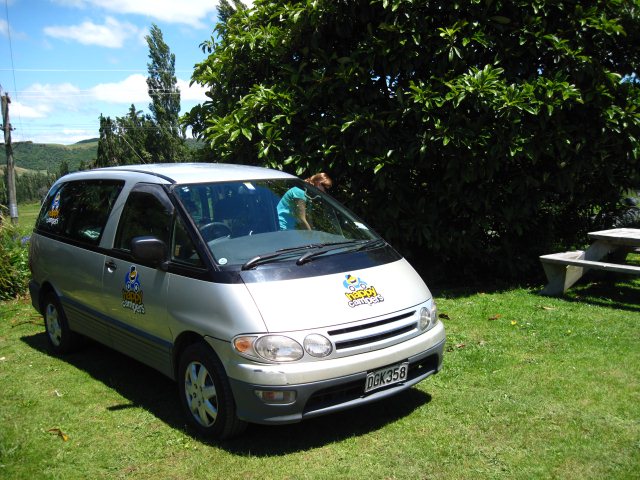
We left our Auckland hostel, Base, and caught a taxi to the campervan place. The only problem being that Jill wasn’t nearly as good with her choice of vehicle this time around. Campervan? Mini-van more like! It was a people carrier, a fucking people carrier! This would not be as comfortable as our campervan in Australia and it took a while for the shock to subside. Nonetheless, we made the most of it and set off.

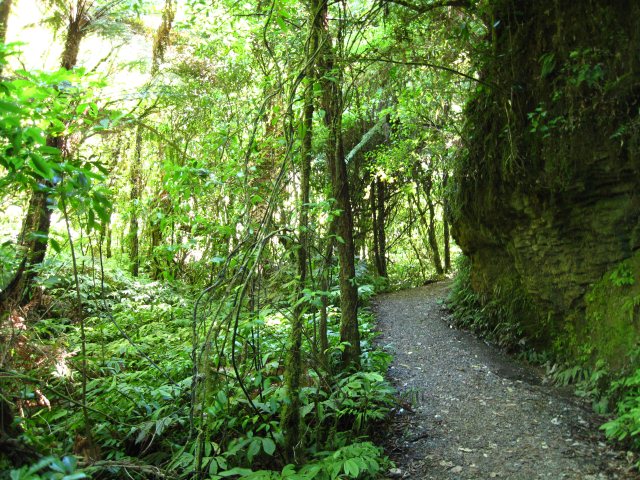
The beautiful New Zealand countryside, beautiful in a way that Australia wasn’t, had a very calming effect on me. I could feel the stress leaving my body. Driving this automatic barely felt like driving at all, it was very relaxing. We drove through Otorohanga and arrived in the world famous Waitomo at around 2pm. After we’d rearranged our ‘camper’ and put our bags into the storage areas we had, things were looking much better. Also, when Jill was clearing up she found a six pack of beer! And four of them were still in there, unopened! We left the caravan park in good spirits and headed towards our first activity of New Zealand, the Ruakuri bushwalk trail. Ruakuri is one of the most stunning caves in the Waitomo region and as such, this trail did not disappoint. We walked through a trail covered with thick vegetation and forest, saw rivers as they entered and exited various cave openings and even walked through small sections of Ruakuri cave itself. The trail was very picturesque and very easily accessible. You’d normally have to travel quite far outside a city to see something like this but here we were, only 2 and a half hours from New Zealand’s most populace city and we couldn’t have felt further from civilisation. There was an incredible feeling of being one with nature, a feeling of remoteness and isolation but there were people so nearby. These ancient caves and trees were stunning and this was only the beginning of our New Zealand adventure. There was so much more to come, I quickly realised that I’d come to love this place. And it wouldn’t take very long.

Not very long indeed. A month before my trip began I asked Jill what her six most anticipated activities of Australia and New Zealand were. I also wrote such a list. With the wealth of activities we’d be doing, the rich beauty and natural wonder of the places we’d be visiting, I managed to write a list with only six things on it. And at the top of that list? The thing I’d be doing today. Of all the incredible things I’d be doing, the tour of a New Zealand cave system was my most anticipated activity. This tour was carrying a huge weight of expectation from me but you know what? It still blew me away. The Black Abyss Tour by the Legendary Black Water Rafting Company was absolutely amazing. There are not enough superlatives for this adventure activity, black water rafting is just amazing.

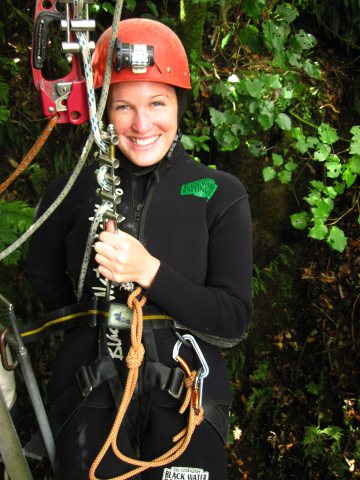
Tom and Andy, our fantastic tour guides, showed us the ropes (literally) and made sure we knew what we were doing. Soon after that we began our tour, starting with the 35 metre abseil down into the stunning Ruakuri cave. There were some very narrow sections on the descent, narrow enough that claustrophobics would not have had an easy time of it. Going down into a pitch black hole with no idea how far away the bottom is wasn’t an easy proposition to begin with though. On the bottom we waited for everyone else before walking a short section on the very uneven and rocky cave floor. We were walking to a zipline in the cave. Tom hooked us up and we were off. I’ve been on a number of ziplines by this point, including a 100 metre long one, high above the rainforest canopy in Langkawi but this, this was something else. Flying down a zipline of any length in pitch black darkness is a very cool experience. Another rocky walk after that and we were at our inner tubes. We sat down with our legs dangling over the edge of the rocks for a bit. Like every other point in the cave it was pitch black, the only illumination was from our head lights. The underground river was about 2 metres below our feet, if I leaned over my knees I could see my headlight reflected in it. We had some hot chocolate and something like a flapjack. Before, you guessed it; we jumped in to the river with our inner tubes held firmly against our arses! We each generated a thunderous noise upon contact with the river. The water was bloody freezing! Tom got some good pictures of us jumping in. We paddled a bit (our arses were still in the tube so we used our hands) to a rope that was attached to one of the cave walls. We pulled ourselves upstream using the rope, my arms were pretty tired by the end of it, we must have been going for about 15-20 minutes. The surroundings were amazing. Our headlights were providing only a faint illumination but I could still make out that this cave was massive, the cave ceiling went up really far. And on that ceiling there were hundreds, no thousands, of tiny blue lights. Glow worms (or as we were later informed, glow maggots). They were beautiful and we got a much better look shortly when our lights were out. At the end of the rope we pulled ourselves up and climbed onto some rocks. We walked along them for about 10 metres before coming to another point from which we could jump. Inner tubes held firmly against our bums, in we went again. This time though we were going with the current. We all turned off our headlights, I took Jill’s hand and we floated down the river in darkness, the cave ceiling faintly visible because of the glow ‘worms’ (glow maggots doesn’t sound as nice). We briefly came to a stop by a cave wall so Tom could give us a closer look at the worms and show us the fine, dangling, spider web like threads they spin to catch food. He explained how it is that they glow (apparently, it’s their physical waste), this was also when he told us that they’re maggots, not worms. We formed a long line after that, there were 8 of us and we each put our feet under the arms of the person in front. I was on the end. As we drifted down that cave in darkness, the only illumination coming from glowing worms on the ceiling and walls, it became so easy to let the rest of the world slide away. Any stress that you might have in your body, it just evaporates, it fades away. I’m only 3 days into my New Zealand adventure and I’ve already been treated to one of the most incredible sights I’ve ever seen.

When we arrived back at our starting point, we threw our tube up to Andy (who was on the rocks that we had first jumped from) and continued with Tom down what’s called the drunken walk. Because of the uneven rocks and relatively fast flowing water, it simulates being drunk without you having drank anything. Walking down it was pretty fun, there were few sections where the cave ceiling dipped down very low, low enough that there was maybe only a foot between the water and the top of the cave. Those sections were really narrow too. Going through them was interesting. The water got pretty rough in places, there was this really cool slide the guys had set up when we got to our first mini waterfall too. It wasn’t very long and the angle of descent was pretty shallow but it was cool. We were wading through some very deep water in that cave and with pretty rough and slippery terrain underfoot. I was submerged to my neck so with the exception of the only other guy on the tour, everyone else had to swim those sections. There were some more low ceilings and narrow passages too. We had a short break after that. Tom and Andy treated us to some chocolate and hot lemon juice. It was the calm before the storm. Our time in the cave was coming to an end and there were two ways back to the top: a path filled with, as Tom put it, bunnies, beer and good times, or a gruesome, spirit destroying slog that would put us all to the test and shake us to our very core. Guess what we picked?

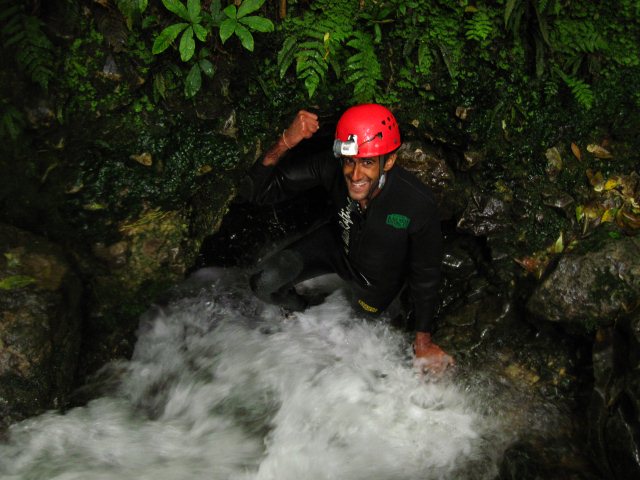
No prizes for getting it right! Really tight, narrow tunnels to squeeze through (Jill’s mild claustrophobia was tested), water up to our necks and real, unassisted rock climbing. We squeezed through a narrow tunnel only to be greeted by a raging waterfall. It wouldn’t have looked very big if seen from afar but because the cavern it was feeding into was so small, it seemed immense. There was definitely a huge volume of water passing through every second. Being right under it was savage. It was dumping rocks along with the water so we had to stay clear of the main flow but the dense spray coming off of it was only amplified by the close quarters. You couldn’t see unless you squinted and it was difficult to hear what even the person next to you was saying. Our backs hugged the cavern wall as we made our way around from the back of the waterfall to the front. We were going to fucking climb this beast! There were plenty of places to put our hands and feet but it was tight and there were no safety ropes. It was only wide enough for one person to go through at a time but if you slipped and took a drop there was a good chance you’d die. Once we’d scaled it and were at the top we had to climb another waterfall! At the top of that one there was one more tight, narrow, almost flooded tunnel to crawl through before the first signs of daylight were visible. We climbed a little more before finally, we had reached the surface! The sun was a glorious sight after having been 25 metres underground in a flooded, pitch black cave. We took some more pictures by a small waterfall at the cave exit (or entrance depending on which way you were going) and started our hike back to the van.

Whitsunday Islands

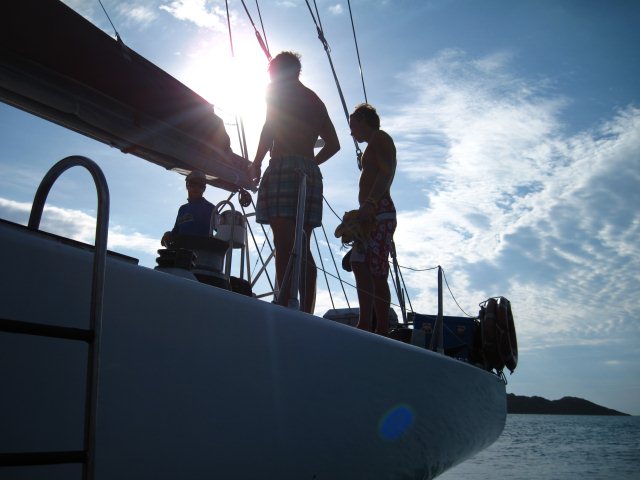
We got to Airlie Beach late in the evening and left early the next morning for our tour of the Whitsundays, a stunning island chain off Australia’s east coast. The Boomerang, an 83ft long, 20ft wide maxi racing yacht, would be our ride. Before being used for Whitsunday sailing tours, Boomerang (under its previous name of Onedine VII) was used to great success in races all over the world, including the prestigious World Maxi Race series. Our 2 day 2 night sailing tour aboard Boomerang was a very exciting experience; all of the guests got stuck in and didn’t hesitate to help our fantastic crew get the best performance out of this famous vessel. There were 31 people onboard during the trip including our 3 crew members, skipper Max, first mate Jordan and chef Griff. Depending on how familiar you are with yachts you probably wouldn’t have looked at Boomerang and thought she was big enough to comfortably hold all of us. You’d partially be right; it was bloody hot in those bunks at night and the double Jill and I were assigned was barely big enough for the both of us. There was maybe a foot and a half between the bottom of the bed and the ceiling and there were sections where it came right down. I whacked my head on those sections a bunch of times, I really should have picked up on that quicker and I wish I could stop having to learn lessons like this the hard way. That said though, there was no shortage of room up top where we spent nearly all our time and the vessel had a full galley, 3 dining tables and 3 bathrooms. We weren’t short of space there and since this trip was definitely aimed at a younger audience (drinking and partying were the order of the day), we got on famously with everyone onboard. There were some great characters from the British Isles there, a bunch of Swedes, Germans, Swiss and a Dutchman too. Apart from Jill and an Aussie couple it was a European smorgasbord of seatastic adventure!

We did a fair bit of sailing on the first day, making sure we covered the distance we needed to. Before the Whitsundays, I hadn’t been on a ship with a sail for an extended period of time, but got a good taste of how life on a boat like this would be during the trip. We turned cranks to raise sails, tacked when changing direction, sat off the edge on both the port and starboard sides during sharp turns (the yacht was cutting through some serious water; it must have been angled at something like 50 degrees during most of the turns) and made decisions affecting our heading based on how long our alcohol supply would last. Sailing is great. As we sat in our swimwear with our legs over the edge of the yacht, the waves splashing on us as they gently rocked the boat, we had the wind in our hair, the sun on our skin, great music playing on the loudspeakers and fantastic people to keep us company. The islands themselves didn’t disappoint either; our surroundings during the journey were incredibly beautiful. For those of you that have read my previous posts, I felt like I did in Halong Bay, Vietnam. I really didn’t know which way to look it was almost too much to take in. It was definitely too much to capture with a camera. We arrived at our spot for the night in good time so Max suggested we go for a swim. It was a good way to get better acquainted with everyone.

I mentioned earlier that the bunks were a little cramped but by the time we actually had to get into them the initial shock of seeing them had subsided. When we got in though there was another shock: how hot and sticky it would be sleeping in them. It was very difficult getting settled and I don’t think I’ve ever been as hot or as uncomfortable when I’ve been trying to go to sleep before. Everyone was a hot sweaty mess when they woke up. It wasn’t so great for the guys but a lot of the girls were mortified at how horrible they looked, felt and smelled in such close quarters to all of these other people. We did a lot of excellent stuff on the second day that more than made up for the sleeping arrangements though.

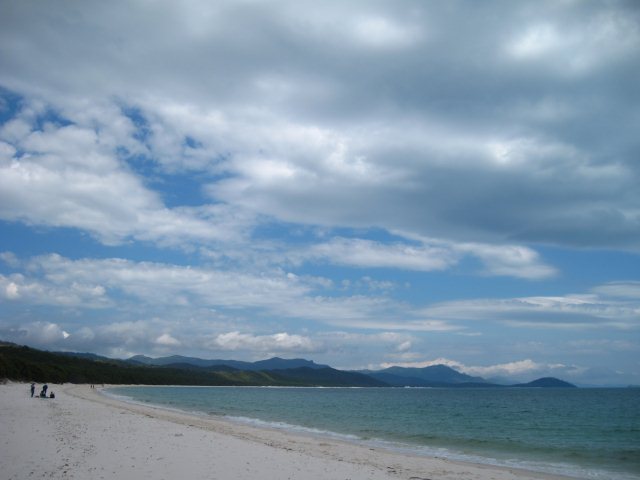
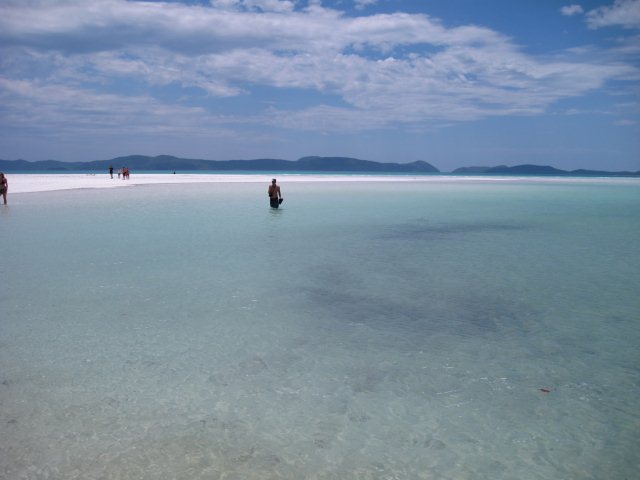
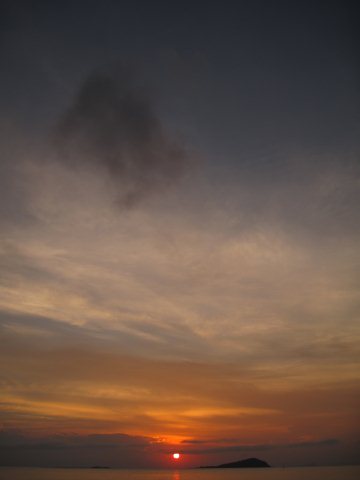
After an early start at 7 for breakfast we sailed to one of the Whitsunday Islands for a 30 minute bushwalk. At the end of the walk we’d be at Whitehaven Beach, one of Australia’s most impressive gems and home to the finest silica sand in the world. The bushwalk was VERY hot and sweaty, we were trekking on a mostly shady path through trees and thick vegetation but we were all ready for it to end long before it actually did. We took a detour to a scenic lookout point so we could see what Boomerang looks like from a distance but we more than relived when we arrived at the crystal clear, blue waters of Whitehaven. We couldn’t get into the water quick enough. We all admired the world famous sand composed 99% of silica after we’d had the chance to cool off. This sand is so soft, pure and free of impurities that when NASA was deciding which sand to use for the glass on the Hubble telescope they had only one place in mind. NASA paid the Australian government millions of dollars for the privilege of using this sand. It really was a beautiful beach but we were all surprised when we got to the next place and it was even more stunning. I’ve seen a lot of very nice, postcard perfect beaches on my travels through Asia and Australia but I wouldn’t hesitate to call this one the most stunning of them all. We hiked to a lookout point on this island too before heading back to Boomerang on a dinghy for some more sailing. There were some extreme turns on the way to our first snorkeling spot and then more as we headed to the second one. I’m sure Max and Jordan did a lot of those turns just to give us all a good time but it was pretty cool. The snorkeling sites, especially the second one, were too. The Whitsundays are home to an incredible variety of marine life and the weather, current and water conditions were just perfect for letting us get the most of our time here. We were a little disappointed we didn’t see turtles, something the Whitsundays are famous for but we had a fantastic time in the water. We were treated to an amazing sunset as we sailed to our stop for the night. It was quite possibly the nicest sunset I’ve ever seen. Along the way we saw the smallest lighthouse in the southern hemisphere. There was also an eagle that was strangely intrigued by our boat. “EAGLE, EAGLE!”, Jordan shouted. “COME GET OUR SAUSAGE!”. Max and Jordan were going crazy acting like they’d taken a few too many magic mushrooms. It was brilliant, they got everyone really excited as the eagle got closer. When it was nearing us, Jordan pulled out a sausage (thankfully not his own) and started waving it in the air. “SAUSAGE! SAUSAGE!”. When the eagle was right above us he threw the sausage into the air. There were gasps and then an eruption of cheers and applause as everyone onboard celebrated the eagle’s success. The crew was all brilliant guys and a big part of why I had such a great time there was the three of them. Griff’s cooking was delicious, I thought it was miraculous that anything came out of that tiny kitchen let alone the wonders Griff cooked up for us. And all three of them were hilarious. The sorts of people I’d be happy to call my friends.

There was one more snorkeling site the next day before we had a chilled sail back to the mainland. It was another incredible site but this one had an added treat. Turtles! The first turtles either Jill or I had seen in the wild. Swimming with them was an amazing experience. We were all in a fantastic mood as we headed back and relished the fact that we saw everything the Whitsundays have to offer during our short time there.

After Boomerang was docked and we were heading off, Max told us about a get together that happens in a local bar for the guests of these trips. Jill and I would have gone anyway but it worked out perfectly since we wouldn’t be catching our bus to the next town until 11:45 that night.

It had only been a few hours since we last saw them but talking to everyone again was great. We partied it up over drinks as a final goodbye before Jill and I headed off for Rockhampton.

Green and Blue

Our flight from Sydney to Cairns arrived on time, as did the bus at Cairns airport that would be taking us to Port Douglas. It was quite a relaxing one and a half hour drive but the heat outside was a serious body shock. The air conditioned bus was cool enough for both Jill and I to fall asleep straight away though. It’s a shame we fell asleep so quickly because the scenery was a uniquely beautiful thing for Australia. It looked like the sort of thing I’d been seeing in Thailand, Cambodia and Vietnam, the tropical trees and plants I was seeing could have come right from there, I didn’t know Australia could offer this type of environment. It felt like I was in a rainforest while we were still on the road.

We did a couple of big things in Port Douglas, the first was the Daintree Rainforest tour and the second was scuba diving on the wonder of wonders, the Great Barrier Reef.

For the rainforest tour Pete, our guide and driver, picked us up at our hostel at 7:30am. Jill and I were the only ones on the tour and it didn’t take long before our first stop. Barely a couple of minutes from our hostel, Pete spotted a gathering of fruit bats so he stopped immediately and took the opportunity to tell us a few things about them. There was then a brief roadside stop as Pete told us about banana plantations and how they work. Enroute to our destination the next stop again felt like it was by the road but this one was actually a reserve or pseudo zoo of some kind. Pete stopped here to show us the cool green ant colony I’ll mention below. When we were done we continued towards the forest in Pete’s Land Rover. The drive was maybe an hour and a half but Pete’s relentlessly interesting information and engaging style of conversation had (at least) me captivated the whole time. After that, we took a ferry to cross the river. Before we actually got to the forest though there was one more stop; a stunning lookout point the aboriginals (or bama, as they refer to themselves) used when establishing the lay of the land. Pete told us about the cassowary, laciandra, licuala, cassowary plum and mamosa plant (see below). He also showed us techniques to use when testing wild soft skinned fruit for suitability to consume. When he was done here we hopped back in the car and had a few more minutes before we got to the starting point for our forest walk. On the way we had a brief roadside stop to try some wild jackfruit, it was delicious and tasted like banana pineapple bubble gum.
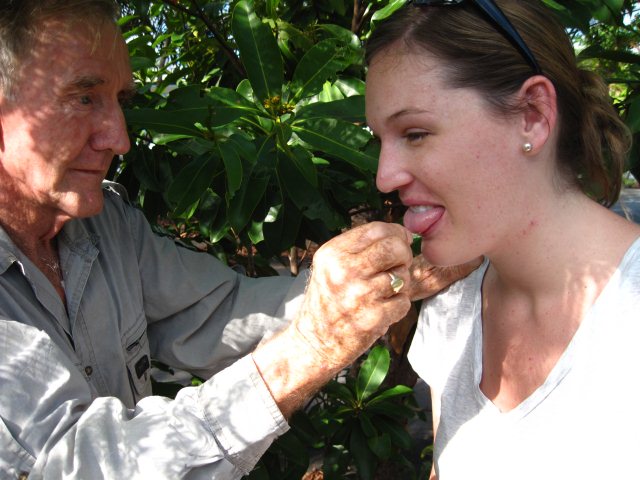
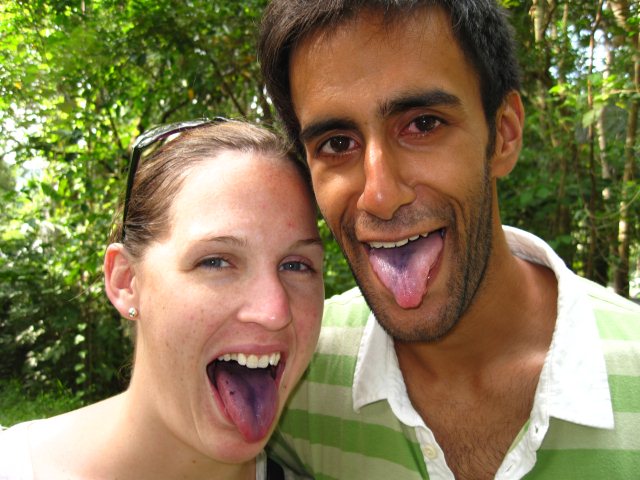
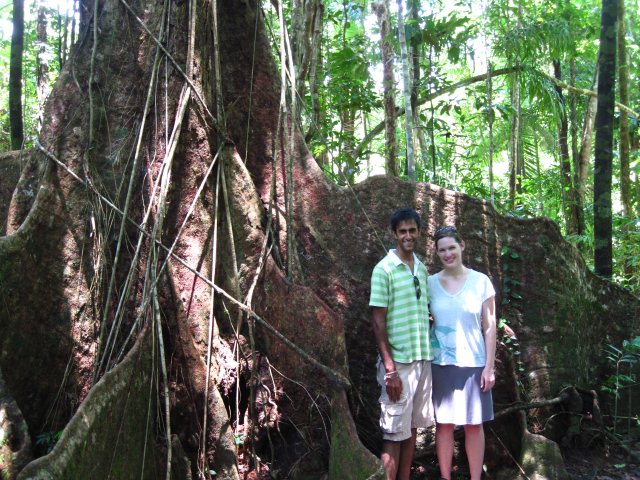
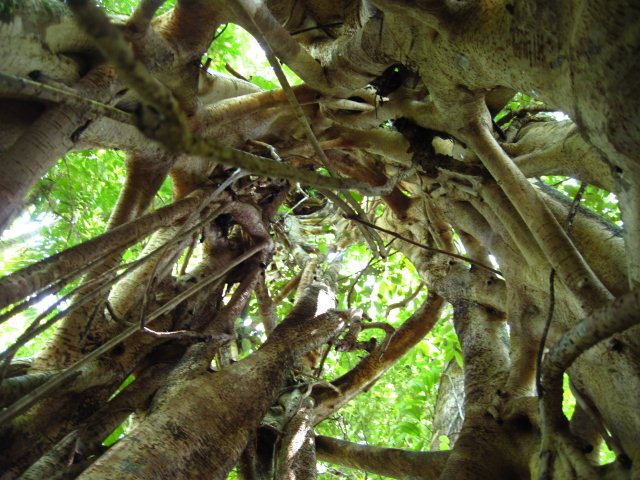
When we finally got into the forest for our bush walk, we didn’t leave for a good 3 or so hours. During that time Pete told us too many interesting things to remember but some that stood out were: triangular spider, davidson plum, spurwood mahogany tree, not sure what they are called but a wispy vine with small, sharp thorns on it, Daintree’s version of poison ivy (this one is much, much worse because it causes the same or possibly even worse agonising pain but the microscopic barbs on the leaves of the plant become embedded in the skin so the pain they cause lasts for about 4 months), parasitic fig trees, one large example of which Jill and I climbed inside, all sorts of trees and leaves that have medicinal and narcotic properties and tarzan vines (one of which Jill and I attempted to climb). Before we got to the fig trees we had to stride through a large stream to reach that section of forest, during that little adventure we picked up a few uninvited guests. Leeches. We knew they were no problem though and as Pete was telling us all about them, he informed us that it’s good karma to leave them on until they’re full, so we did. They were only small but they drink 10 times their own body weight in blood. I’ve got before and after pictures of them and the difference is staggering, the leech is unrecognisable when it’s full. If you allow a leech to get its fill when you find one on you, it won’t need to eat again for another year. Also, this is just by the by but if you ever get a leech on your eyeball you should leave it there until it falls off of its own accord. If you try forcing it off in any way it will spasm, possibly taking some of your cornea with it. This won’t blind you but it will give you distorted vision. After the main forest walk we hopped back in the Land Rover and Pete took us to a little spot he’s been cultivating over the last 12 years. We stopped by the side of the road and came across a makeshift doorway Pete had fashioned to deter visitors from his little sanctuary. He discovered a little stream here 12 years ago and since then, one stone at a time, has been building up an impressive dam that has turned the stream into a lovely natural swimming pool. He’s even fashioned his own ‘furniture’ by stacking some of the larger rocks. This is where we had lunch. After we’d eaten and had a swim, Pete showed us how the bama captured their artwork; they’d use oxidised red stones as chalk and larger flat rocks as a canvas. Pete also showed us the ‘cooee’ stick, an amusing trick that’s sure to entertain anyone, especially kids. We headed to Cape Tribulation beach after that, it was absolutely stunning. We walked through a nice little mangrove on the way there from our parking spot, Pete showed us all sorts of cool and interesting seeds and plants while we were on the beach too.  As we walked there, one of the things he had us do was try a berry he found. It was called blue tongue and guess what? It turned our tongues blue. Pete made us lick, taste, chew on or eat at least 8 different kinds of wild fruit, plant or insect while we were out on the tour, it was a really cool way of keeping the tour fresh and exciting. (Green ant, jack fruit, laciandra, davidson plum, small fig, a mushroom like plant growing around Pete’s ‘swimming pool’, blue tongue and the ‘magic fruit’).
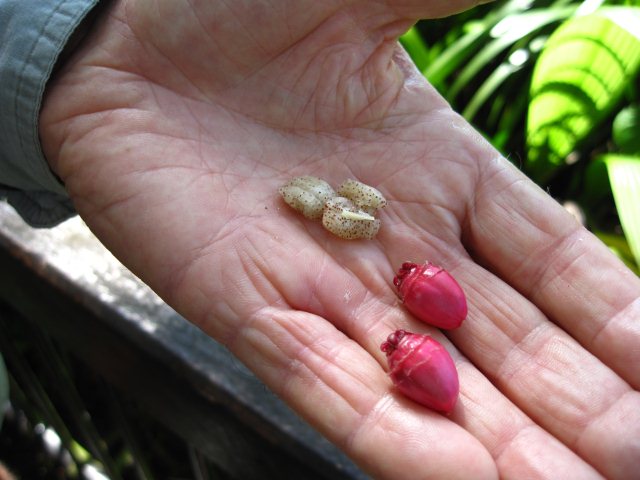
As we were leaving, when we waited for the ferry to take us back to the other side of the river, Pete showed us one final thing. He was going to perform a miracle for us. We tried the davidson plum earlier and knew that it was very sour, it has a lemon like taste. When he picked one for us to try earlier in the day he took a second one and popped into his water bottle for what he said was an ‘experiment’. Well it was finally experiment time! Pete had both Jill and I chew on what he called a miracle fruit for six minutes and then had us try the davidson plum again. True to his word, Pete had performed a miracle; it now tasted very sweet and completely different from before. It turns out that Pete’s miracle fruit had temporarily desensitised the sour taste buds on our tongues and made everything taste different. Apparently, it makes beer taste like wine but I didn’t have a chance to test that out.
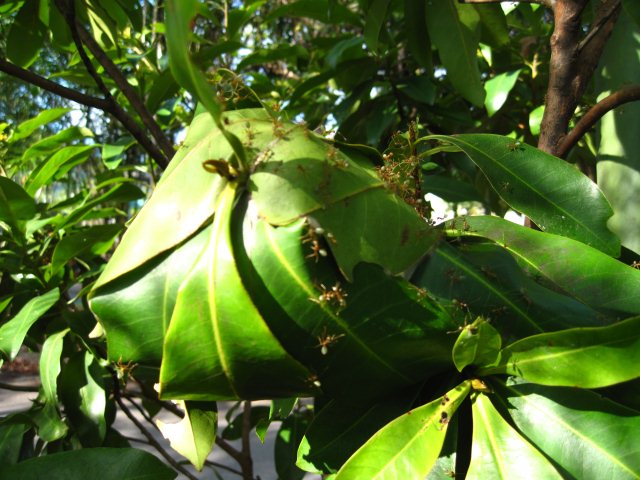
I (and possibly Jill but I’m not too sure on that one) learned far too much on this tour for us not to share it with you. I got schooled in a lot of stuff during the day so I’m going to drop some steaming hot knowledge on you: Green ants (so called because of their large green abdomens) look more or less like normal ants but if you lick the tip of their abdomen (which we did because Pete told us to), you get a nice little kick. Pete pulled one of the ants off the impressive looking leaf hive they were crawling on and while holding the top half of the ant told me to lick the bottom half, it was sour like a lemon or sort of like putting your tongue on an acid based battery (I did dumb stuff as a kid). Jill did the same but since she isn’t a lemon officianado like myself, had a much stronger reaction to it. (Interjection by Jill: That was not true, Pete made me lick 3 ant butts because he thought I wasn’t getting the right reaction to it.)

Banana is not a plant, tree or palm, it’s an herb. The banana is like a flower, the ‘branch’ is like the stem. Once you cut the flower, the stem will never produce bananas again, you have to cut it down and start again. Despite the fact that Australia has every latitude and type of environment necessary to grow anything that any other country can grow, Australia has no commercial agricultural product; everything that grows here has been brought here from somewhere else.

The cassowary is north western Australia’s large bird. It sort of looks like the large bird from Pixar’s Up. They’re big; the females weigh 60kg, the males weigh 35kg. They’ve got very strong legs and three sharp toes on each foot. When they kick they go back on their tail and kick with both feet, they’ve been known to disembowel humans when they do this.

The biggest crocodiles in the world live in Daintree, there have been 8-9 metre long crocs spotted here and since they’re an apex predator (at the top of their food chain), they live for ages. A 93 year old crocodile was found here. One of many cool schoolings given: you know how old a crocodile is by counting the rings in its spinal column.

The rainforest in Daintree is the oldest one in the world. It doesn’t have the oldest trees, nothing survives here very long before becoming fertiliser for the next generation, but the species of plants and trees here date back hundreds of millions of years. This is a very primitive rainforest. So primitive that the plants here don’t even have fruits. Because of this there are no animals here, just insects and possibly some birds. It is a very forgiving forest, there isn’t much here that can kill or injure you, certainly no deadly snakes, spiders or anything like you’d find in other rainforests.

Things we saw in Daintree: a small pink fruit that looked a lot like dragon fruit on the inside. It’s called laciandra, Pete cut some for us to eat with his Swiss army knife. Various types of tree trunks that have medicinal and sometimes narcotic properties. The licuala plant. It has large, circular, cool looking leaves. They can survive hurricanes and typhoons because in strong winds (provided the barometric pressure is indicative of a big storm), the leaves crumple up like a Chinese or Japanese fan. The cassowary plum. Poisonous so it shouldn’t be eaten. It’s interesting because like the thorny bushes we saw in Namibia they can only be pollinated when eaten by a specific animal. The thorny bushes in Namibia needed to be eaten by a springbok but this cassowary plum is, unsurprisingly, eaten by cassowaries. They’ll eat and evacuate the same cassowary plum up to 8 times so by the last time they do it, the seeds will be quite far from the tree they came from. The plum has to pass through the cassowary at least a few times before all of the inhibitors, the nutrients, are removed and absorbed by the cassowary and the fruit can actually germinate. Pete showed us how to test the suitability of soft skinned fruits for consumption. The first thing you when assessing whether or not you can eat something is to cut off a small piece and rub it on soft flesh like your wrist, wait 20 minutes for a reaction. If nothing happens, rub a small piece on your tongue, wait 20 minutes. Then chew a small piece, ensuring it gets on to all of your mucus membranes and spit it out, wait 20 minutes. The final step is to eat a small piece and wait 2 hours. If you follow this 3 hour cycle, you can be confident that you won’t eat something that can kill you. The closing leaf plant that I first saw in Laos. I didn’t know what it was called at the time but I now know it’s called a mamosa. Its’ leaves are open at first but they close up if you touch them or breathe on them when you have bad breath. To the plant, you always have bad breath. The leaves open up again 8-12 minutes after they were first touched. This plant has narcotic properties. Jackfruit, tastes like banana pineapple bubblegum. The largest tropical fruit in the world, it can grow up to 30kg in weight. As we saw so many insects on this tour Pete dropped some hot knowledge about them on us; insects make up 85% of ALL biomass in the world. Also, after a termite queen is fertilised, she can produce 1 egg a second for each second of her 54 year life.

Triangular spider, as the name would suggest, this is a triangle shaped spider. Its shape is more evident if the spider is stunned because it has an autonomic response whereby its legs are drawn in towards its body. Davidson plum. A fruit that looks just like a normal purple plum but is very sour like a lemon. I loved the taste of this. Spurwood mahogany tree. Has massive ‘spurs’ going out over the ground in every direction for support. It does this because its roots don’t penetrate deep enough into the ground to keep its large structure upright. We saw numerous other things too but it was just too much information to take in over such a short time.

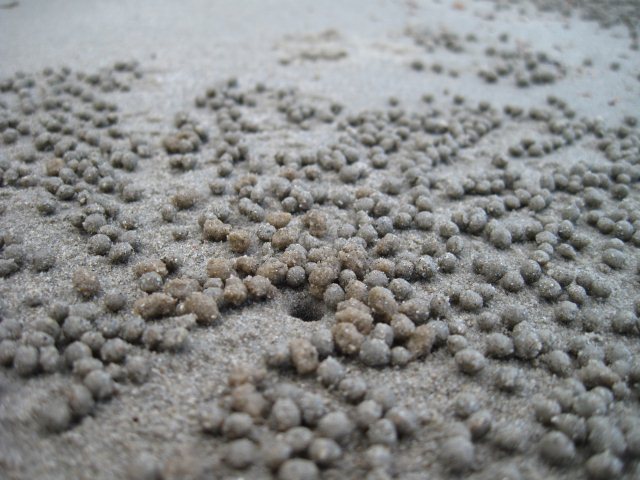
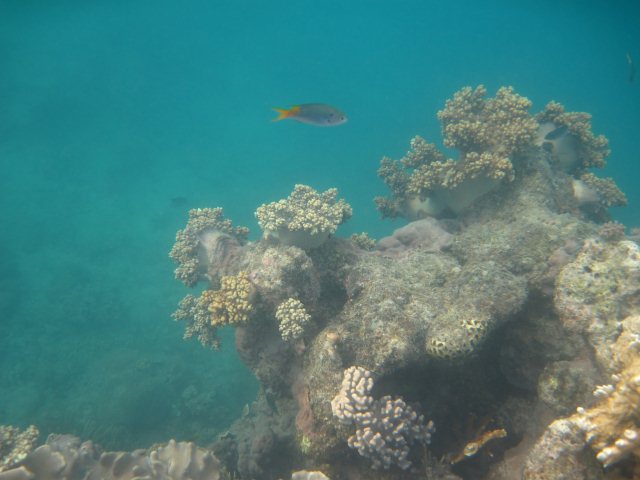
As mentioned above the second thing we did in Port Douglas was scuba dive along the Great Barrier Reef. Truly one of the most generous gifts to the world, the Great Barrier Reef is an absolute marvel and one of the most breathtaking sights I’ve ever witnessed in person. Scuba diving here was an experience I’ll never forget and it was without question one of the best things I’ve ever done.

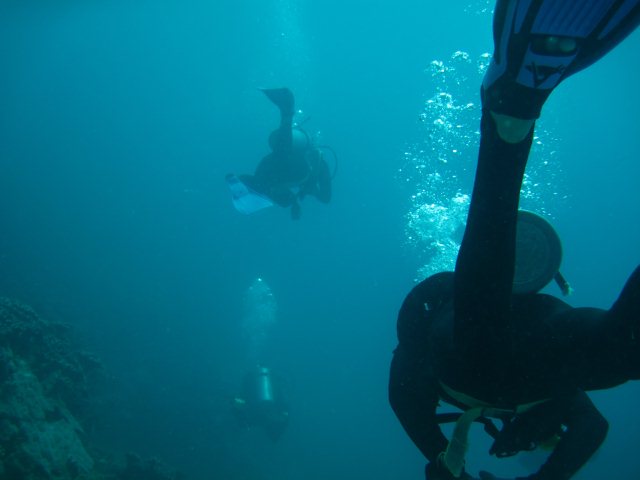
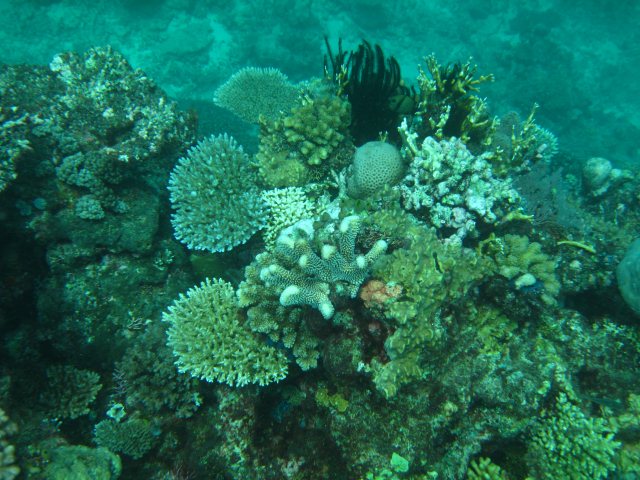
After that introduction I don’t feel I have the words to accurately reflect what swimming in this wondrous place is like but I’ll try. It’s a shame my pictures couldn’t really capture it either, light entering the water is dispersed and absorbed by the water too quickly. As you go further down in to the water, the visible part of the electromagnetic spectrum gets cannibalised by the water. The lighter colours (red, orange, yellow, green) are the first to go, it makes everything look blue and if you go down deep enough, eventually black. I’d need a powerful light to capture what I saw with a camera, even with my eyes it becomes more difficult to clearly see the underwater environment as I descend deeper, especially if another diver has disturbed the sea bed and kicked up sand or silt with their fins. What I did see though was transcendent. If you’ve read my other posts about scuba diving you’ll know that I love it, it’s one of my favourite things to do but this, this was something else. Like the dive sites in Langkawi and Phuket, there were more fish and coral species than I could count, there’s no point in trying after having spent a few minutes down there but where in my previous dives the number of new species I was seeing slowed after maybe 20 minutes, the Great Barrier Reef just kept on producing. Up until the last few seconds I was in the water I kept seeing new species of fish and new types of coral, it was endless. During the last of my three dives I even saw a white tipped reef shark, Jill wasn’t there because she wanted to snorkel at the end of the day but she saw the shark from the surface so things worked out fine.

At each of the three dive sites I visited there was a huge wall of ever varying coral that was seemingly without end. The wall was immense and there were shoals of countless fish, fish of all colours and sizes, passing through. It really was wondrous.