Cuddly Creatures

After lots of long driving days, leaving Melbourne was a welcome relief knowing that we’d only be driving about two hours to Phillip Island, our stop for the day. Considering our last couple weeks, it was understandable that after getting to Phillip Island at noon, Jaz asked me in a rather stunned voice whether that was really all for the day. Upon arriving to the island (which is connected by a rather short bridge to the mainland), we made a quick detour to what’s becoming my new favorite location, the I. The I (as I call them) are the information centers in most touristy or larger Australian towns, and they provide lots of brochures and maps that I rely on to get around towns and find all the attractions. We were able to buy tickets there too for the most popular attractions on the island.

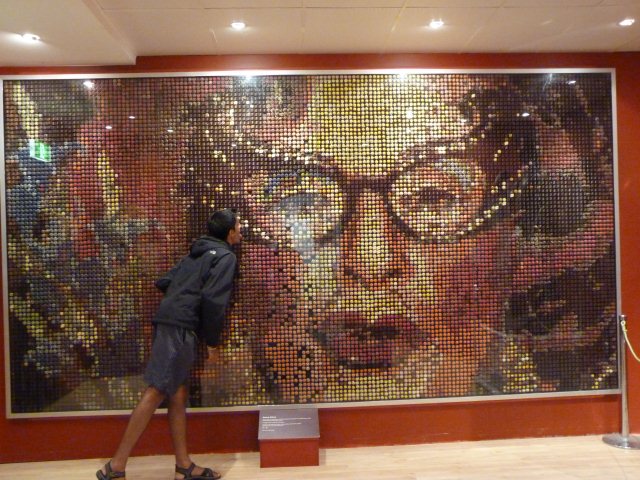
First on the list of the Phillip Island attractions was Panny’s Amazing World of Chocolate, which you know I wasn’t going to miss. It was a little overpriced, and after the size of the free sample of chocolate, I was starting to think I’d be a little disappointed. There was a neat hands-on explanation about the process of making chocolate, and then we saw several large chocolate sculptures. After that, there was the chocolate fountain, which pours massive amounts of chocolate every couple minutes, but my favorite part of that room was the robot that dispensed pieces of chocolate. Since the attraction was fairly empty, Jaz and I spent a good chunk of time just pressing the buttons to get free chocolate. I was also pretty proud of myself because they had a wall full of 36 jars of chocolate ingredients to guess, and I only got two wrong. And they totally didn’t count because we don’t have passion fruit at home. Then there was a machine that you could draw whatever you wanted in chocolate, it went down a conveyor belt, and you got a chocolate design to eat. So all in all, I think we ate enough chocolate to make the ticket price worthwhile.
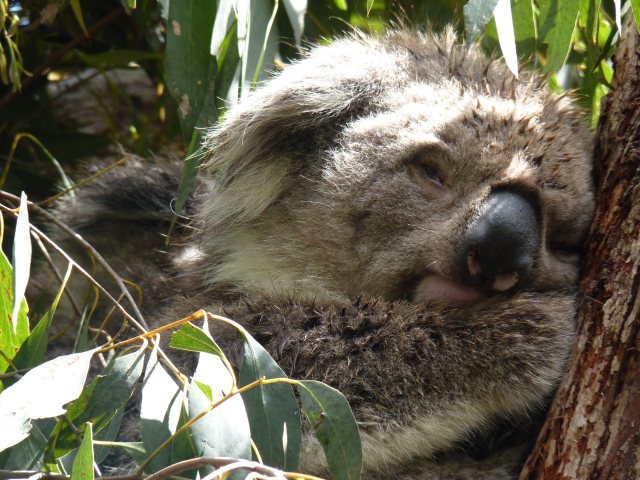
Phillip Island is rather small, so the next attraction was only a 5 minute drive up the road to Churchill Island. I wouldn’t really call it an island since it seemed to be attached to the island by a boggy-like area. I can’t really say I enjoyed Churchill Island, it had a working heritage farm, but it was nothing compared to Greenfield Village. Moving on from that, we went to the Koala Conservation Center, our second time seeing koalas in Australia. This location was really cool because they had a boardwalk that went up around the trees at the koala height, so we were quite close to them. We even followed one koala as he ate in a tree, moved on to the next tree and then settled in a final tree with a mother and baby koala. Now all that’s left on my list for koalas is to hold one! It was hard not to want to pet them when they were that close because they looked so cuddly.
The Penguin Parade is by far the biggest attraction on Phillip Island, and while it’s not the only place in Australia where this occurs, it has one of the largest populations of little penguins that come ashore in one location. Little penguins, which stand just over a foot tall, fish during the day, and then in the evening come ashore to sleep. Because of their size, they come across the beach in waves of 20 to 30 penguins, so they gather out in the ocean until everyone is ready to return, usually right after the sun sets. I was a little disappointed with how commercialized it was, but in a location that gets almost 700 penguins a night, it makes sense that they’d have to build it up just to protect the penguins from tourists. We got there early enough to get a front row seat, and then froze in the chilly wind for the next hour and a half waiting for the penguins to arrive. They were well worth it though, because they were super cute to watch running across the beach to the grassy protected areas where they’ve built their nests. Sadly, pictures are not allowed, they don’t want flashes disturbing the penguins and having them be too scared to come into land. The coolest part happened after they landed though, because the conservation has built a boardwalk all down the path to the beach, so you could follow the penguins as they waddled to their nests. And since we were there at just the right time, we got to see cute, even littler fuzzy babies getting fed! I really wanted to take one home, because this size penguin would fit perfectly in my bathtub.

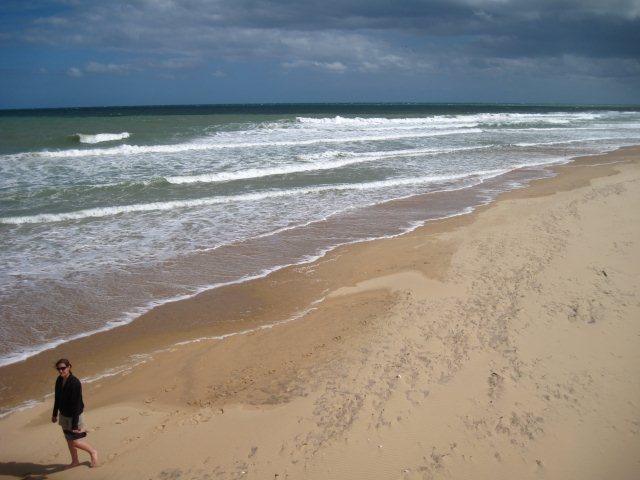
Our busy day on Phillip Island was followed by a rather long driving day to Lakes Entrance. The drive was very scenic though, because it runs through the Gippsland Lakes, the largest freshwater lakes system in Australia. We made a couple stops along 90 Mile Beach, which is the fourth longest beach in the world. I’m not sure if it was the fact that it wasn’t quite summer yet, but we were both shocked by the fact we didn’t see a single person up and down the whole beach. The wind was a little chilly, but it was still a nice day to be out for a walk on gorgeous beaches.
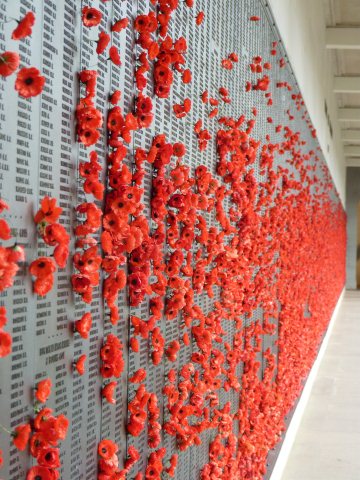
Next up on the driving agenda was Australia’s capital, Canberra. Even after knowing that it was only chosen as capital to stop Sydney and Melbourne’s rivalry, and was meticulously planned out specifically to be the capital city, I was expecting it to be a big city just like any of the others we had been too. Instead, the city of 300,000+ manages to feel even smaller because of the ridiculously wide streets, confusing layout (it’s done in concentric circles), and massive green spaces. Normally I’d like a lot of green, but it just wasn’t what I was expecting from a nation’s capital. We didn’t make it to Canberra quite as early as I had planned, and so only had time for one national landmark. Since I’m not a huge museum fan, we chose the Australian War Memorial. I was very impressed with the parts of it we saw, it’s been quite awhile since I’ve seen dioramas in a museum, but they had some very cool ones depicting battles from WWI. The World War II section was especially interesting for me because I tend to forget that Australia was bombed by the Japanese, and lived in fear of being outright invaded during that time. Finally, at closing time, there was a bagpiper that played a funeral song at the Tomb of the Unknown Soldier next to the eternal flame which was quite moving.
Leaving Canberra was a bit sad, because it was the conclusion of our road trip across Australia, we only had two more short driving days to go to get to Sydney.
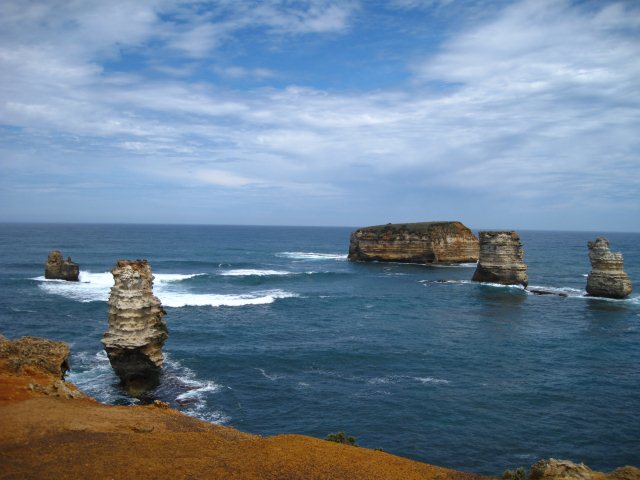
The Great Ocean Road

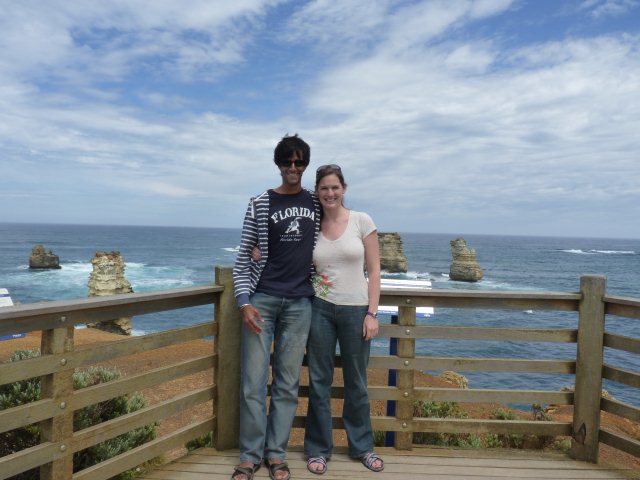
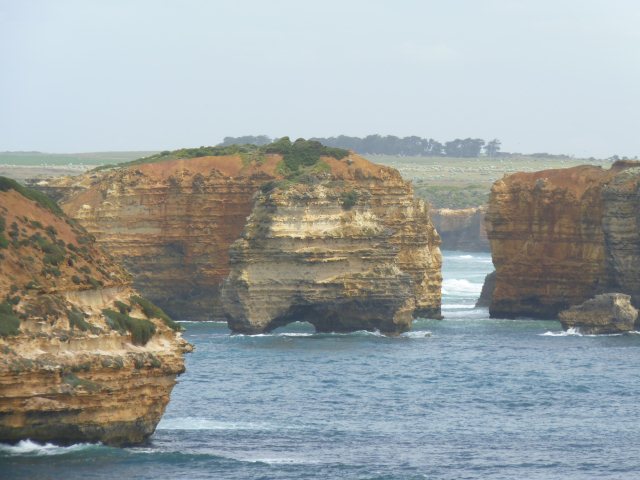
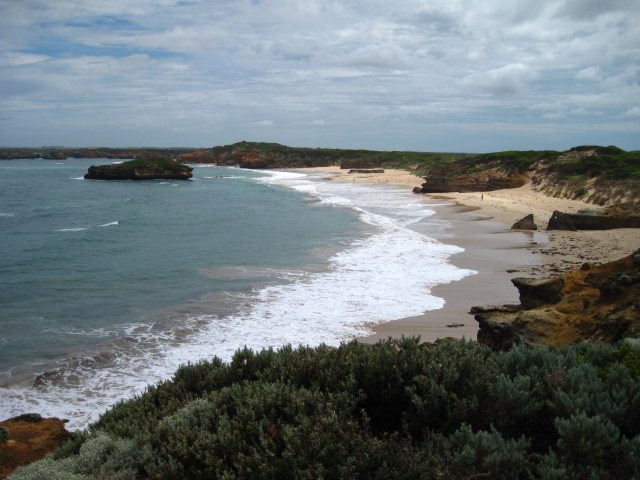
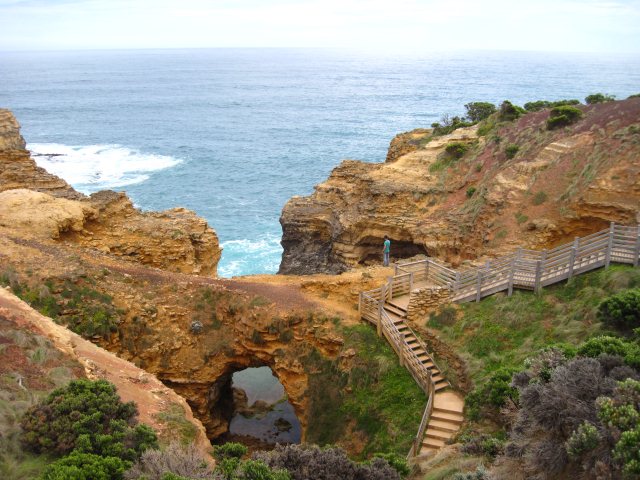
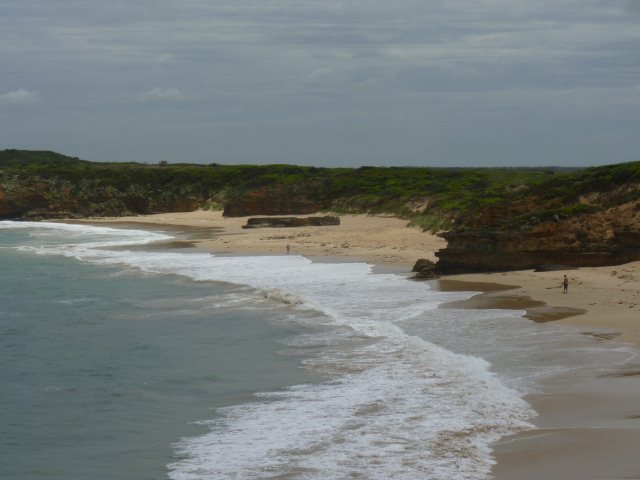
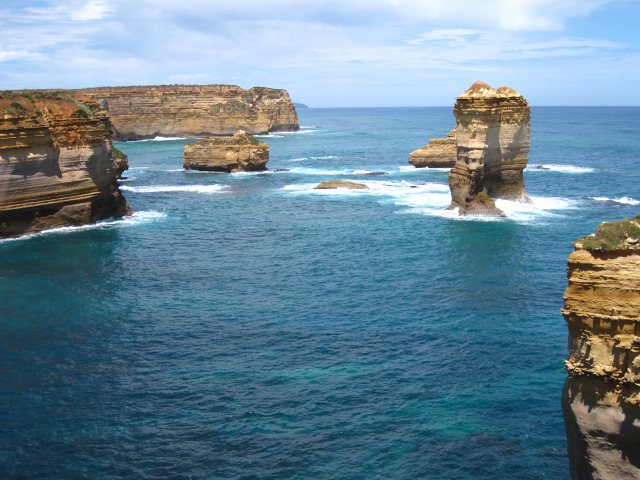
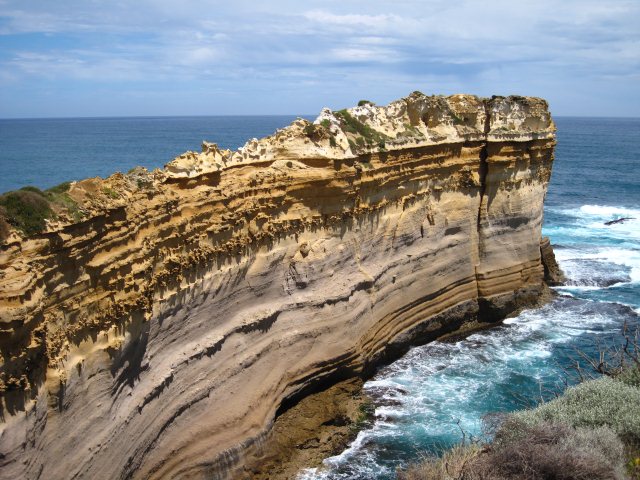
The Great Ocean Road was built after World War I by the servicemen who came home as a memorial to those who died. The idea, besides just to create the memorial, was also to give the returning men employment. Built by over 3000 servicemen, the road travels 285 km between Torquay and Warrnambool through a very rugged and forested cliffside. We drove the road in reverse, starting in Warrnambool, for which I was grateful once we started the section between Apollo Bay and Torquay. The hilly and extremely curvy road hugs the cliff line, and I was very happy to be on the inside lane, especially because people like to pass our campervan since it doesn’t do so well on hills. Along the route, there are numerous picturesque stopping points, oftentimes having bronze signs commemorating events, with the most famous being the Twelve Apostles.

Bay of Islands

Bay of Martyrs

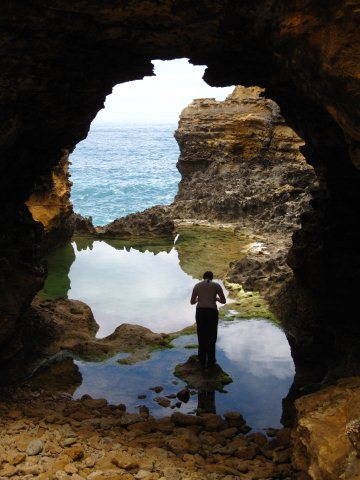
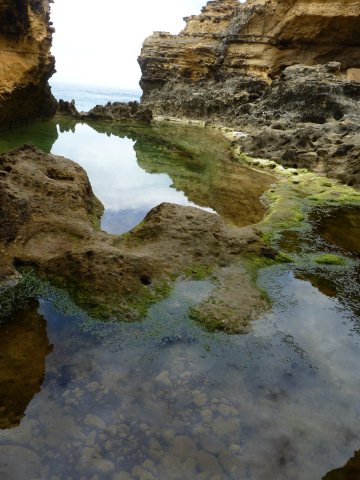
The Grotto

London Bridge

The rock formations used to connect here, and you could walk out on them until 1990 when the center collapsed into the ocean, stranding two people on the furthest rock.

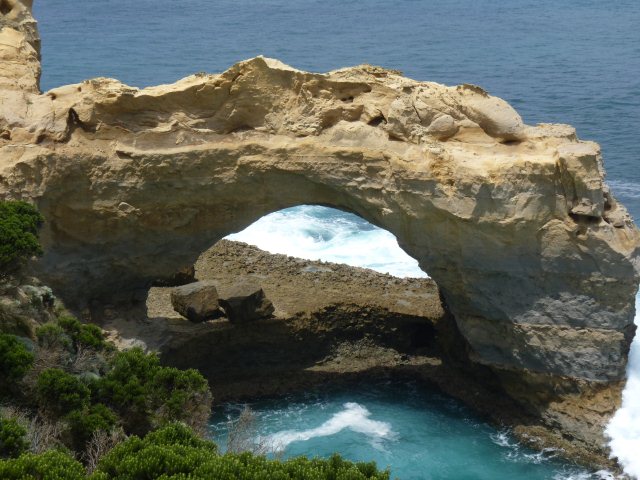
The Arch

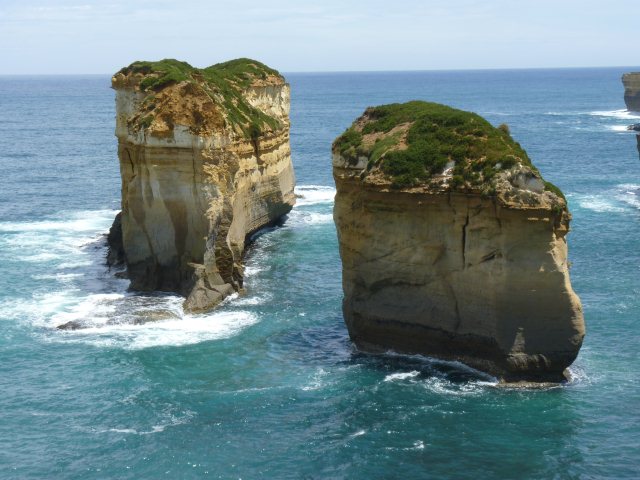
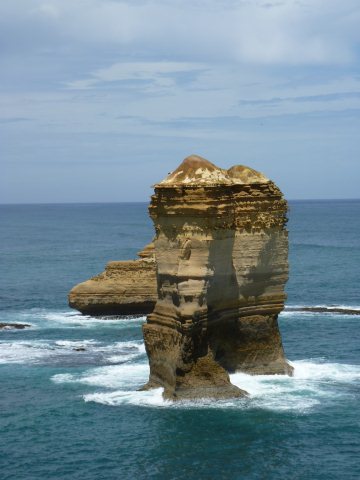
Loch Ard Gorge

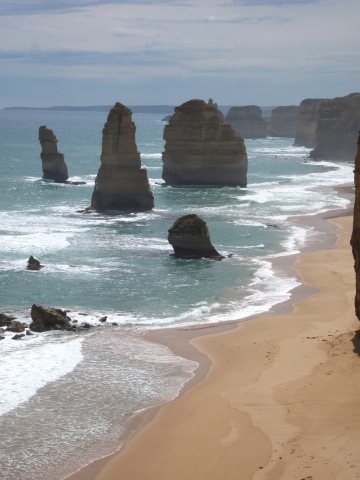
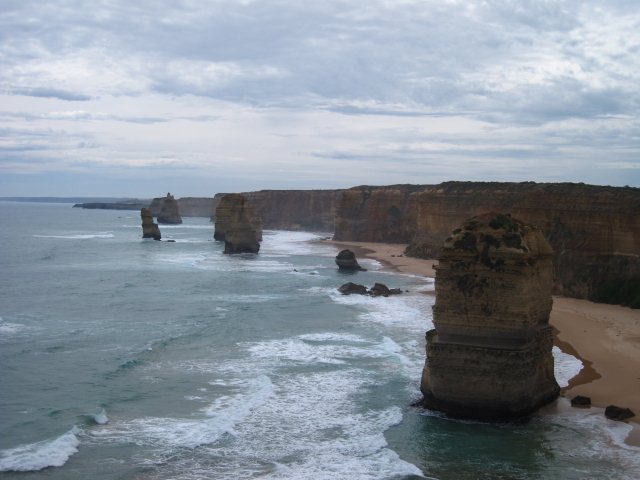
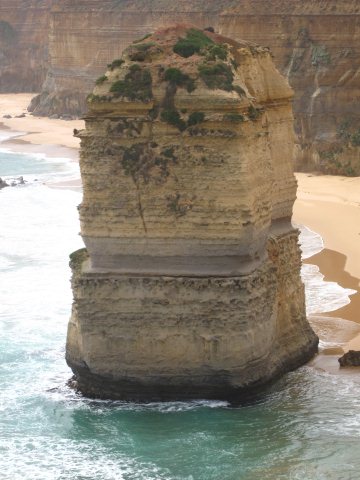
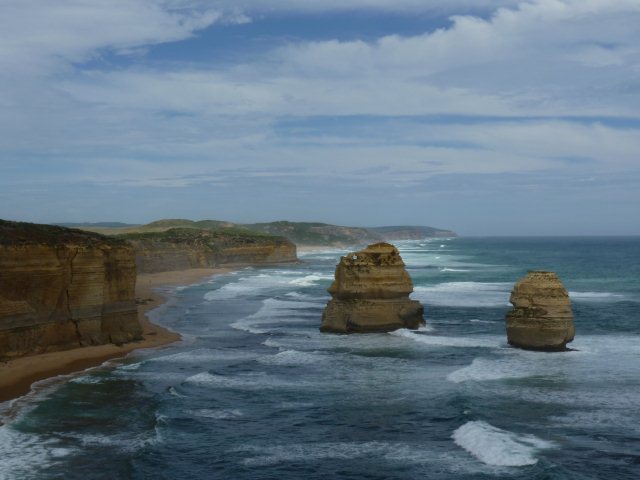
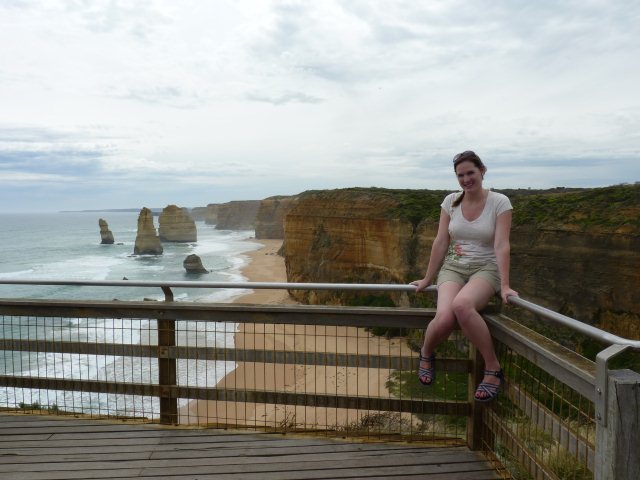
Twelve Apostles

There used to be twelve main rock formations, but there are only seven still left standing. This was by far the most popular stop along the road, and the first place on our whole journey where we saw hordes of tourists (more than 2 or 3 was unusual for us).

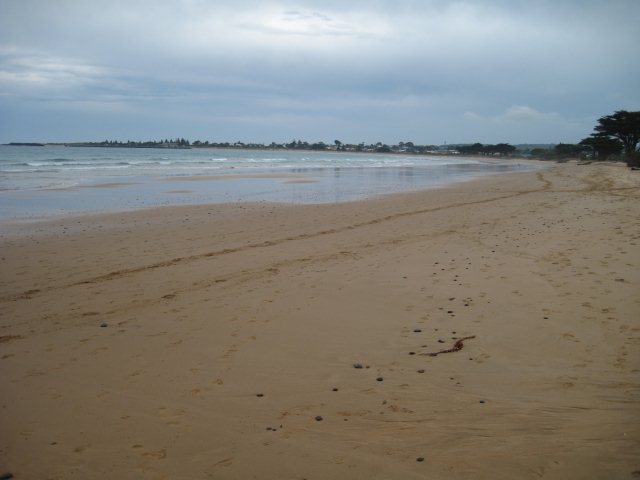
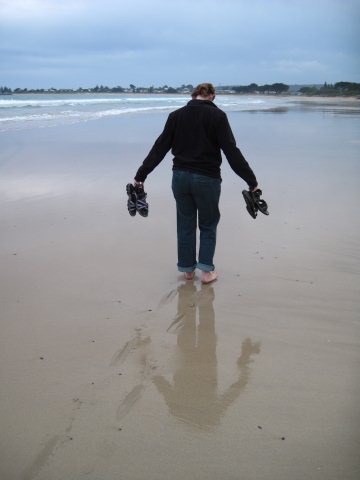
Playing on the beach at Apollo Bay, our stop for the night

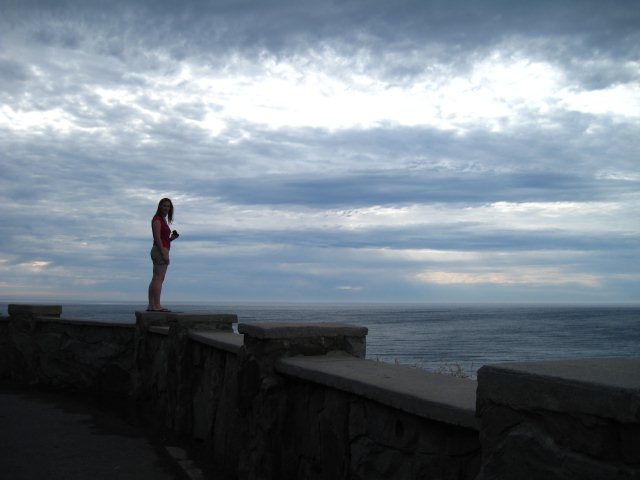
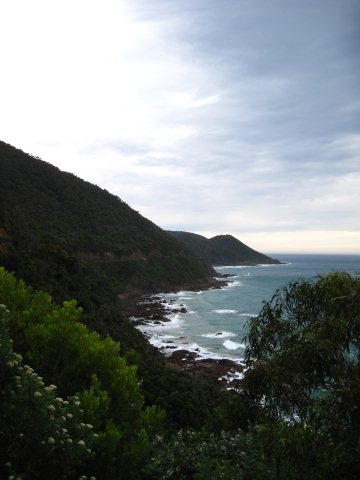
Cape Patton Lookout, why they put the wall so high I’m not sure, you couldn’t get a picture of anything standing on the ground!

Mt Defiance Lookout

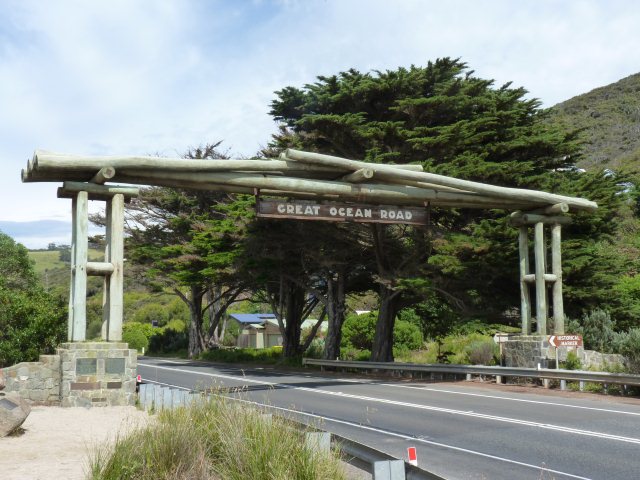
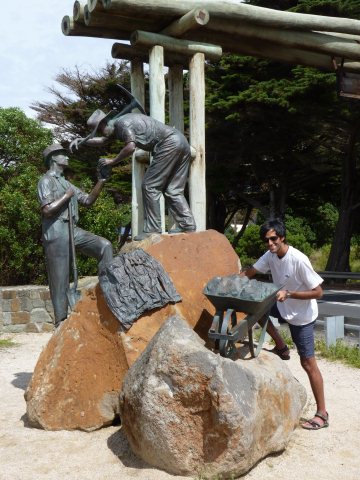
The start of the Great Ocean Road, and a statue honoring “The Diggers”, the men who built the road

Kangaroos, Koalas and Kookaburras

Even though this article was posted by Jaz, it was written by both of us again. All but the last three paragraphs were written by Jaz, the end is Jill’s.

Australia is one of my favourite countries in the entire world and it took me barely a week to realise it. It’s been one amazing sight after another and Jill and I saw plenty more during our visit to the world famous Kangaroo Island. Up until this point, we’ve been driving around going wherever the wind (or Jill’s ridiculously detailed planning spreadsheet) took us but since Kangaroo Island is so big (seven times the size of Singapore), we decided to book a day tour for that part of our trip.

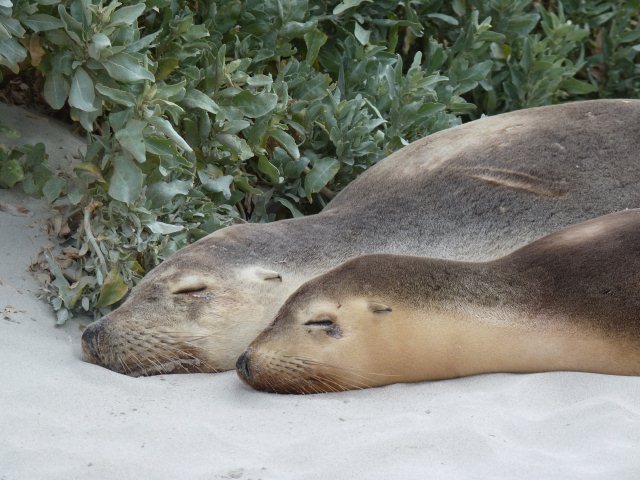
It was an early start with a one and a half hour bus ride to wake up for but it was what came after that that I was dreading. We needed to catch a ferry to get to the island itself and since I’ve seen Jill throw up on this trip several times already (that boat ride to the sharks was REALLY messed up), I wasn’t keen on a repeat performance. Luckily though, it wasn’t anywhere near as bad as I thought it would be and we got to the island barf free. For most of the day we were in a tourist coach with our driver Daniel acting as the tour guide and onboard stress relief, his voice providing smooth dulcet tones throughout the journey. The first place he took us was Seal Bay. Unsurprisingly, it reeked of various seal juices, an especially bad set of animal odours that Jill and I first encountered when we were in South Africa. It was a lovely beach though, animal smells and all. I hadn’t really thought about it before since seals are always the ones getting eaten or screwed over but they can be quite vicious when they want to be and even with their clumsy looking movement on land, can run 3 to 4 times faster than people can. We were told to keep our distance. Being warned about things has been a bit of a recurring theme throughout Australia, apart from the obvious stuff that can all kill you like spiders, snakes and jellyfish so small you can barely see them (scuba diving here is going to fun!), the sea and cliffs here are very dangerous too. A surprisingly high number of people die here every year because they don’t give Australia’s awesome natural wonders the respect they deserve. Also, I’ve found that with such long stretches of wide open road (I’m sure the high campervan didn’t help either), the cross winds here are deadly. Even a one second lapse in concentration is too much. But back to the island, after seal bay and lunch, we went to see a birds of prey show. The birds that featured were a tawny frog mouth (cool looking), Australian kestrel (it can do cool stuff like dive down really quick but it looks a bit shit), barn owl (shit), kookaburra (cute!) and a badass peregrine falcon. I didn’t know this before the show but since they’ve been recorded at speeds of up to an insane 246mph, peregrine falcons are the fastest animal on Earth.

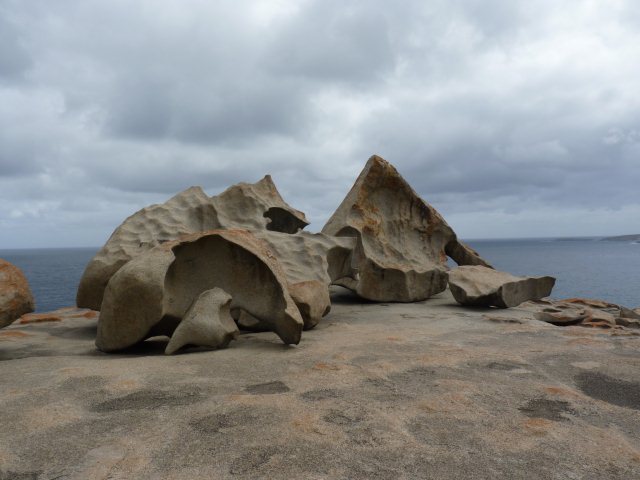
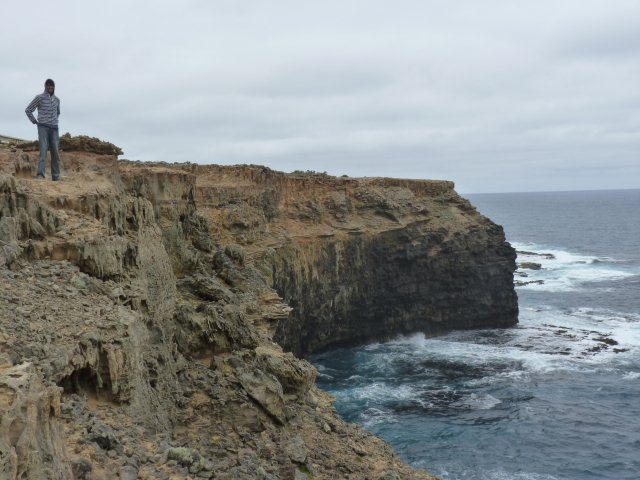
Daniel drove us through Flinders Chase National Park next. Matthew Flinders was an English explorer dude that lucked out big time and found a bunch of stuff in Australia, stuff like Kangaroo Island. His name is everywhere in Australia, I’ve lost count of the number of roads, buildings, parks and general shit named after him. The English have definitely had their fingers in a lot of pies throughout history; old English dudes had their names all over stuff in Singapore and Malaysia too. Next we saw Remarkable Rocks, a cluster of large granite boulders shaped by thousands of years of unforgiving Australian weather. With the rocks sitting on a large granite dome rising steeply from the ocean, the views were fantastic and climbing the rocks was pretty cool. The $4 flip-flops I picked up in Thailand have been serving me well but in hindsight probably weren’t the best choice for footwear that day. The wind was pretty strong when we were up there, it didn’t feel particularly safe and it made everything really chilly too. I’ve been amazed by what I’ve seen in Australia so far so I’m not complaining, but I really wasn’t expecting to bust out my winter wear until New Zealand a couple of months from now. Who knew Australia was so bloody cold in spring? Next we had a brief stop at the eerie Cape du Couedic Lighthouse (the place gave me the willies) before heading to Admirals Arch, a stunning natural arch formed by coastal erosion. Words can’t really do it justice, so check out the pictures of it in the Kangaroo Island image gallery!

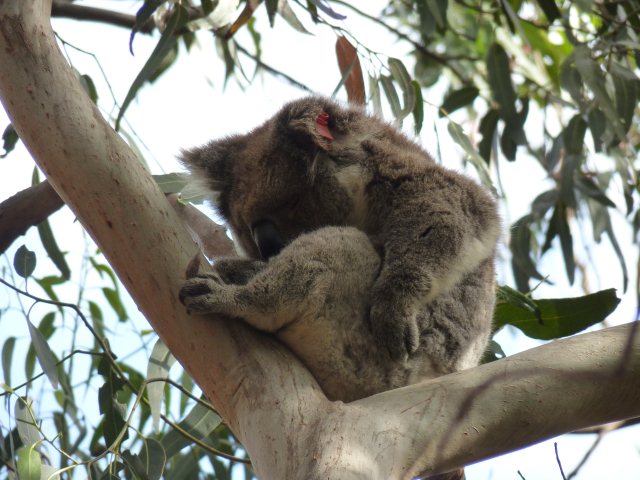
We had time to spare at the end of the day’s scheduled events and since we hadn’t really seen any kangaroos yet, Daniel kindly offered to take us to a kangaroo and koala reserve. The animals were just as cute as you’d expect up close but one thing I was surprised by is how big the koalas are. Most of them were pretty solidly conked out high in the trees. If a sudden gust had caught one of them while they were sleeping high up in a branch and someone happened to be walking under that branch at the time, that falling koala would have done some serious damage. Almost as interesting as what we saw during the day was hearing Daniel’s take on everything as he was showing us around. Towards the end of the day he was talking in general about life on Kangaroo Island, the hardships of being so isolated from the mainland, how important water conservation is (if there’s no rain, there’s no water), inflated prices because of the captive market and so on but also how much simpler life is there. Luxuries you might not be able to live without were you in Sydney or Melbourne seem unimportant when you’re living on a place like Kangaroo Island. There are only a few thousand people living there so practically everyone knows everyone and because of this there is near zero crime on the island. There is no need for a legal system because whenever someone commits an act that is deemed unacceptable by the community, they are simply asked to leave the island. They can try to stay if they want but because of how close and dependent on one another everyone is, life would just be made too difficult for them if they stayed against everyone else’s wishes. They would in effect be exiled. Learning about the island was a very interesting experience and I’d definitely recommend a visit there if you’re ever in Australia.

After returning late and exhausted from our long day on Kangaroo Island (after the ferry, bus and city bus rides, we didn’t get back until after 11 pm), we were happy to not have to get up real early the following day. In a slight change from my not ridiculously overplanned spreadsheet, we decided to drive to Mt. Gambier on the way to start the Great Ocean Road. Getting out of Adelaide was not as complicated as our arrival since we left after rush hour, and we were on our way relatively quickly.

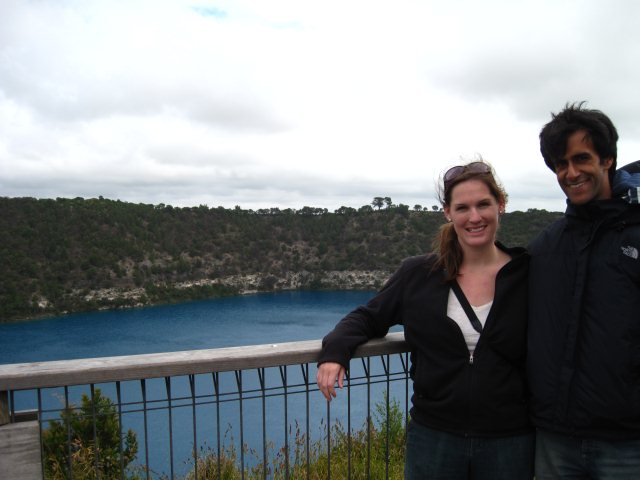
The reason I suggested switching our route to include Mt. Gambier was to shorten our drive time by a bit, but also because of its’ famed Blue Lake. On our way into the town, we first stopped at the “I” (the information center and my favorite place to stop in every town and collect maps), where we discovered the other local attractions. The first stop was the Umpherston Sinkhole, a large sinkhole on the eastern edge of town that had been turned into a garden. Back in the late 1800s, the sinkhole (and surrounding property) was owned by a man named James Umpherston who even then promoted the site as an attraction for locals. It was neat to be able to walk down into it and see all the greenery. Since it was a Saturday, on the way out we also saw wedding photos being taken (the first of two that day). Next up on our Mt. Gambier sites was the Blue Lake, which is known for its’ ocean blue color in the summer months. Luckily for us, we got there a week or so after the lake had changed, the lake is a steel blue color in the winter, and then over a couple days it switches its’ color. The lake was very pretty, although the site was slightly marred by the fact that the town uses the lake for its’ drinking supply and consequently has built a plant right on the waterfront. Last up was the Cave Gardens, situated right in the town center, and it looked like a smaller version of the Umpherston Sinkhole. The only redeeming quality was the huge rose garden surrounding the sinkhole.

Leaving Mt. Gambier, we headed off to Port Fairy to start the Great Ocean Road. Along the way though, we stopped near Portland at Cape Bridgewater, where there was supposed to be a blowhole (not that I saw it though) and a petrified forest. Not much is left of the petrified forest due to local and tourist damage, but what was left was cool to see. The scientists speculate that a long time ago, there was a forest that got covered by a sand dune, which subsequently hardened to stone around the tree trunks. Once the tree trunks rotted away, the hollow sandstone pillars were all that was left. This detour was much appreciated once we got to Port Fairy, because we ended up making friends at our caravan park and didn’t head into town until the sights were closed. Since it was the first group of people we had chatted with at any of caravan parks, we didn’t mind the diversion though. We were the youngest people by at least 40 years, so we were the only ones on a limited timeline. One of the couples had sold their home and bought a converted truck to drive around Australia in. The helpful part was that several of them had just driven the Great Ocean Road and were able to give us a couple tips about driving (the roads are quite steep and curvy) and campgrounds to stay at!